Reliable and Cost-effective Manufacture of Turbochargers in Series
The turbocharger has been state-of-the-art in diesel vehicles for some time. And almost all automotive manufacturers offer a turbocharged petrol engine. Why? The turbocharger makes comparable performance with a smaller engine capacity possible and that contributes to the advance in downsizing. Turbochargers also help to achieve lower fuel consumption and are therefore fundamental in meeting strict emission limits. MAPAL offers the complete process for machining these parts, including tools.
Challenge for machining tools
Most turbochargers are exhaust gas turbochargers. These look different at almost every automotive manufacturer and have a special geometry. Common to all: there are very high temperatures when they are used in vehicles with petrol engines. For this reason the turbine housing, the so-called “hot side” is manufactured from very abrasive, heat-resistant materials. These materials represent a particular challenge for every machining tool.
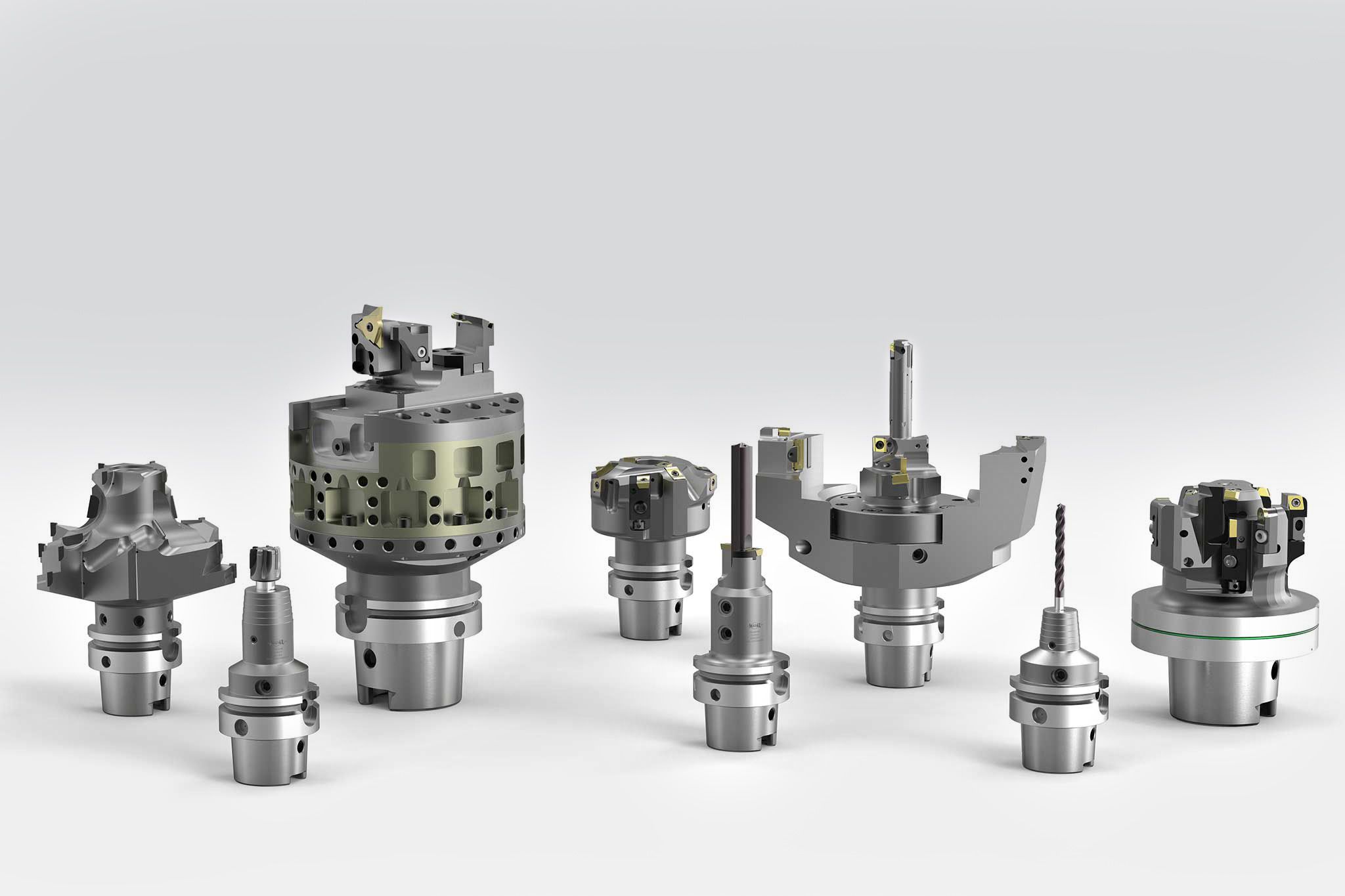
MAPAL has taken up these challenges and developed new cutting materials and tools. The company offers the complete process for machining turbochargers, including all tools, for example drills, milling cutters, reamers and mechatronic actuating tools – matched to the related geometry of the turbocharger. The company also assists its customers during the continuous further development of processes, to reduce cycle times and to increase tool lives. As such, combination tools that undertake multiple machining operations in one machining step form part of the portfolio.
A large part of turbocharger machining can be implemented using tools with ISO indexable inserts. Including many machining processes on the challenging hot side. MAPAL has developed a cutting material specially matched to the machining of heat-resistant cast steel and that offers long tool lives and therefore high cost-effectiveness, despite the abrasiveness of the material.
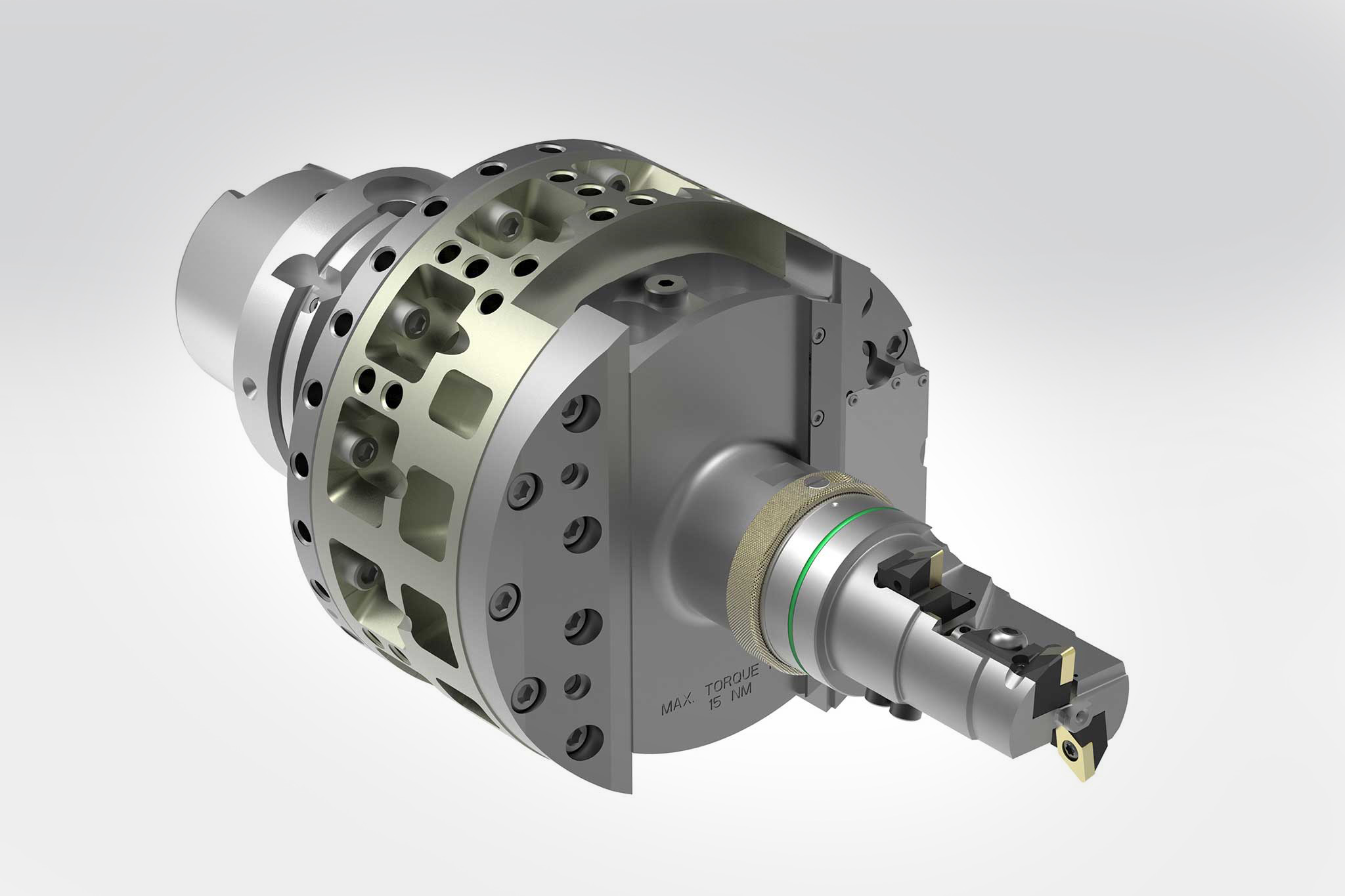
1. Complex boring tool with ISO indexable inserts
A particular challenge during the machining of the turbine housing for exhaust gas turbochargers is the main turbine bore. Its manufacture is subject to close tolerances in relation to shape, position and surface finish. The bore is bell-mouthed shaped to generate the best possible flow characteristics. MAPAL undertakes this machining operation using TOOLTRONIC with the LAT attachment (linear actuating tool). TOOLTRONIC, a mechatronic tool system, is a full NC axis integrated into the existing machine controller. The mounting tool is fitted with three inserts, one for roughing and two for finishing.
2. Turning on the machining centre using TOOLTRONIC
A particular challenge during the machining of the turbine housing for exhaust gas turbochargers is the main turbine bore. Its manufacture is subject to close tolerances in relation to shape, position and surface finish. The bore is bell-mouthed shaped to generate the best possible flow characteristics. MAPAL undertakes this machining operation using TOOLTRONIC with the LAT attachment (linear actuating tool). TOOLTRONIC, a mechatronic tool system, is a full NC axis integrated into the existing machine controller. The mounting tool is fitted with three inserts, one for roughing and two for finishing.
Machining example:
Material: 1.4837 | Cooling: MQL | Diameter: 40.5-57.295 mm | Cutting speed: 140 m/min (roughing), 120 m/min (finishing) | Feed: 0.15-0.4 mm | Tool life: 50 parts
Turning on the machining centre using TOOLTRONIC
3. New face milling cutters for roughing
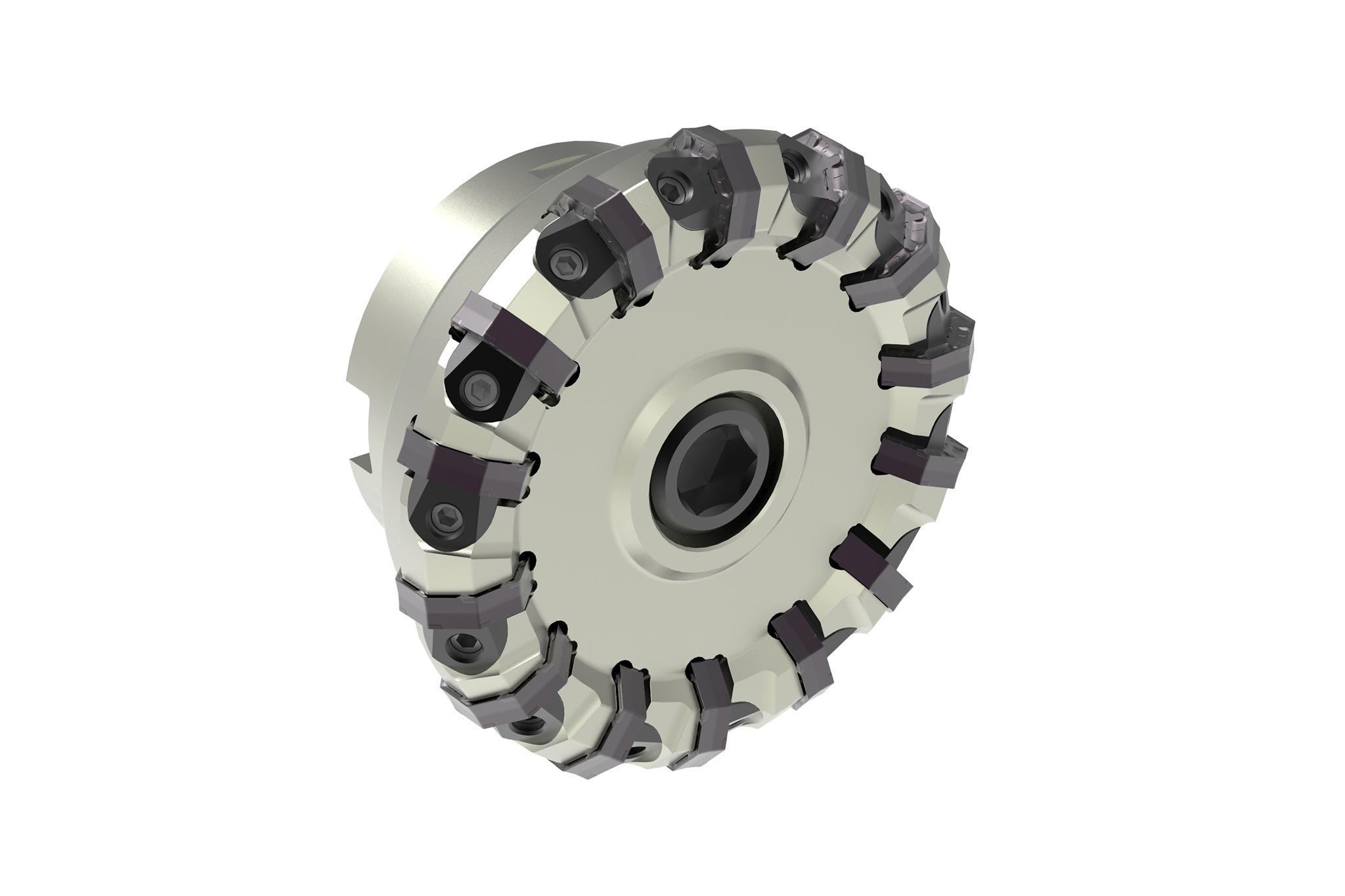
MAPAL recently announced a milling range with pressed, radial ISO indexable inserts. The milling cutter for roughing the face surface on the turbocharger housing comes from this range. The ISO indexable inserts with 16 usable cutting edges are the highlight of this face milling cutter. As such the usage of the tool is particularly economical.
Machining example:
Material: 1.4849 | Cooling: Dry machining | Diameter: 125 mm, 14 inserts | Cutting speed: 80 m/min | Feed: 0.12 mm | Tool life: 125 parts
New face milling cutter for roughing
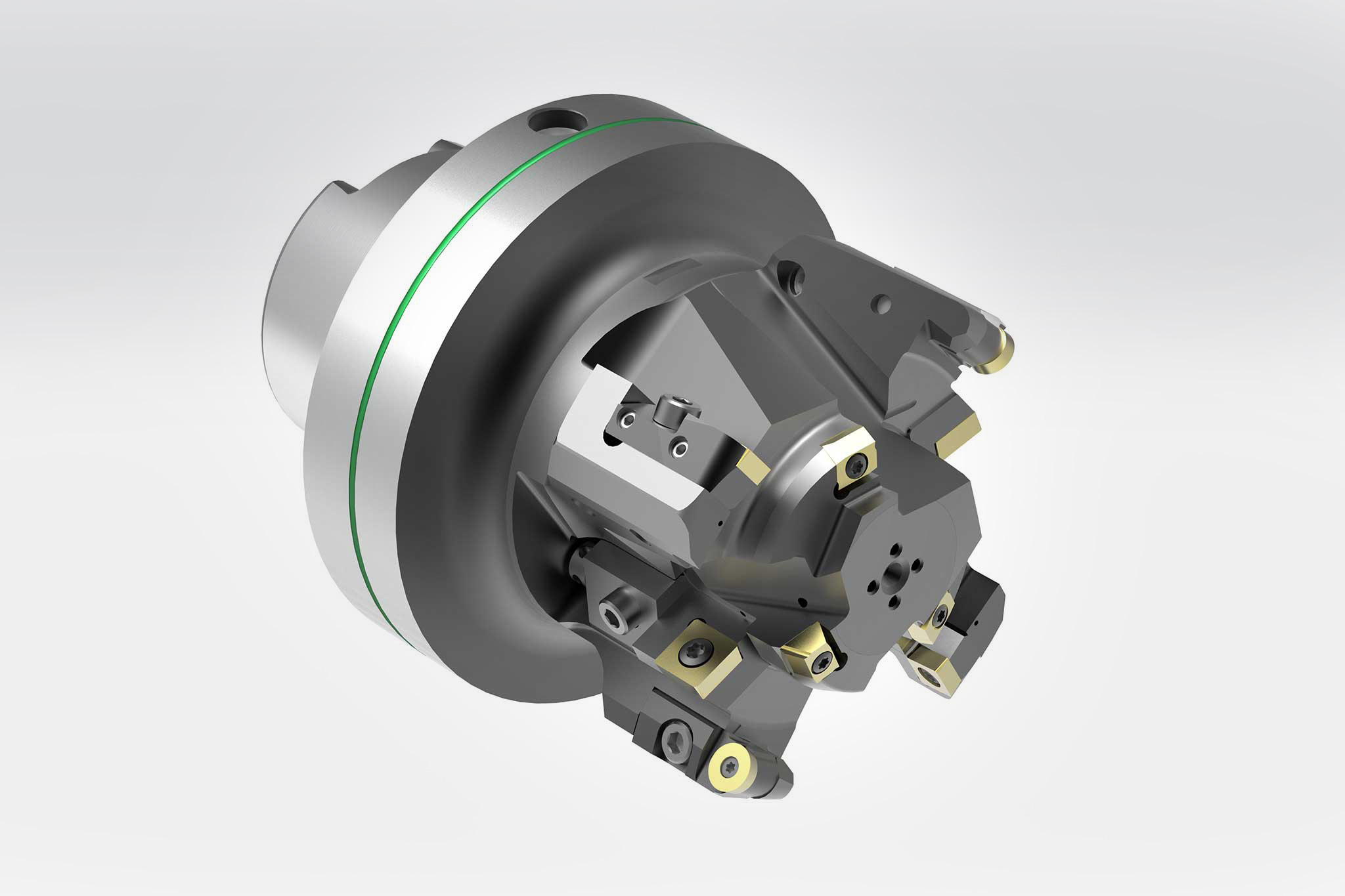
4. Diameter turning tool with tangential technology
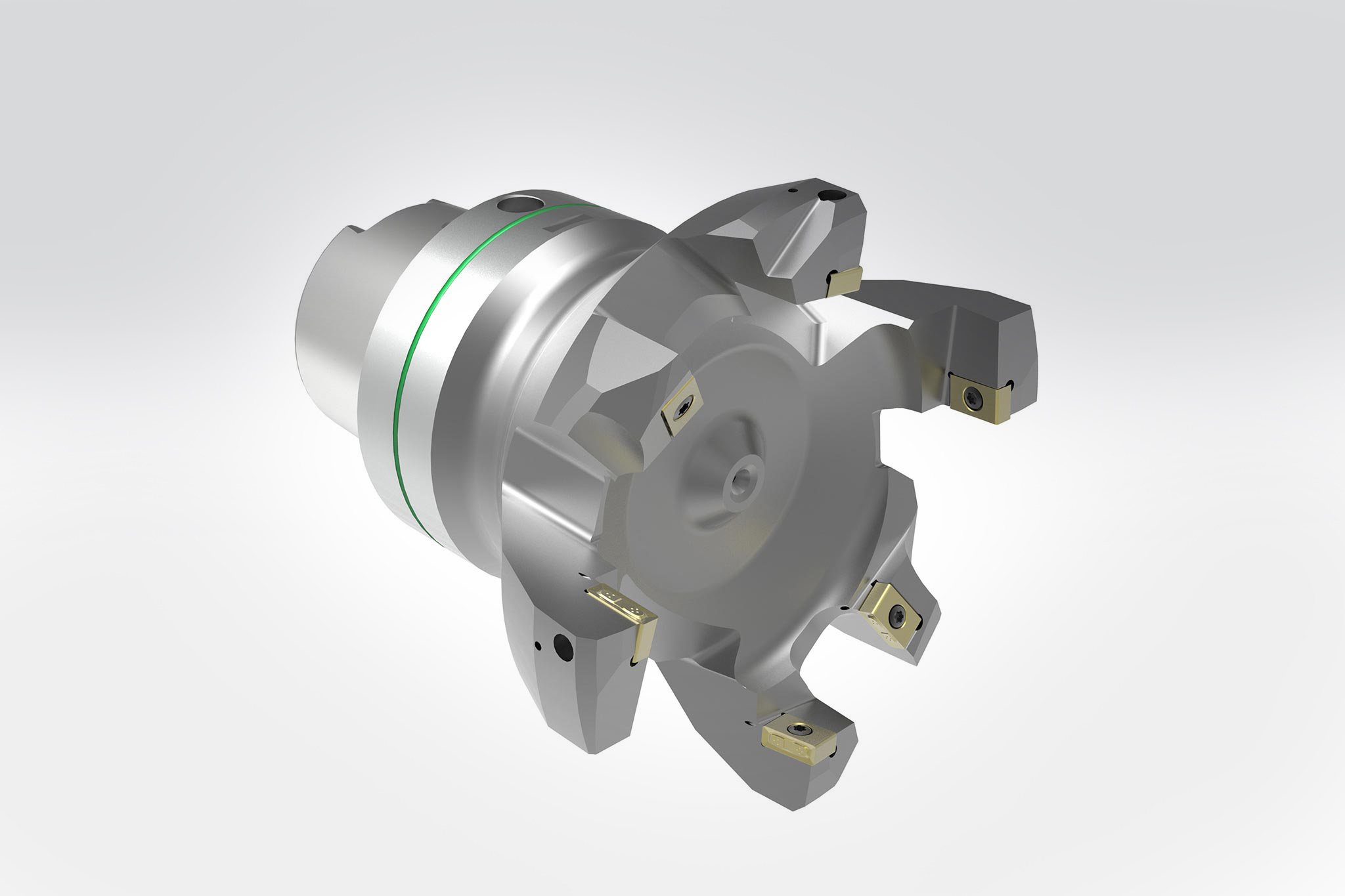
The new tool from MAPAL for pre-machining the catalytic converter flange is also particularly cost-effective. Tangential technology is used on this diameter turning tool. Due to the upright and horizontal installation of the LTHU inserts, in effect eight cutting edges can be used per indexable insert.
Machining example:
Material: 1.4837 | Cooling: MQL | Diameter: 119 mm | Cutting speed: 80 m/min | Feed: 0.3 mm | Tool life: 100 parts
Turning tool with tangential technology
The four tools mentioned demonstrate, on the one hand, the different machining tasks on a turbocharger and, on the other hand, symbolise the variety of tools and know-how available from MAPAL. From standard milling cutters, through mechatronic actuating tools, to complex boring tools, the programme includes all the tools necessary for machining turbochargers, including the tool clamping systems. MAPAL designs the complete machining process such that the most reliable and cost-effective strategy for the customer is used. There is always a close eye on accuracy down to the μm so that the turbochargers achieve the highest possible efficiency in operation.