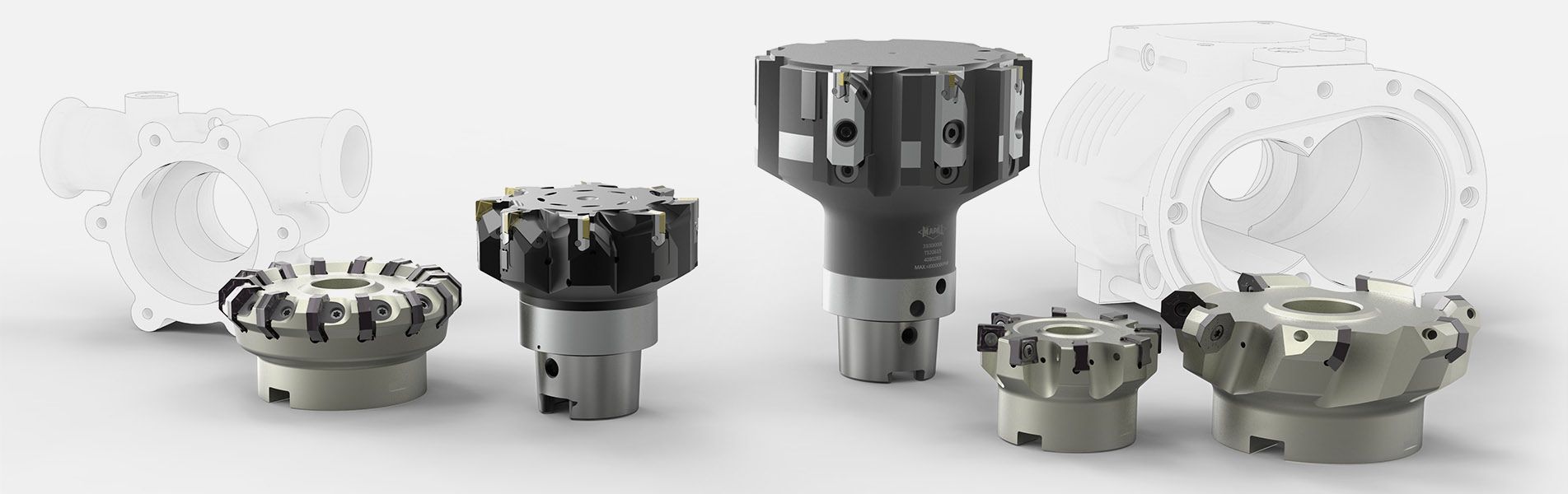
Newly developed tool solutions for steel and cast iron processing.

鋳鉄や鋼鉄加工の新たな工具の開発

鋳鉄や鋳鉄材料は、機械加工で最も頻繁に使用される材料です。例えばポンプハウジング、コンプレッサー、ステアリングなどがあります。2つの成功例が示すように、マパールの開発者は常にこれらの大規模な材料グループの経済的な加工に焦点を当てています。

New cutting material series for milling cast iron and steel components

MAPAL has developed a specially tailored CVD-coated cutting material series for milling cast iron and steel materials. The new cutting materials show their strengths especially at high cutting speeds or when dry milling takes place.

The new cutting materials HC760, HC770 and HC775 impress with their extremely heat-resistant α-aluminium oxide coating with excellent layer adhesion and thus extremely long tool lives. Users can apply them at very high cutting speeds in a significantly higher range than their counterparts with a PVD coating.

The new cutting materials are also ideally suited for dry machining. Stable machine conditions are required for their use.

Fine boring of interrupted bores with multiple cutting edges with EA system and CVD coating

For example machinists are faced with open or extremely interrupted bores in the case of gear pump cast housings. MAPAL has developed a multi-cutter fine boring tool with guide pads in order to machine such bores faster, reliably and more cost-effectively. MAPAL's own CVD coating, which ensures a long tool life, is used for cutters. It is ideally suited to difficult machining conditions during reaming and fine boring.

Multiple cutting edges on the tool significantly reduce the machining time compared with spindle tools or single-insert fine boring tools. At the same time, the guide pads arranged opposite the cutting edges ensure maximum accuracy. The tool can be adjusted with high precision. Appropriate distribution of material removal on the cutting edges ensures long tool lives and very good surface quality.

The EasyAdjust system (EA system) is used to clamp the indexable inserts. Its cassette holds the indexable insert stably and without any play. The back taper of the minor cutting edge is already integrated in the cassette, thus eliminating the need for back taper adjustment. Precise guiding of the cassette along a precision guide pin ensures that the back taper remains unchanged even during diameter setting.