03.11.2022

ロボットによる効率的なバリ取り

KADIAシステムがバッテリートレイを加工

フライスカッターをロボットでガイドする場合、マシニングセンターでの加工に比べて基本的に不安定になります。KADIA 社は、このような工業生産における最短のサイクルタイムを確実に実現するため、電気自動車用バッテリートレイのバリ取り用に新たに開発した 3 台のロボットにMAPAL 社の 3 つの切れ刃を持つ フライカッターを使用しています。
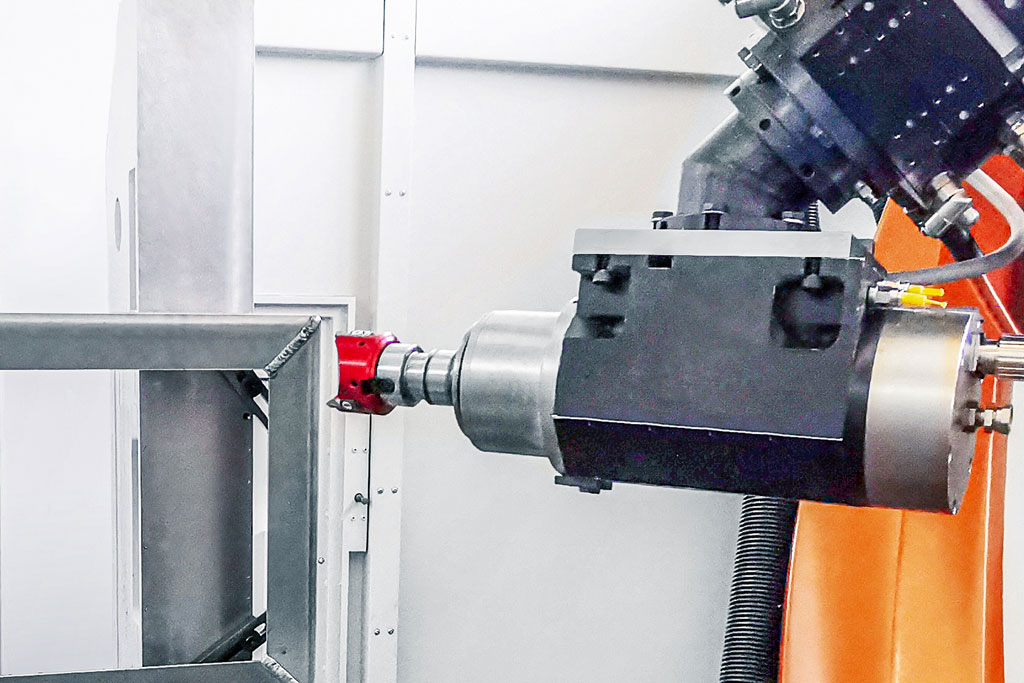
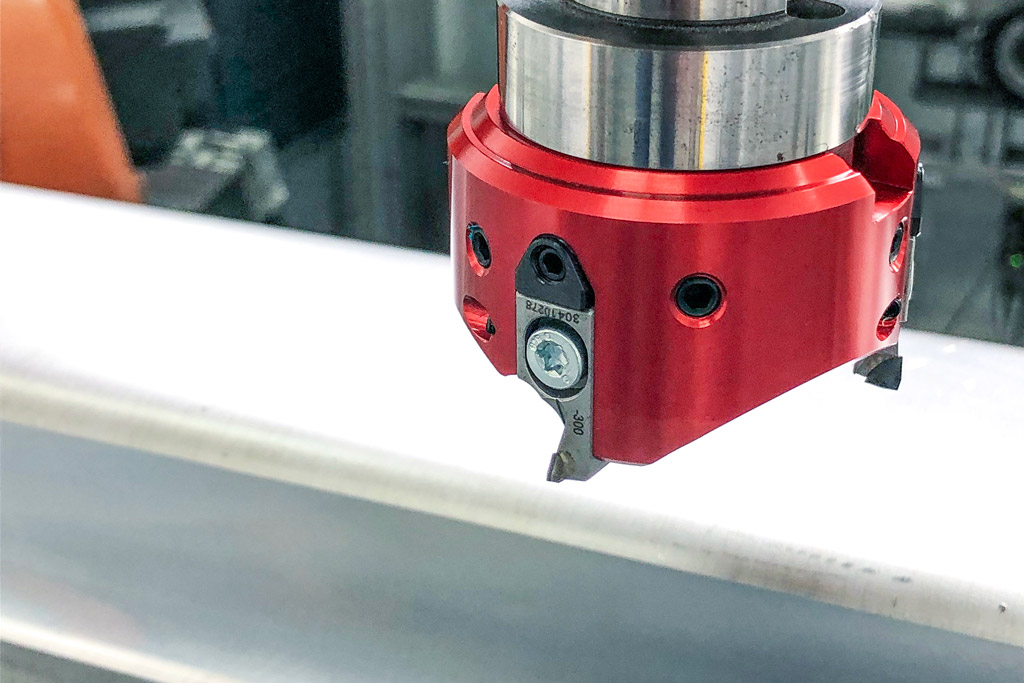
The PCD milling cutter FlyCutter from MAPAL clamped in the robot from KADIA in front of the battery tray.
  • The PCD milling cutter FlyCutter from MAPAL clamped in the robot from KADIA in front of the battery tray.
  • Jannik Weiss from KADIA and Norbert Meier from MAPAL in discussion.
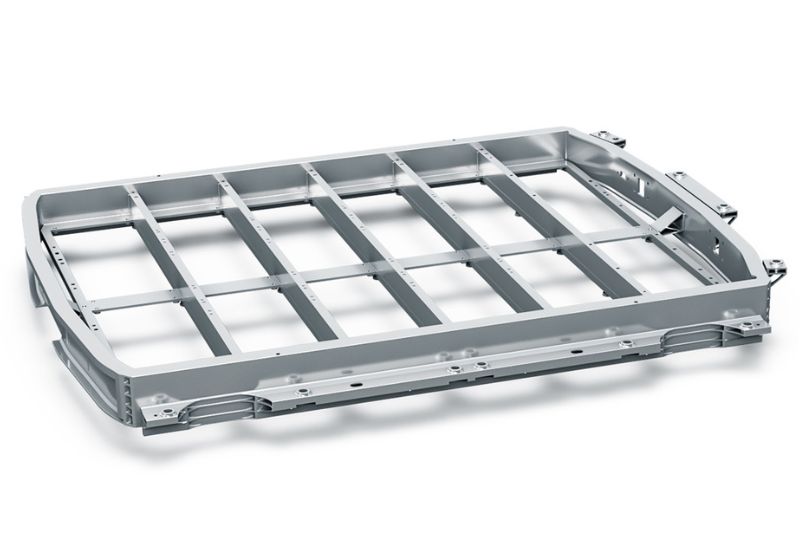
  • アルミプロファイルで作られたバッテリートレイ
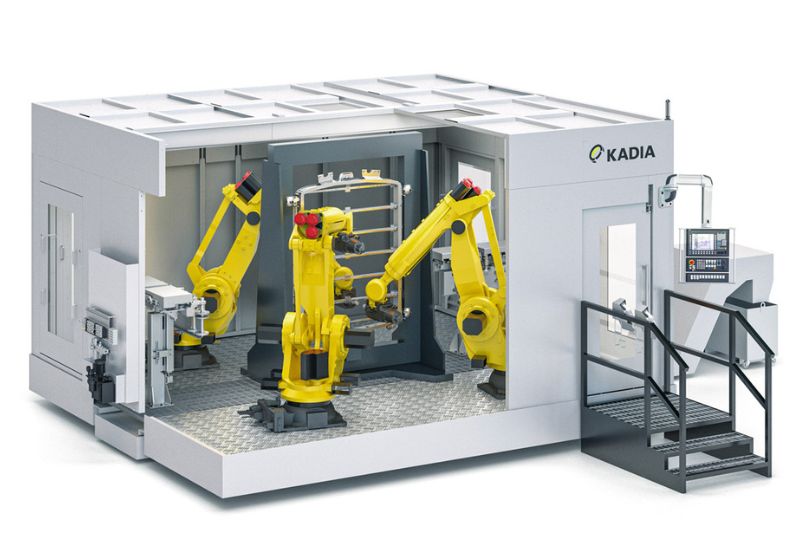
  • 3台のロボットを備えたレイアウトでのKADIA特殊バリ取り機
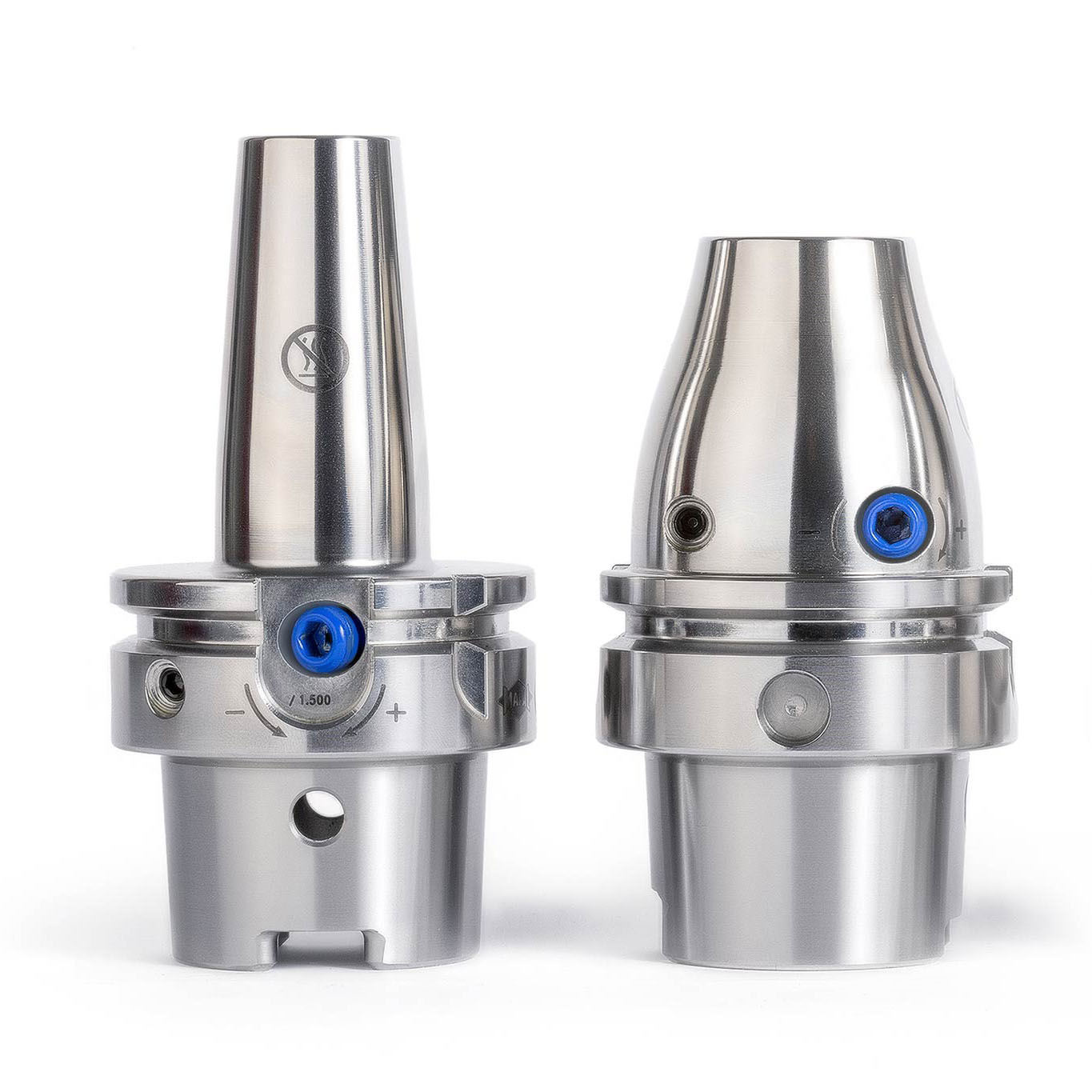
  • The PCD-tipped FlyCutter with three cutting edges from MAPAL.
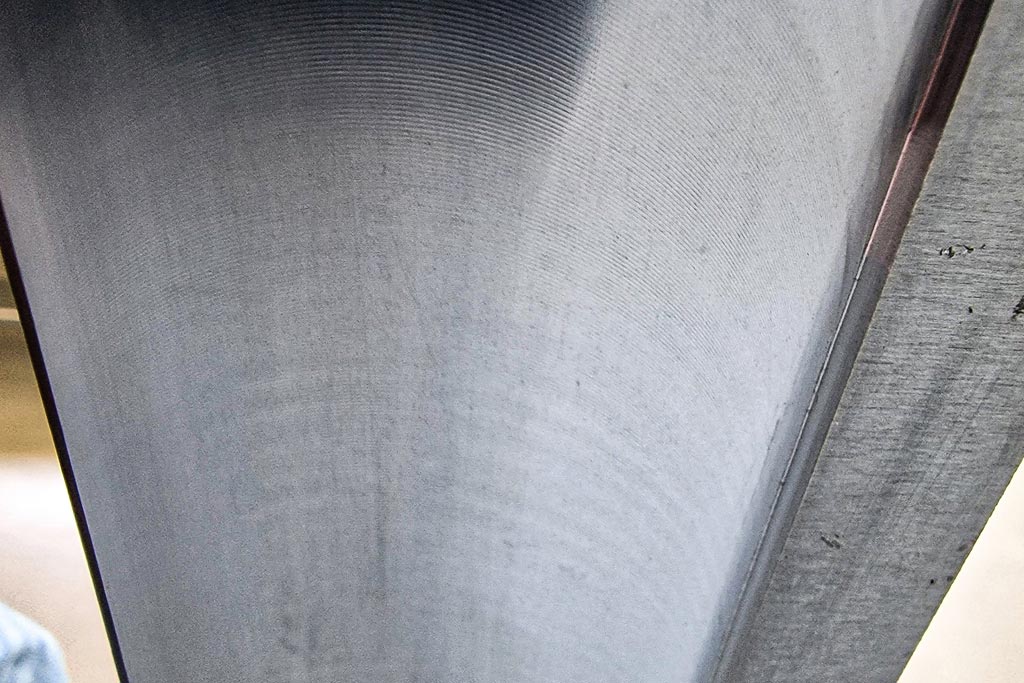
  • The component shows chatter marks.

ニュルティンゲンに本社を置くKADIA Produktion GmbH + Co.社の歴史は、1959年のホーニング工具の製造から始まりました。最初のホーニング盤は創業から10年後に開発されました。1981年同社はバリ取り機の製造と共に、別の事業分野に参入しました。現在、KADIA社はホーニングおよびバリ取り技術のリーディング・スペシャリストであり、200名の従業員を擁しています。

主な顧客は、自動車メーカーやサプライヤー、建設・農業機械メーカー、風力発電所メーカー、航空宇宙産業などです。同社は、ホーニング加工用にさまざまなサイズの標準機を提供してますが、バリ取り加工用には原則としてカスタムマシンを製造しています。顧客にはバリ取りのエキスパートとしてKADIA社を採用する大手機械メーカーも含まれています。
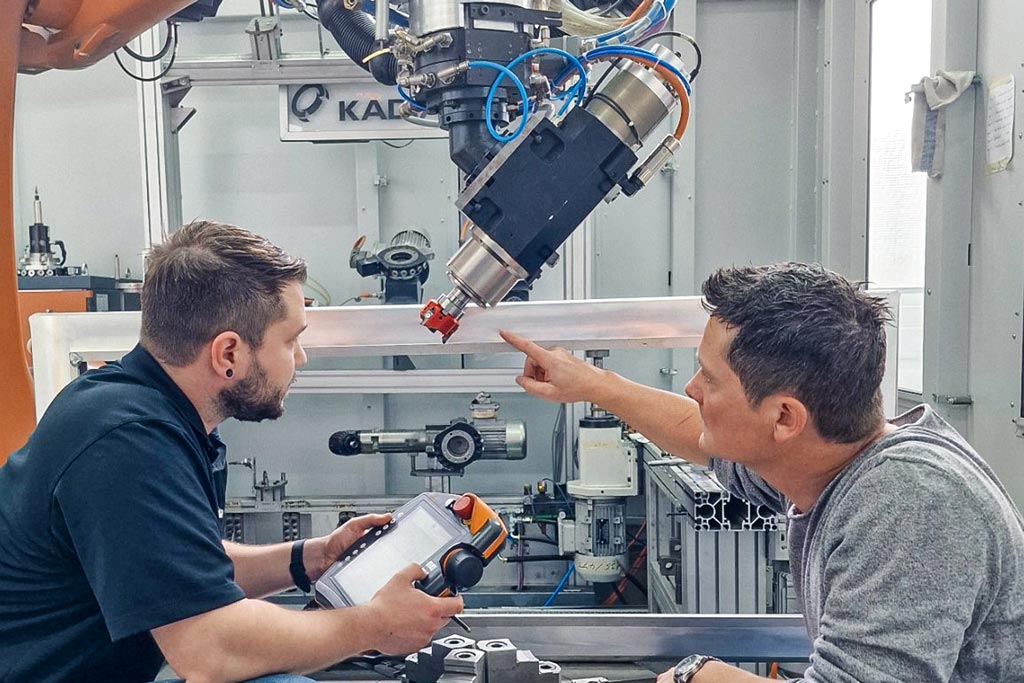
Jannik Weiss from KADIA and Norbert Meier from MAPAL in discussion.
Jannik Weiss, Sales Specialist Deburring & Robotics at KADIA (left), and Norbert Meier, Technical Consultant at MAPAL, are very happy with the results of this joint project.  ©MAPAL

Pencil test for burrs

In mechanical machining, a distinction is made between loose and fixed burrs. After deburring, depending on what’s required, the part should have sharp edges, edge rounding or a chamfer, which is why this is also known as edge design. To assess a burr, KADIA uses a simple but meaningful test using the lead of a mechanical pencil extended by five millimetres. If it can be used to remove the burr, then the burr is loose. If the lead breaks, it’s a fixed burr, which needs to either be milled off or can be left in place, as it won’t come off later.

The size of the workpiece is also crucial to machining processes that make use of robots. Guiding the workpiece is favoured for smaller parts. The robot guides the workpiece along fixed processing units. In a tool-guided strategy, the robot arm processes a workpiece firmly clamped in place. “For bigger workpieces, I’m much more skilful with the milling cutter in hand than if I have to move the bulky part,” explains Jannik Weiss, Sales Specialist Deburring & Robotics at KADIA.

Un vassoio per batteria realizzato con profili in alluminio
The aluminium profile tray design is roughly the same size as a double bed frame and is used to hold batteries in an electric vehicle. Deburring ensures the lid fits cleanly and remains tightly sealed after “closing”.  ©KADIA Produktion GmbH + Co.
When a major car manufacturer requested a deburring machine for battery trays in electric vehicles, it soon became clear that the robot would have to guide the tools in this instance. The aluminium frame, welded together from extruded profiles, measures 1,900 x 1,400 x 100 mm. The requirements for KADIA involved milling the separating surfaces and then brushing the burrs created by the milling cutter so that the frames can later be bolted and sealed with a lid. Tasks of this nature are performed more efficiently and flexibly by a robot cell than a machining centre, especially as the surface finish requirements are moderate.

テストセルでの加工

Kernstück der Entwicklung bei KADIA ist eine fünf mal sechs Meter große Versuchszelle mit einem Sechs-Achs-Industrieroboter und einer Schnellwechseleinheit. Hier kann der Prozess der späteren Anlage bereits getestet werden. Vorversuche ermitteln die optimalen Schnittdaten und prüfen die Stabilität. In der Zelle befinden sich 15 einwechselbare Einheiten, auf neun davon hat der Roboter einen automatisierten Zugriff mit einem Aktionsradius von 2,70 m. Eine Einheit stellt eine bestimmte Funktion dar, die für die Bearbeitung eines Bauteils gebraucht wird. Typischerweise besteht sie aus einer Motorspindel mit Schnittstelle und einem Zerspanungswerkzeug.

Ein Rundtisch als siebte Achse gehört ebenfalls zur Ausstattung der Versuchszelle, die zudem über genügend Freiraum verfügt, um weitere Anlagen, wie etwa eine Kühlmittelversorgung oder zusätzliche Prozesseinheiten unterbringen zu können. Oft sind bei KADIA gleich mehrere Teile für verschiedene Versuche in der Zelle gerüstet.

Die Sondermaschine zum Entgraten von KADIA im Layout mit drei Robotern.
  ©KADIA Produktion GmbH + Co.

バッテリー・トレイ用のダミー部品の初期予備テストでは、KADIA社はすでに在庫していたラウンド・インサート・ミーリング・カッターを使用しました。しかしこの工具は、この作業には全く適さないことが判明しました。発生した振動は非常に激しく、加工スピンドルさえも損傷したのです。切削値が低くてもフライス加工中のバックグラウンドノイズは隣接する建物にも響いていました。

アルミニウム製ハウジングに適したフライスカッターを提供するという課題において、MAPAL社がパートナーとして選ばれました。「私たちはどの工具メーカーとの協力が可能かを事前に評価しています。」とヤニック・ヴァイス氏は言います。KADIA社は当初、標準工具に重点を置いていました。工具メーカーが必要に応じてカスタム工具を製造することは、MAPAL社にとって大きなプラスでした。

選べる2種類のフライスカッター
KADIA already used this service in a previous project for which MAPAL developed a special hydraulic chuck. The services of the Aalen-based manufacturer came to be appreciated here. When Norbert Meier, Technical Consultant at MAPAL, was on site to deal with this chuck, the battery tray project was explained to him. Meier had solutions ready right away and brought two milling cutters from MAPAL’s standard range with him on his next visit: the seven-blade face milling cutter IFM751 and the FlyCutter D63 with three cutting edges. Both milling cutters demonstrated they were up to the task in the tests, but to Jannik Weiss’s amazement, the little three-blade milling cutter gave much better results: “What the FlyCutter did there was really great.”
The PCD-tipped FlyCutter with three cutting edges from MAPAL.
The FlyCutter with PCD-tipped milling inserts was developed specifically for unstable machining processes and small connections.  ©KADIA Produktion GmbH + Co.

But Norbert Meier, who wanted to show the customer an alternative with the second milling cutter, had reckoned with this outcome. “We specially developed our FlyCutter for requirements like these,” he explains. MAPAL developed the lightweight tool specifically for unstable machining requirements that occur in robot applications. It is optimised for small connections such as BT30. The innovative design and use of aluminium ensure the milling head is particularly lightweight. With the diameter of 63 millimetres used at KADIA, the PCD milling head, including milling inserts, weighs just 220 grams.

The sensitive wedge adjustment make µ-precise adjustment of the milling inserts possible. The dovetail guide and an additional worm screw ensure perfect seating and high accuracy of repetition for the assembly of the milling inserts. The special, ultra-positive cutting edge geometry means only weak forces are applied to the part and the tool spindle guided by the robot.

When machining the battery tray, accuracy down to the µm is not required. In fact, to ensure the sealant applied by the automotive manufacturer holds better, a certain rawness of the surface is needed. Only the waviness must not be too high. In the tests, the milling cutter was moved beyond the limit to determine up to which point chatter marks on the relatively thin part still lay within the required tolerance.

Das Bauteil weist Rattermarken auf.
Je weiter der Roboterarm ausfährt, desto größer wird die Gefahr von Schwingungen und Rattermarken. Testreihen geben Aufschluss zu Schnittgeschwindigkeit, Vorschub und Schnitttiefe, für die der Fräser von MAPAL prozesssicher eine gute Oberfläche erzeugt.  ©KADIA Produktion GmbH + Co.

Schnittwerte und Positionierung sind wichtig

„Die Krux bei einer Roboterbearbeitung ist das Zusammenspiel zwischen Werkzeug, Vorrichtung und Roboter“, erläutert Norbert Meier. Die Steifigkeit ist ein grundsätzliches Problem bei der Bearbeitung. Je weiter der Roboterarm ausfährt, desto labiler wird die Zerspanung. In den Versuchen testet KADIA daher nicht nur unterschiedliche Schnittwerte, sondern auch verschiedene Positionierungen des Roboters vor oder neben dem Werkstück.

Für den vorliegenden Fall ermittelten die Partner als optimale Schnittdaten bei einer Spindeldrehzahl von 11.000 min-1 einen Vorschub von 0,16 m/s und eine Zustellung von 0,5 mm. Prozesssicher lieferte der FlyCutter eine sehr gute Oberflächenqualität. Diese Daten aus dem Versuchsstand hat KADIA in das Konzept für die Sondermaschine übernommen. Als wirtschaftlichste Lösung für die Serienfertigung hat der Hersteller dafür den Einsatz von drei Robotern in einer Zelle ermittelt. Während zwei sich die Bearbeitung der Vorderseite teilen, arbeitet der dritte an der Rückseite. Dem Kunden gibt KADIA nicht nur die Schnittdaten an die Hand, sondern kann bereits vor dem Bau der Maschine sagen, wie lange eine Bearbeitung dauert und was für eine Taktzeit damit zu realisieren ist. Das Entgraten einer großen Batteriewanne dauert demzufolge etwa 80 Sekunden. „Bei einem Roboterprozess sind solche Prozessangaben zu Schnittwerten noch nicht ganz so üblich wie bei einer CNC-Maschine. Je nach Positionierung des Roboters erzeugen gleiche Daten andere Ergebnisse“, sagt Jannik Weiss. 

Aufgrund der durchweg positiven Ergebnisse wollen KADIA und MAPAL ihre Zusammenarbeit vertiefen. Weitere Versuche für unterschiedliche Bearbeitungsprozesse sind bereits in Planung.


Kathrin Rehor, PR Project Manager bei MAPAL

Kontakt

Kathrin Rehor Public Relations Kathrin.Rehor@mapal.com Tel.: +49 7361 585 3342


Weitere Artikel aus dem Bereich Case Studies