Moteur à combustion
Composants clés du domaine ICE
- Culasse
-
Cylinder head
In the passenger car sector, the cylinder head is usually cast from aluminum alloys, whereby the structure and the features to be machined differ slightly depending on the engine fuel. It is mounted on the cylinder crankcase and is primarily responsible for the fuel and fresh air supply. Due to its extremely high quality and tolerance requirements, the cylinder head is the most demanding component to be machined in engine production. Precise valve control in the valve train and minimal friction losses in the camshaft bearings reduce fuel consumption and thus emissions even before the combustion process begins.
Machining highlights:
- Valve Train
- Injector bore
- Camshaft bearing bore
- Core plug bore
- Cylinder crankcase
-
Cylinder crankcase
The cylinder crankcase, also known as the engine block, is the central element of every combustion engine. Depending on the vehicle model and engine size, there are a variety of different designs and sizes, from 2-cylinder in-line engines to 12-cylinder V-arrangements. Due to the weight advantage, aluminum alloys are predominantly used in the automotive sector today. However, this forces car manufacturers to use cast liners or wear-resistant coatings, especially for cylinder bores, in order to guarantee a high mileage. During machining, tool manufacturers are increasingly encountering mixed machining (cast aluminum) or extremely abrasive coatings. The increased combustion pressures of modern engines also increase the mechanical and thermal load requirements, which, among other things, leads to increasing quality requirements for the features to be machined.
Highlight machining:
- Cylinder bore
- Water pump bore
- Crankshaft bearing bore
- Connecting rod
-
Connecting rod
High-strength steel materials such as 70MnVS4 or C70 are generally used for the connecting rods, which are subject to alternating heavy loads, in order to convert the linear movement of the pistons into a rotational movement of the crankshaft. In order to reduce the moving mass during engine operation, the components are reduced to a minimum weight. Over the years, this has resulted in an enormous number of variants with, for example, parallel, trapezoidal or stepped shapes, which entail a wide variety of tapping situations, especially when machining the small connecting rod eye. Due to the enormous production quantities, manufacturers are particularly focused on cost-effectiveness in series production.
Highlight machining:
- Large eye
- Small eye
- Screw hole drilling
- Turbocharger
-
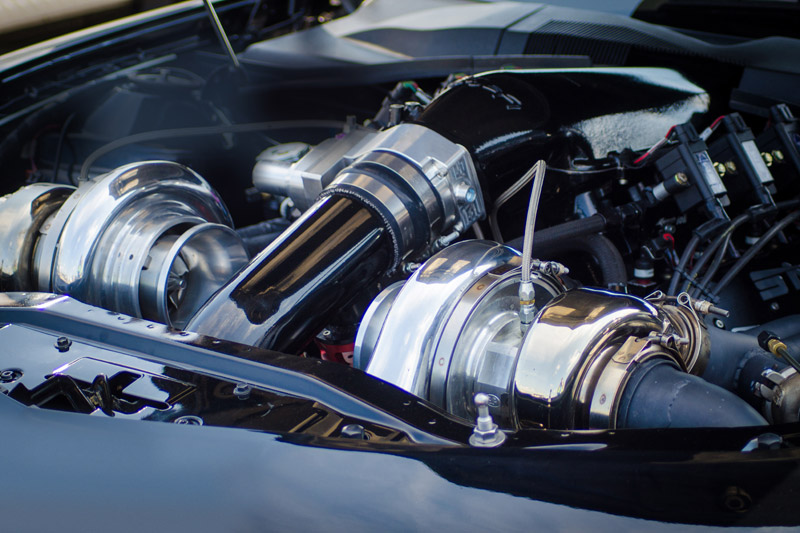
Turbocharger
To increase the efficiency and performance of modern combustion engines, exhaust gas turbochargers are increasingly being used today. The compressed air supply via the turbocharger increases the efficiency of engines and at the same time reduces emissions. At speeds of up to 300,0001 rpm, it is imperative that quality requirements are met, especially with regard to coaxiality and roundness. Extremely abrasive high-alloy materials, especially on the exhaust gas side (turbine side), demand maximum wear resistance from the cutting tools. If the tool life quantities for the various machining operations are increased by even just a few components, this has an enormous cost benefit for the manufacturer.
Highlight machining turbocharger housing:
- Internal contour machining
- Exhaust manifold connection machining
- Control pin bore
- Turbocharger housing connecting Surface
- Shoulder milling of surfaces
Highlight machining Impeller / vane wheel:
Hot side:
- Shaft bore
- Balancing surface
Cold side:
- Shaft bore
- Balancing surface
- Vane machining
- Rocker/toggle lever
-
Culbuteur / levier oscillant
Le contrôle très précis des soupapes d'admission et d'échappement est particulièrement important pour la puissance et l'efficacité des moteurs à combustion. Dans le secteur automobile, quatre soupapes sont généralement commandées par cylindre, deux d'entre elles contrôlant l'admission d'air frais ou de mélange air-carburant et les deux autres la sortie des gaz d'échappement. Selon la conception du moteur, les commandes de soupapes OHV et SOHC utilisent différents culbuteurs (à galets) afin de réduire au maximum les frottements et l'usure des pièces mobiles qui en découle. De plus, les rondelles de réglage intégrées permettent de régler et d'ajuster le jeu des soupapes afin de garantir un processus de combustion optimal et de prévenir d'éventuels dommages au niveau du moteur.
Principaux usinages :
- Alésage de palier
- Alésage d'ajustement
- Rail
-
Rail
Connu sous le nom de Common Rail dans les moteurs diesel, le carburant est désormais aussi injecté dans la chambre de combustion d'une voiture neuve à essence sur deux via des injections directes performantes. Le mélange air-carburant se forme dans la chambre de combustion. Cela permet d'obtenir des moteurs à essence plus puissants tout en réduisant la consommation de carburant et les émissions de gaz d'échappement. Les exigences croissantes relatives à la pression, qui peut atteindre 2 500 bar, sont déterminantes dans l'utilisation de matériaux modérément ou difficilement usinables, tels que l'acier moulé ou l'acier inoxydable.
Principaux usinages :
- Alésage central du rail
- Usinage d'injecteur / transmission injecteur
- Raccord haute pression
- Usinage des extrémités
- Vilebrequin
-
Vilebrequin
La forme de base du vilebrequin est déterminée en grande partie par le nombre de cylindres et la conception du moteur. Toutefois, les vilebrequins en acier, généralement forgés, doivent être de plus en plus légers pour réduire les émissions. Des opérations d'usinage supplémentaires sont donc nécessaires lors de la fabrication de ces composants déjà coûteux. Par ailleurs, du fait de l'augmentation des pressions de combustion générées par les moteurs modernes, le vilebrequin est en permanence soumis à des contraintes accrues de flexion et de torsion, ce qui implique des exigences de qualité plus élevées.
Principaux usinages :
- Perçage central d'allégement
- Alésage de rampes de graissage
- Usinage des extrémités
- Face and sealing surfaces
-
Face and sealing surfaces
Machining flat sealing surfaces in the combustion engine requires the utmost in dimensional accuracy, flatness and surface quality – often in dry conditions. MAPAL supplies high-performance face milling tools with maximum number of teeth, sturdy tool design and optimal chip removal. Whether roughing or finishing: The solutions are designed for cost-effectiveness, process reliability and component quality.
Case studies from the internal combustion engine sector
-
26.08.2025
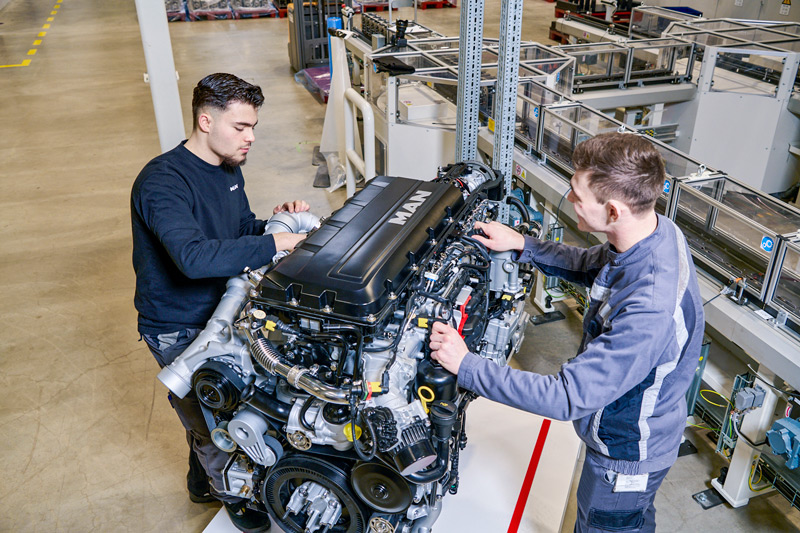
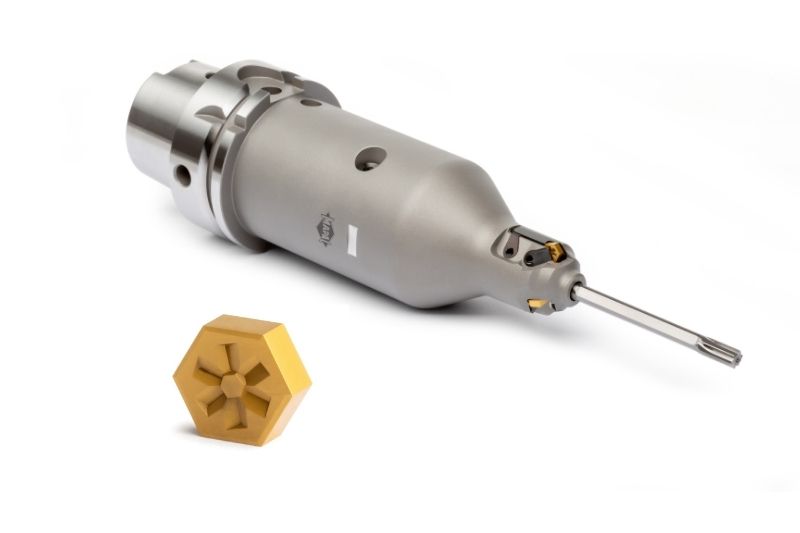
MAN uses MAPAL fine boring tools for machining cylinder heads
At MAN engines, fine boring tools from MAPAL are used to machine the valve guide and valve seat counterbores of cylinder heads."
#Boring #Technology #Industries #Automotive #Reaming&FineBoring
-
22.07.2025
Crankshaft and valve seat machining: MAPAL sets standards
Optimised machining of crankshafts and valve seats: MAPAL offers innovative tool solutions for modern combustion and hybrid engines.
-
16.01.2025
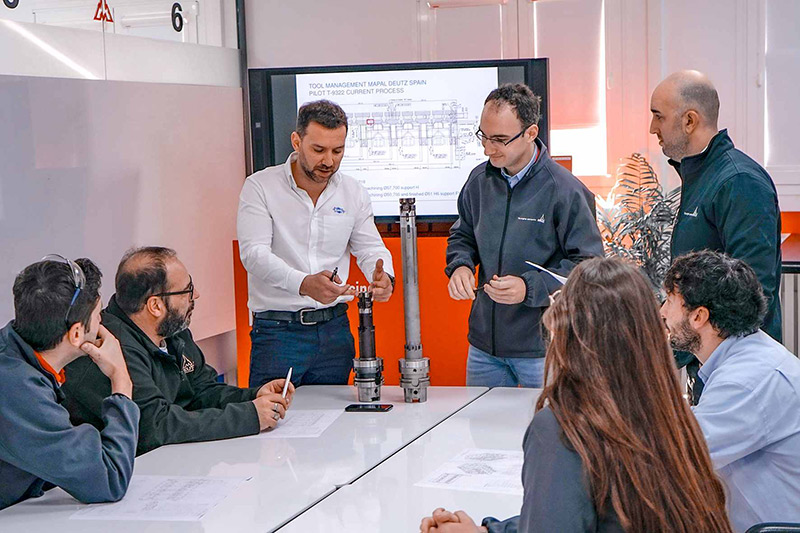
Tool management from MAPAL completed for DEUTZ in record time
MAPAL completed the entire engineering including tool design, cycle time study and cost calculation for the engine manufacturer Deutz in the Spanish plant in Zafra within a very short time.
#Produits #Industries #CaseStudies #Technology #Services #Automotive #Reaming&FineBoring
-
23.03.2023
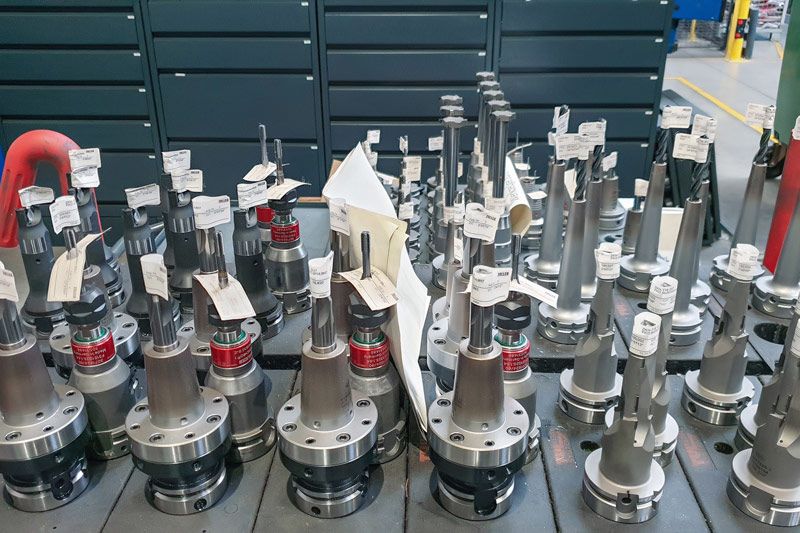
The production must go on
Digital tool management with more than 750 tools from MAPAL ensures smooth large-scale production at Schabmüller Automobiltechnik.
-
30.06.2022
Even more cost-effective turbochargers
How the complete machining of turbochargers becomes even more productive with indexable insert milling cutters from the NeoMill range.
-
09.12.2019
Highly precise machining of truck engine cylinder bores
High-precision MAPAL actuating tools and a special setting fixture ensure precise and economical production at Mercedes-Benz in Mannheim.