Obudowy do zasilania energią
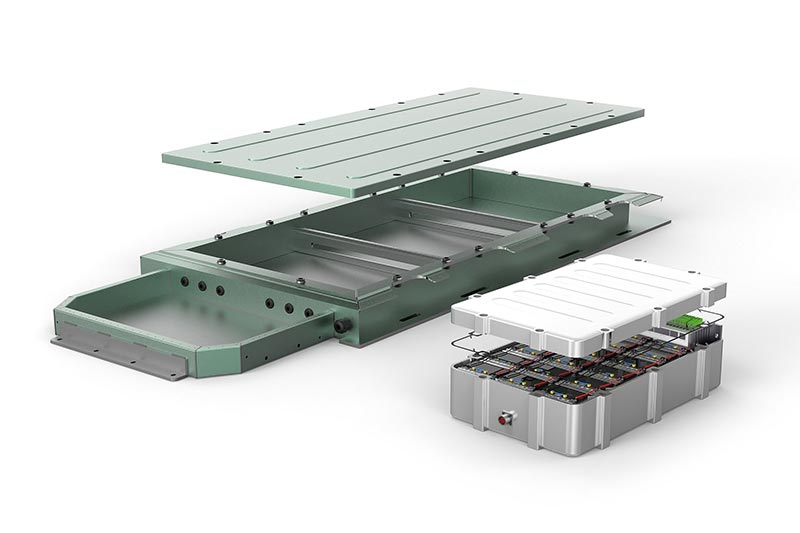
W celu ochrony elementów elektronicznych, takich jak system akumulatorowy lub elektronika mocy, przed wpływem czynników zewnętrznych oraz w celu zamocowania komponentów we wnętrzu pojazdu, aby zapewnić ich bezawaryjne działanie podczas eksploatacji pojazdu, stosuje się różne obudowy. Wymagania dotyczące obudów zależą od systemu elektronicznego i koncepcji napędu. Obecnie stosuje się różne materiały i procesy produkcyjne.
CECHY
- Niestabilne, cienkościenne elementy (podatne na wibracje)
- Konstrukcja w postaci odlewanej wanny lub konstrukcji ramowej z profili zamkniętych
- Częściowo aluminium o niskiej zawartości krzemu
- Duża powierzchnia (2 x 3 m)
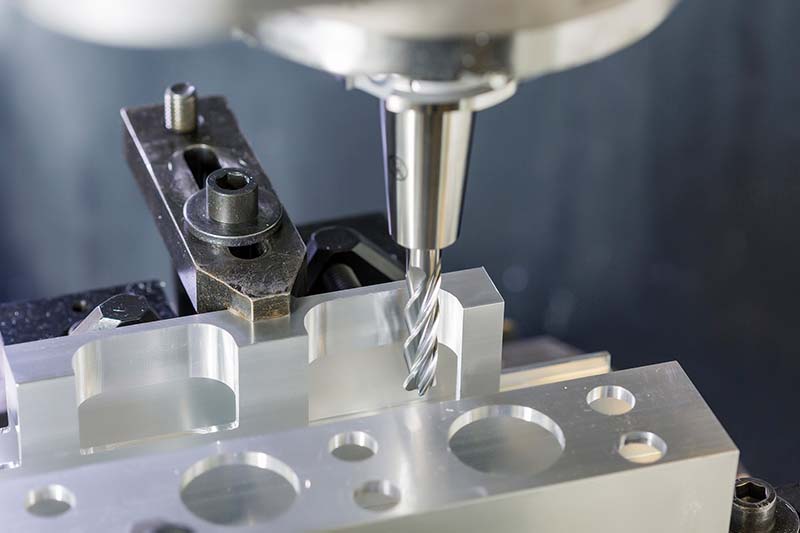
- Głównie operacje wiercenia i frezowania oraz gwintowania
- Wymagania dotyczące dokładności i powierzchni w przypadku przepustów kablowych i przyłączy chłodniczych


Przegląd narzędzi
-
 1 / 9
1 / 9Standard programme for the machining of aluminium structural parts
- Highly positive cutting edge geometry
- Reduced cutting forces
- Low vibration cut
-
2 / 9
OptiMill-SPM-Rough
- Low vibration roughing with deep cutting depth
-
3 / 9
OptiMill-SPM
- Ideal for making openings or pockets
- Solid carbide design or with brazed PCD cutting edges
-
4 / 9
OptiMill-SPM-Finish
- Finishing of great depths in one go
- Strong performance with high wraps
-
5 / 9
Tritan-Drill-Alu
- Creation of core holes
- Three cutting edges for the highest feed rates
- Highest positioning accuracy through self-centring cross cutting edge
-
6 / 9
MEGA-Drill-Alu
- Solid carbide drill
- Drilling with lower cycle time
- Focus on chip formation
- Effective drilling processes with a larger number of equal diameters
-
7 / 9
FaceMill-Diamond-ES
- PCD face milling cutter
- Roughing and finishing of face surface
- Machining face surfaces with different stock removal using a single tool
- Roughing and finishing operations possible
-
8 / 9
OptiMill-Diamond-SPM
- PCD milling cutter
- Circular milling operations of various diameters and surfaces
- Less tool changes thanks to flexible tool deployment
-
9 / 9
OptiMill-Alu-HPC-Pocket
- Corner milling cutter
- Pocket milling of aluminium materials
- Optimum chip removal
- Optimum stability


-
1 / 5
PCD milling cutter overview
-
2 / 5
PCD milling cutter with alternately arranged cutting edges
- Low cutting forces over the entire machining depth
-
3 / 5
Spiralled PCD milling cutter
- Finishing of thin-walled structures
-
4 / 5
PCD Helix milling cutter
- Trimming with a large cutting depth
-
5 / 5
PCD face milling cutter
- Face milling for a cutting depth of up to 10 mm
- Creation of defined surface profiles for sealing and contact surfaces


Case studies from the energy supply sector
-
03.11.2022
Ekonomiczna obróbka za pomocą robotów
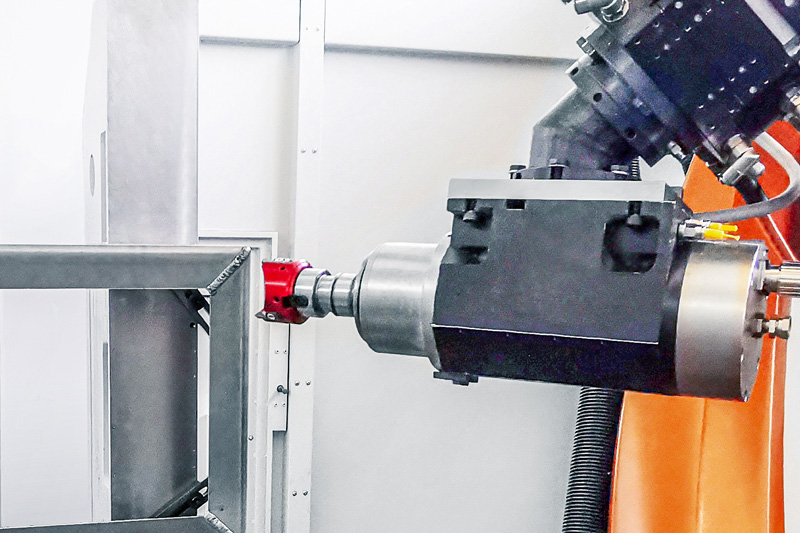
Trójostrzędowy FlyCutter firmy MAPAL idealnie nadaje się do gratowania pojemników akumulatorowych. Producent robotów KADIA jest zachwycony frezem z płytkami PKD.
-
11.05.2023
Strategia dotycząca ramki baterii
Eksperci ds. elektromobilności w MAPAL skonstruowali przykładowy element, który obejmuje główne operacje obróbki ramy akumulatora.
-
12.07.2023
Frezowanie zamiast wiercenia
Dlaczego frezowanie zamiast wiercenia może być sensowną alternatywą? MAPAL pokazuje, jak osiągnąć większe bezpieczeństwo procesu i skrócić czas obróbki.