Gehäuse für die Energieversorgung
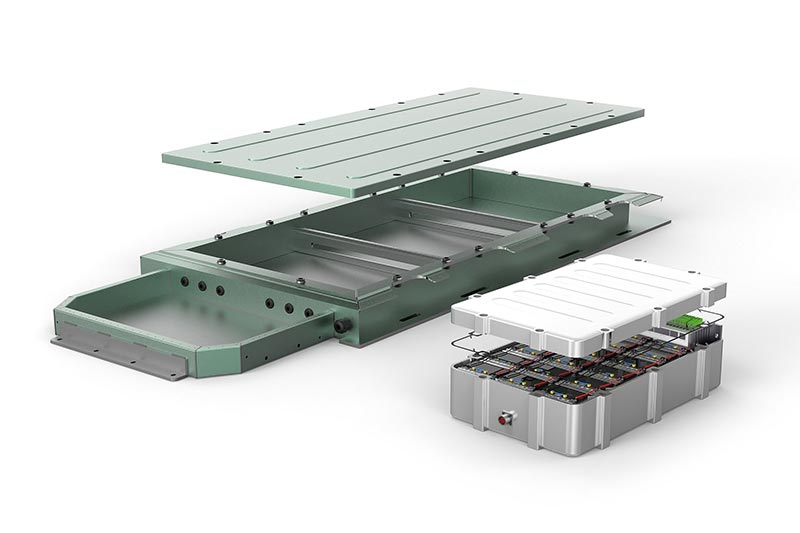
Für den Schutz elektronischer Bauteile, wie beispielsweise Batteriesystem oder Leistungselektronik, vor äußeren Umwelteinflüssen und zur Fixierung der Komponenten im Innenraum, um deren störungsfreie Funktion während des Fahrzeugbetriebes zu gewährleisten, werden unterschiedliche Gehäuse eingesetzt. Die Anforderungen an die Gehäuse sind abhängig vom elektronischen System und Antriebskonzept. Aktuell kommen unterschiedliche Werkstoffe und Fertigungsverfahren zum Einsatz.
MERKMALE
- Labile, dünnwandige Bauteile (vibrationsanfällig)
- Aufbau als gegossene Wanne oder als Rahmenkonstruktion aus Hohlprofilen
- Teilweise niedrig-siliziumhaltiges Aluminium
- Großflächig (2 x 3 m)
- Hauptsächlich Bohr- und Fräsoperationen und Gewinden
- Genauigkeits- und Oberflächenanforderungen bei Kabeldurchführungen und Kühlanschlüssen


Resumen de herramientas
-
 1 / 9
1 / 9Programme standard pour l'usinage de composants structurels en aluminium
- Géométrie de coupe très positive
- Réduction des forces de coupe
- Coupe à faible vibration
-
2 / 9
OptiMill-SPM-Rough
- Ébauche à faible vibration et grande profondeur de coupe
-
3 / 9
OptiMill-SPM
- Idéal pour la réalisation de percées ou de poches
- Conception en carbure monobloc ou PCD brasé
-
4 / 9
OptiMill-SPM-Finish
- Schlichten von großen Tiefen in einem Zug
- Starke Performance bei hohen Umschlingungen
-
5 / 9
Tritan-Drill-Alu
- Herstellung von Kernlochbohrungen
- Drei Schneiden für höchste Vorschübe
- Höchste Positioniergenauigkeit durch selbst zentrierende Querschneide
-
6 / 9
MEGA-Drill-Alu
- VHM-Bohrer
- Bohren mit geringer Zykluszeit
- Fokus auf Spanbildung
- Effektive Bohrprozesse bei größerer Anzahl an gleichen Durchmessern
-
7 / 9
FaceMill-Diamond-ES
- PKD-Planfräser
- Schruppen und Schlichten von Planflächen
- Planflächen mit unterschiedlichem Aufmaß mit einem Werkzeug bearbeiten
- Schrupp- und Schlichtoperationen möglich
-
8 / 9
OptiMill-Diamond-SPM
- PKD-Fräser
- Zirkulare Fräsoperationen verschiedener Durchmesser und Flächen
- Reduktion der Werkzeugwechsel dank flexiblem Einsatz des Werkzeugs
-
9 / 9
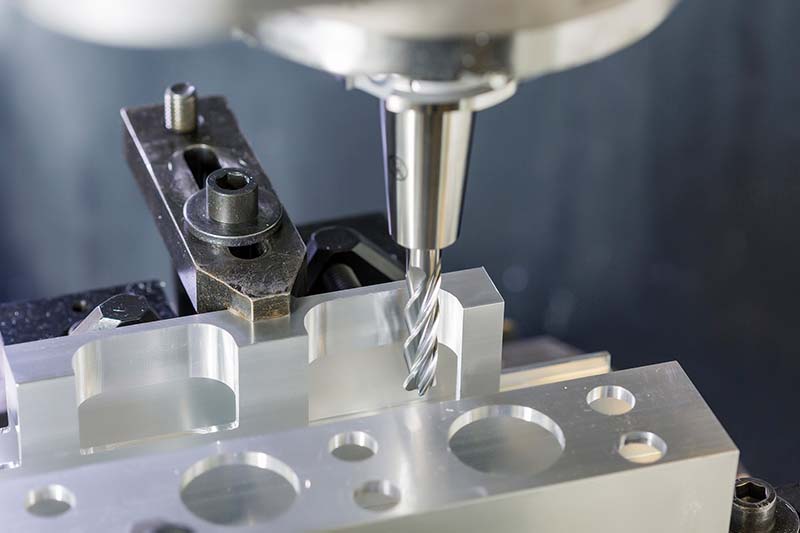
OptiMill-Alu-HPC-Pocket
- Eckfräser
- Taschenfräsen von Aluminiumwerkstoffen
- Optimaler Abtransport der Späne
- Optimale Stabilität


-
1 / 5
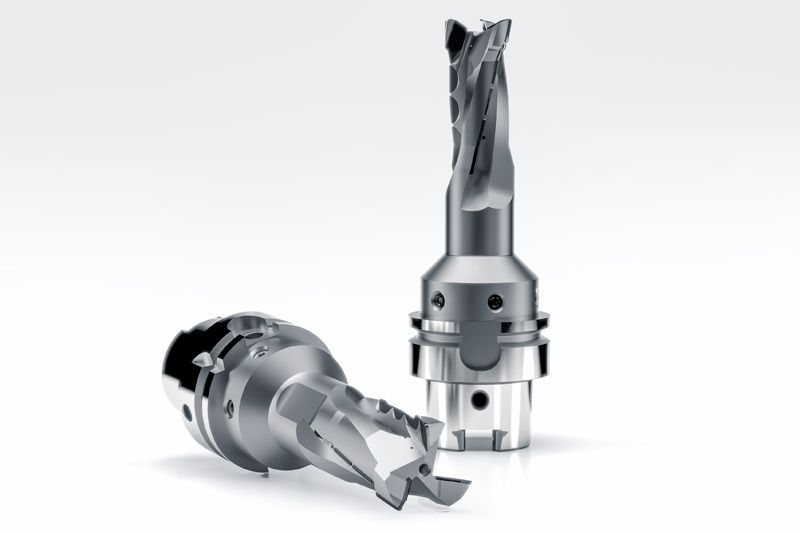
PCD milling cutter overview
-
2 / 5
PCD milling cutter with alternately arranged cutting edges
- Low cutting forces over the entire machining depth
-
3 / 5
Spiralled PCD milling cutter
- Finishing of thin-walled structures
-
4 / 5
Fraise hélicoïdale en PCD
- Détourage avec grande profondeur de coupe
-
5 / 5
Fraise à planer en PCD
- Surfaçage avec profondeurs de coupe allant jusqu'à 10 mm
- Génération de profils de surface définis pour les surfaces d'étanchéité et de contact


Case studies from the energy supply sector
-
03.11.2022
Efficient deburring with robots
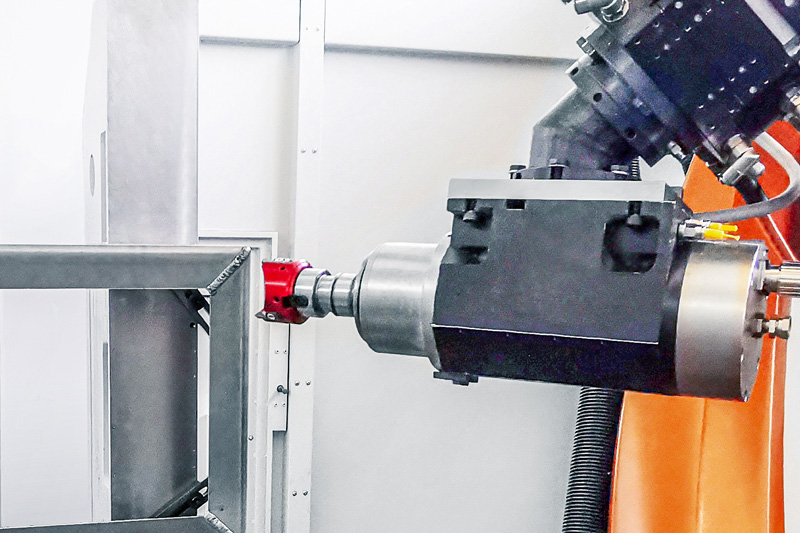
The FlyCutter from MAPAL is ideally suited for deburring battery trays. Robot manufacturer KADIA is enthusiastic about the PCD-tipped milling tool.
-
11.05.2023
A strategy for battery frames
MAPAL’s electric mobility experts have designed a generic component that encompasses the main machining operations of a battery frame.
-
12.07.2023
Milling instead of drilling
Why milling instead of drilling can be a sensible alternative? MAPAL shows how higher process reliability and shorter machining times can be achieved.