23.11.2022
Sights set firmly on supply chains and key components
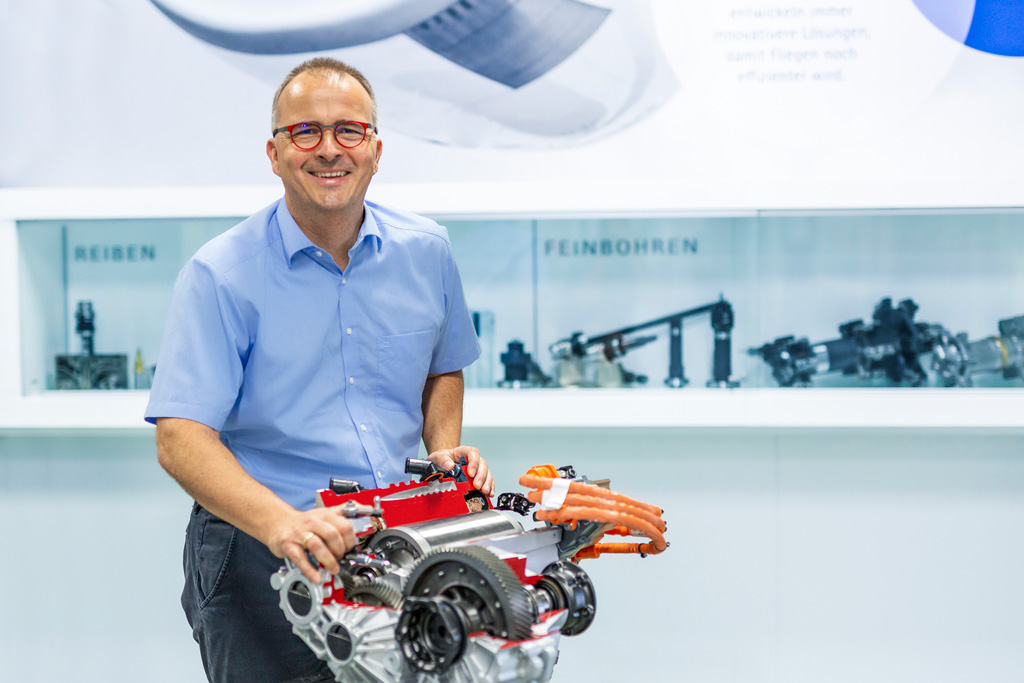
An interview with Matthias Winter, Global Head of Segment Management Automotive
MAPAL is joining the automotive industry on its path to electric mobility, confirms Matthias Winter, Global Head of Segment Management Automotive, in an interview. In his view, success requires an in-depth understanding of how parts function and the knowledge of where the components are made.
In the automotive industry, the transition to the electric vehicle is well under way. What does MAPAL’s strategy for electric mobility look like?
MAPAL wants to be number one in electric mobility too – that’s our clear strategy. To do this, we mustn’t just focus on our tools – we have to move with the shift in the automotive industry. We examine the individual regions, as the pace of changes in the market varies dramatically from region to region. We use this to come up with forecasts to help us adapt our business accordingly and take a focused approach. The common thread is to proceed from the market to the components and finally to the necessary solutions. We want to get to know the new parts in detail and understand their function or key aspects so we can go in the relevant direction with our machining solutions.
Does MAPAL need to position itself differently to do this?
We will adapt our organisation in the automotive segment in line with the changes. That doesn’t necessarily mean that we have to change completely, but we do need to take into account the fact that new players are entering the market and there may also be changes in the supply chain where the parts are ultimately produced. Accordingly, we also have to optimise our global network, both in terms of expertise as well as here and there in the organisation. To achieve that, we focus on internal and external communications. We provide our own employees with the relevant information via the network, but we also communicate outwardly that MAPAL is the right partner for this transition in the automotive business. As ever, our aim is to act as technology partner for the automotive industry.
How is the market developing?
Based on forecasts, we assume that battery-powered electric vehicles will attain a market share of around 30 percent by the end of the decade. The proportion of vehicles with combustion engines is gradually decreasing. Electric vehicles are already set to overtake combustion engines in Europe by 2029. Some manufacturers have made relatively large inroads, while others still face a bit of a learning curve. We aren’t seeing a design freeze yet. Developments are continuing. As such, there’s a certain variety in the design of drives and other systems.
What are the regional differences?
Worldwide, by 2029, there is set to be seven times as many battery-powered electric vehicles as there were in 2021, at around 30 million vehicles produced per year. However, on a regional level, change is occurring at different rates. The European market is predicted to grow to ten times its size, i.e. to over 10 million. That would be almost on a par with China. We’re also expecting strong growth in Asia outside China with strong production markets in South Korea, Japan and India, and of course the US market is transforming too.
What does this mean for the tool market?
The distribution of machining between the combustion engine, electric drive, chassis, brakes and driveline, i.e. everything from the clutch to the wheel, will change dramatically in the next few years. Our strategy is to maintain our existing combustion engine business and expand it in some countries if possible. We’ll continue to invest in the chassis and brakes business, as ultimately, electric vehicles do need to be steered, braked and have a suspension too.
“We mustn’t just focus on our tools – we have to move with the shift in the automotive industry.“
During the transition to the electric car, can we expect more innovations in combustion engines?
Combustion engines won’t die out overnight. Their efficiency is still being improved. They will remain an issue in many countries for a long time to come – even beyond Europe’s target limit of 2035. Accordingly, aspects such as downsizing and turbocharging will continue to play a role in modern combustion engines, but it will largely be possible to cover production in existing facilities with appropriate re.tooling projects.
New technology means new players on the market. How can they be reached?
Around 80 percent of battery-powered electric vehicles will come from the well-known automotive manufacturers. We’re focusing more and more on the supply chain. Knowing where the parts come from is essential for our business. Industry is increasingly assigning tasks to component suppliers at tier 2 or tier 3 level. If automotive manufacturers don’t have their own systems capability in specific areas, tier 1 suppliers handle the relevant production. For the electric drive, I presume these suppliers will play a major role in future. We have to understand the entire supply chain to make ourselves known to new players here. Of course, we also need to watch what’s going on with our existing customers.
Complex tools for highly efficient production of specific parts are MAPAL’s major strength. Are they also in demand for electric vehicles?
Our entire product range is used in e-mobility as well. As a lot of aluminium is machined and the proportion of it used is also on the increase, our PCD tools are utilised a great deal. For MAPAL’s guide pad technology for ultra-precise bores, we’re finding areas of application, particularly in the motor. Our insert and shank tools are also used for milling and drilling. We are able to contribute our entire portfolio and also offer project management for complete parts as usual.
Does MAPAL focus on specific parts?
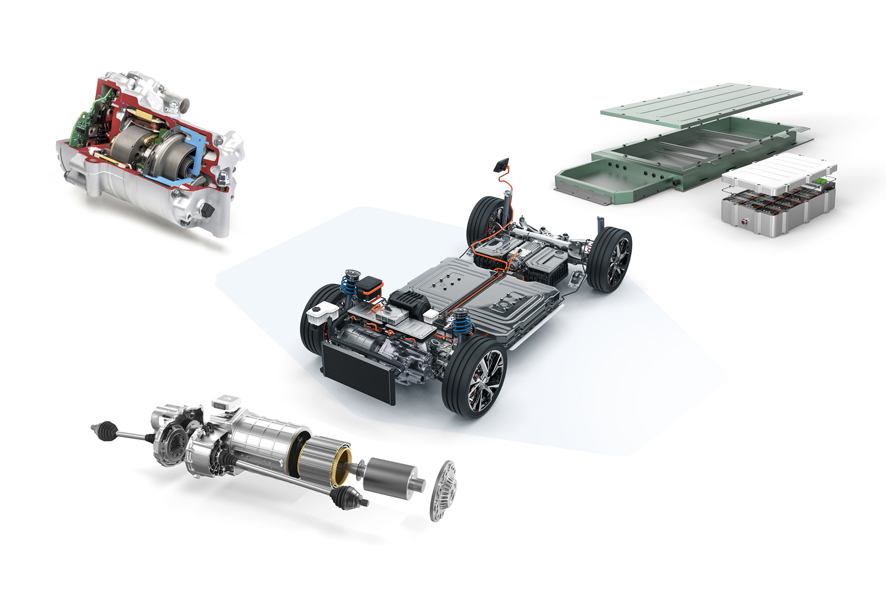
When manufacturing a component, you have to master the key features, otherwise your component expertise is clearly lacking. The parts we have chosen to focus on have a specific machining volume and specific machining requirements. And we also have to be able to develop them with our technology. These parts are found in drives, in energy supply including energy handling and in thermal management. MAPAL tools are used to produce parts such as stator housing for electric motors, battery frames and parts for the scroll compressor.
What are the special challenges of electric mobility for tool manufacturers?
Tolerances in e-mobility can be even tighter than those for current parts. One reason for this, for instance, is the narrow but constant air gap required between rotor and stator, which is necessary for the efficiency of the electric motor. That requires an exact concentricity between these parts. Transmissions in electric vehicles may be comparatively simpler, but the gears must mesh at the optimal operating point, because any incorrect alignment would be immediately audible. In addition, the drive stages are exposed to unusually large forces, especially during recuperation. This leads to high shape and position tolerances which are required in manufacturing. In some areas they are within a range of just a few µm.
Will the move to e-mobility entail switching production to minimum quantity lubrication?
We have already implemented MQL projects. Whether there will be another push towards completely dry production due to e-mobility and the increasing importance of sustainability remains to be seen. We are also technically capable of implementing this in series production with our tools.
E-mobility doesn’t just mean cars. Is MAPAL involved in making electric bikes too?
Yes, although I’d tend to call this micromobility. It also includes electric scooters or rickshaws and similar vehicles in Asia. Standards for accuracy in the key bores and functional surfaces are often comparable with those for cars. In the premium segment, magnesium die-cast housings are sometimes also used in e-bikes. Here, the material properties pose an additional challenge for machining.
What can we expect from MAPAL next in the area of e-mobility? What are you working on at the moment?
As in electric mobility, there’s no design freeze in our portfolio of solutions either. With every project, we learn more and develop our tool solutions further. Always with the ambition of being number one, especially in the case of key components.

Contact
Kathrin Rehor Public Relations Kathrin.Rehor@mapal.com Phone: +49 7361 585 3342