Internal and External Machining of the Stator Housing
With increasing numbers of electric vehicles, not only very precisely manufactured parts are required, but also the most efficient production possible. One part that is particularly demanding in terms of machining is the motor housing for the electric motor. MAPAL has already established a three-stage solution for machining the stator bore. The precision tool manufacturer now presents a large tool for external machining.
Three-stage solution for the stator bore
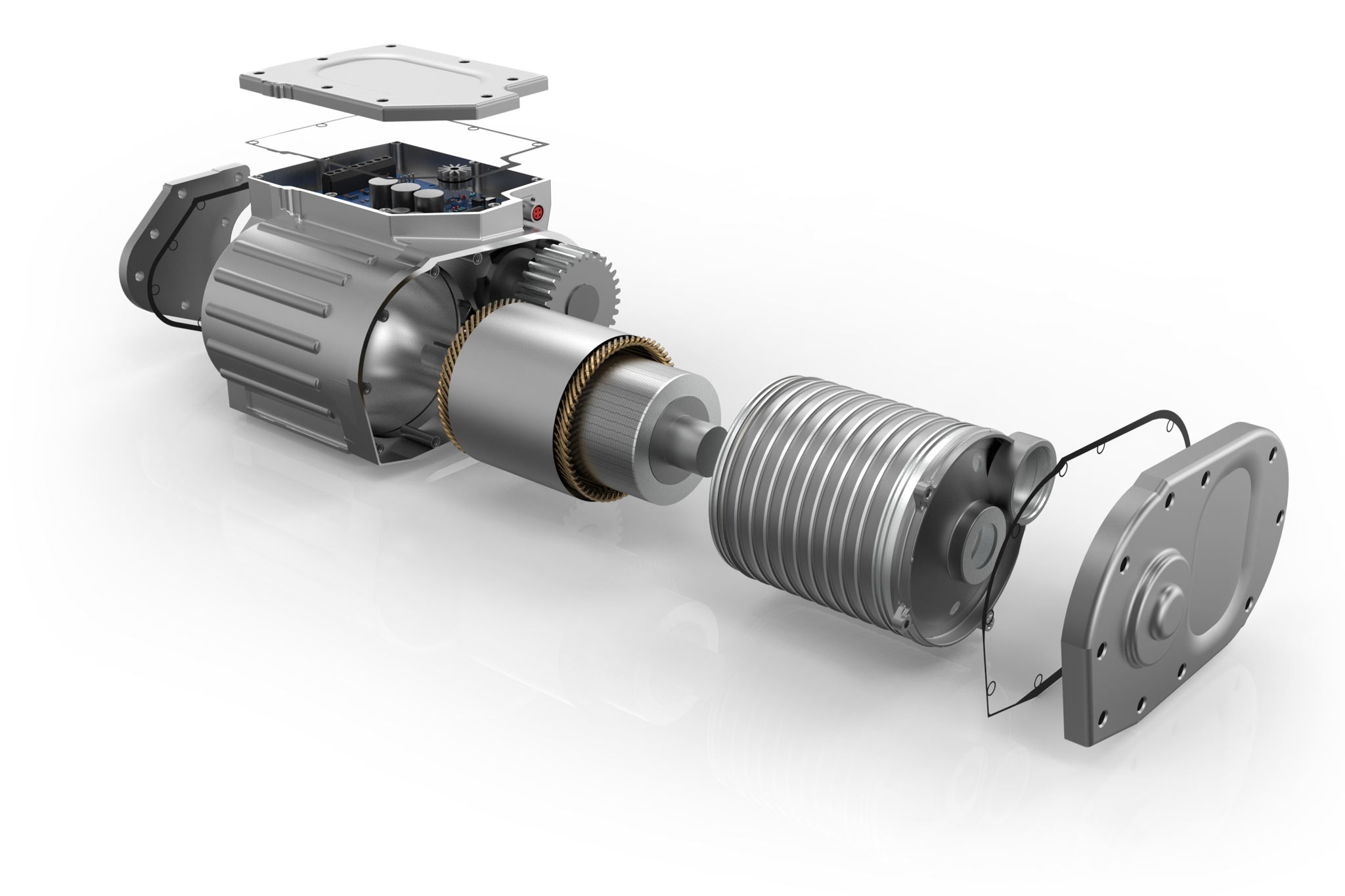
In the pot-shaped version of the motor housing, the stator carrier housing is inserted into the main housing as an intermediate housing. Typical diameters for the thin-walled aluminium part are between 200 and 240 mm on the inside and between 240 and 260 mm externally. Concentricity of the various bearing and mounting diameters is critical to the performance of the electric motor, which requires very precise machining within tight tolerances.
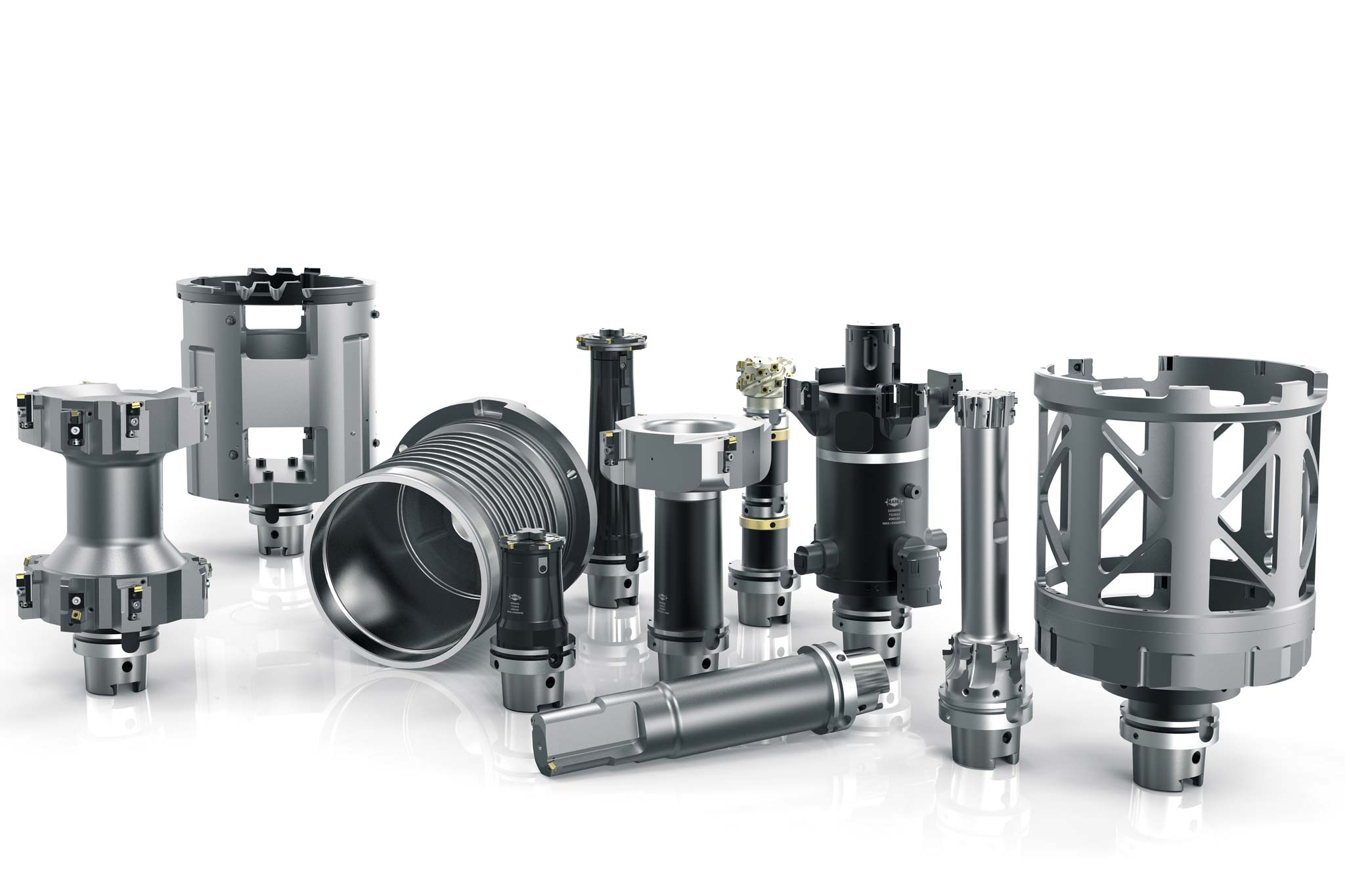
The first of three steps for machining the stator bore is pre-machining with a boring tool. The blank has casting bevels that result in cutting depths of up to 6 mm to be removed. For this purpose, special indexable inserts with a supporting arc shaped land are used to avoid vibrations. This also ensures that small chips are produced, which can be easily removed. In the subsequent semi-finish machining, the complex contour path of the electric motor housing is pre-machined in such a way that the complete fine machining with chamfers and radial transitions can be produced to μm accuracy with the finishing fine boring tool. The tools are individually designed for the respective customer depending on the stock situation, machinery and clamping setup. Different steps in the housing are taken into account with the cutting-edge positions of the tools, as are cast-in or pressed-in steel bushings for bearings. While the majority of the workpiece is machined with PCD, carbide cutting edges are used for the steel area.
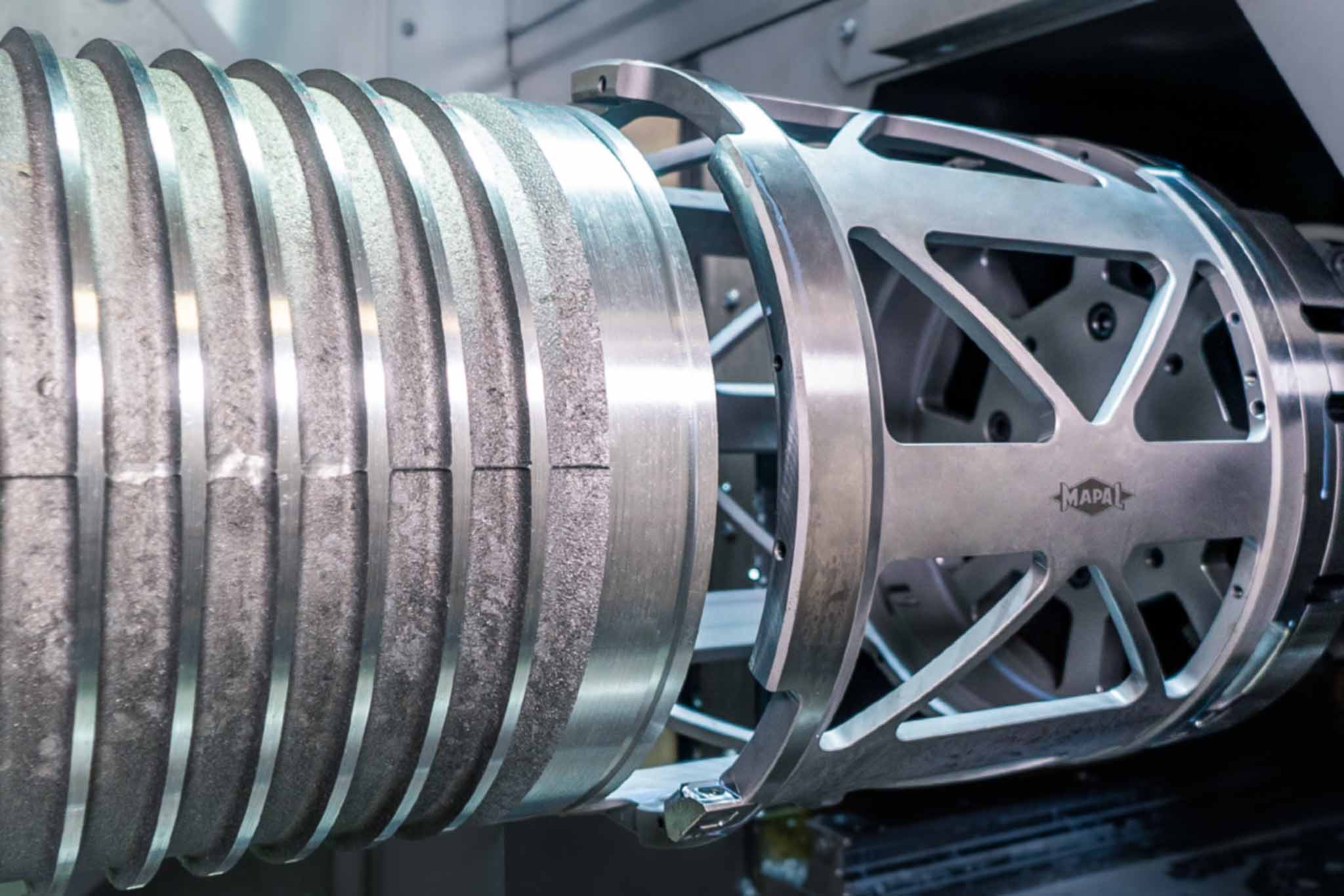
Außen ist das Bauteil mit einer spiralförmig umlaufenden Nut versehen. Nach dem Einsetzen in das äußere Gehäuse fließt durch diese Nut das Kühlmittel. Daher wird der Statorträger auch als "Cooling Jacket" bezeichnet. Zur EMO in Mailand stellt MAPAL neue, außergewöhnliche Außenbearbeitungswerkzeuge vor. Nach der Vorbearbeitung übernimmt ein Glockenwerkzeug das komplette Finish der Außenseite. Das speziell konstruierte Leichtbauwerkzeug ist mit Schneidplatten und Führungsleisten versehen und weist an strategischen Stellen Stege auf, um möglichst viel Gewicht zu sparen und durch große Öffnungen die Späne abführen zu können. Das Feinbearbeitungswerkzeug verspricht hohe Rundheit und Genauigkeit.
Komplettbearbeitung auf Bearbeitungszentrum
Die Innenbearbeitung ist mit den Bohrwerkzeugen sehr schnell und präzise möglich. Zusätzlich kann in der gleichen Aufspannung, ohne zu verfahren, auch die Außenseite bearbeitet werden. Mit der Lösung für Bearbeitungszentren wird zudem Kunden Rechnung getragen, welche die Transformation zur E-Mobilität mit einem vorhandenen Maschinenpark mitmachen, der auf die Bearbeitung großer kubischer Aluminiumgehäuse ausgerichtet ist.
Eine alternative Bearbeitungslösung hat MAPAL gemeinsam mit einem Maschinenhersteller entwickelt. Dabei wurde der Prozess um 90 Grad gedreht, um ihn auf vertikalen Drehmaschinen einzusetzen.
Der neue MEGA-Deep-Drill-Alu bearbeitet die gesamte Bandbreite an Aluminiumwerkstoffen prozesssicher und setzt bei Bohrtiefen bis 40×D einen neuen Benchmark.
MAPAL zieht positive Bilanz zur AMB 2026: Intensive Fachgespräche, innovative Lösungen und Präsenz bei Partnern und im Rahmenprogramm prägten den Auftritt.