Major progress in external reaming of turning workpieces
Rapid and secure tool setting with EasyAdjust-System
Mass production of precise turning workpieces on multi-spindle automated lathes is subject to its own rules. The highest component quality only guarantees admission to the competition. In a hotly contested market, every tiny opportunity for cost reduction must be taken. Optimum machine use therefore requires optimum tools. The example shown here illustrates the importance of assistance from an innovative tool manufacturer.
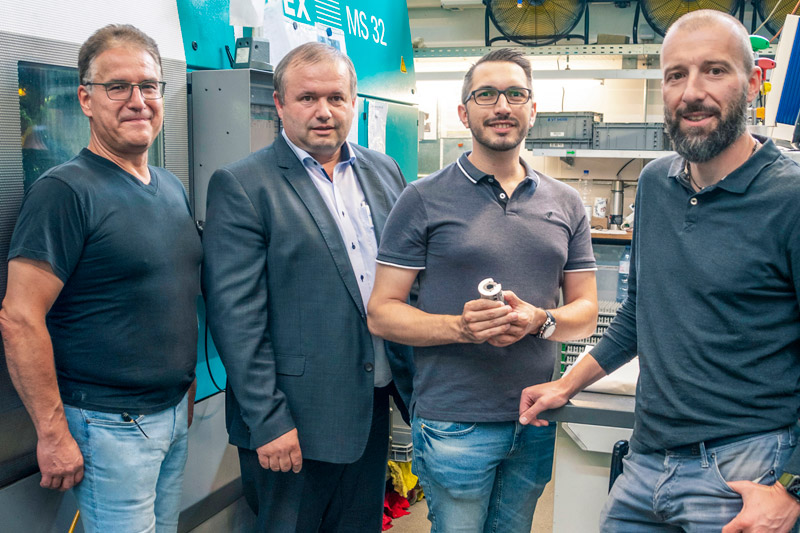
“We’re part of MSMgroup, a group of companies specialising in magnetic actors and sensors, now in its fourth generation as an owner-run business, with around 2,700 employees worldwide,” says Alexander Hildt, Head of Manufacturing at W. E. Schultz GmbH in Oberrindal (Switzerland). The company plant, in its idyllic rural surroundings, specialises in producing turning workpieces in large quantities. The components produced are intended for electromagnetic assemblies such as solenoid and switching magnets, magnet valves or sensors and actuators in a wide range of different fields of application. The company proudly points to components used to control a mini helicopter for a NASA mission to Mars.
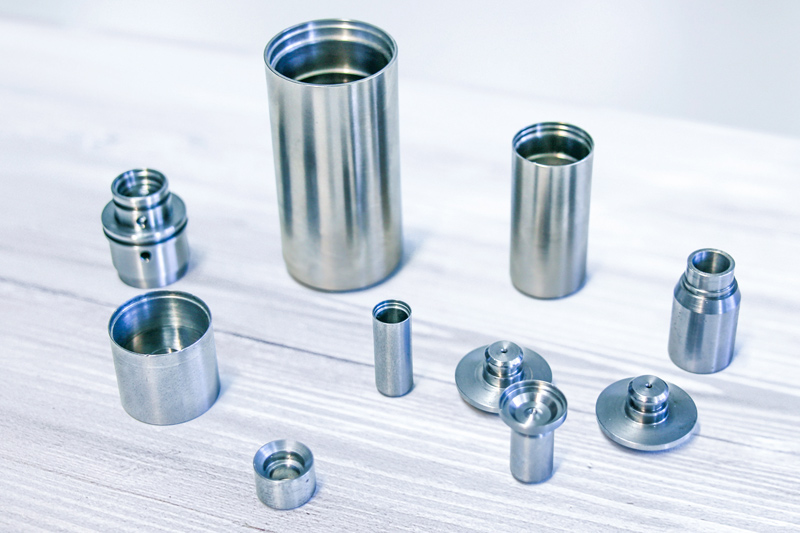
However, its everyday work involves mass production of ultra-precise parts by turning. These parts serve as the starting material for producing assemblies in the group’s plants around the globe. End users come from industries such as the automotive industry, aerospace and machine and system engineering.
“As a true mass producer of comparably simple parts, we have to be able to compete in terms of price and quality with competitors from Asia here in Switzerland,” says Alexander Jaksch, Deputy Head of the Turning Shop. Accordingly, the business must take advantage of every little opportunity to improve productivity, parts quality or economic efficiency. A key lever in this is the support of external partners such as suppliers of tools used. “Ultimately, the tools for a machine tool are as important as the tyres on a car,” says Jaksch. A decisive factor in the machine tool’s performance is also what happens in the contact area between the cutting edge and the part. That’s why W. E. Schultz only uses tools for every workpiece that have been carefully optimised for this machining task. The potential that can be tapped into here has been demonstrated to decision-makers at W. E. Schultz by a custom tool developed and subsequently optimised by MAPAL.
A turning workpiece that’s not as simple as it looks
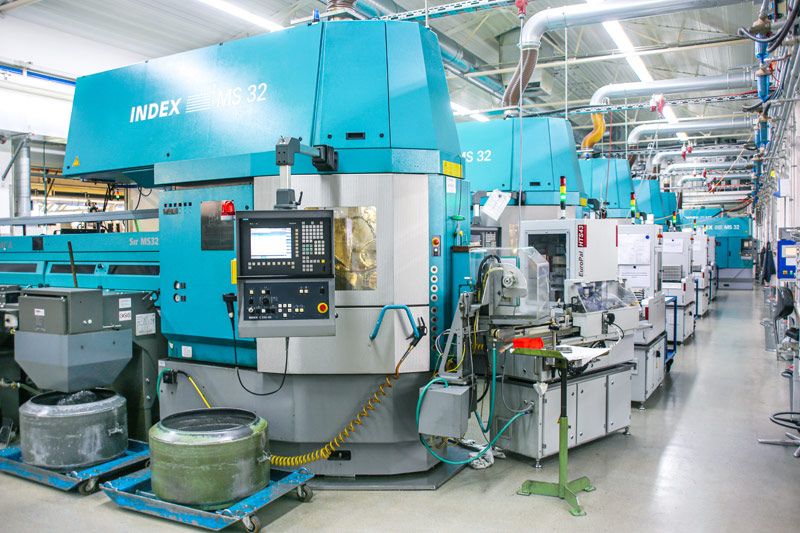
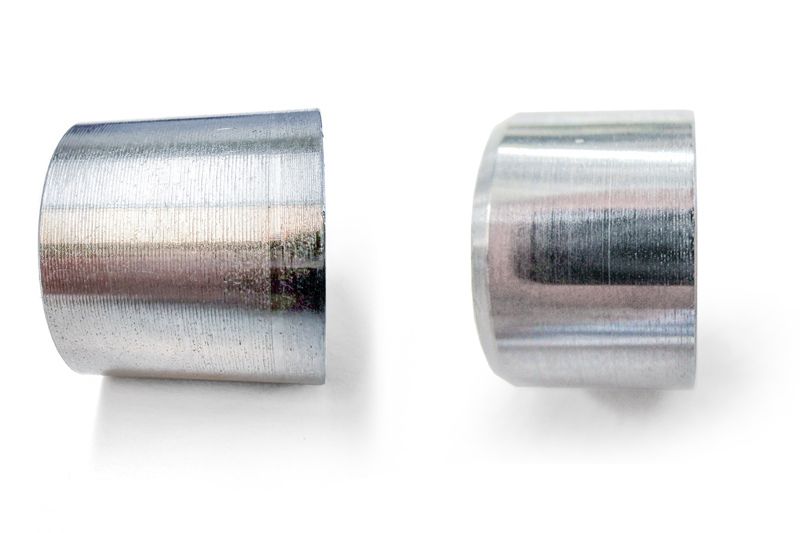
„Bei diesem Projekt ging es um ein vordergründig eher einfach anmutendes Bauteil, eine aus dem Vollen gedrehte Buchse mit einem Durchmesser von knapp 15 mm und einer Länge von 10 mm“, sagt Emil Hugentobler, der als Maschineneinrichter im Oberrindaler Werk beschäftigt ist. Das Teil wird in Stückzahlen von jährlich rund einer Million hergestellt und kommt im Verstellmechanismus eines modernen PKW-Stoßdämpfersystems zum Einsatz. Es wird wirtschaftlich auf einem bereits etwas in die Jahre gekommenen Mehrspindel-Drehautomaten hergestellt. Allerdings gibt es hierbei zwei entscheidende Knackpunkte, und zwar zum einen bezüglich der engen Durchmessertoleranz von 14,7 mm +12/-2 µm und zum anderen wegen der außergewöhnlich geringen Oberflächenrauheit von lediglich Rz = 6 µm. Beide Vorgaben sind mit dem eingesetzten 30 Jahre alten Drehautomaten eigentlich nicht mehr darstellbar. Normalerweise müsste eine solche Feinbearbeitung durch Schleifen umgesetzt werden.
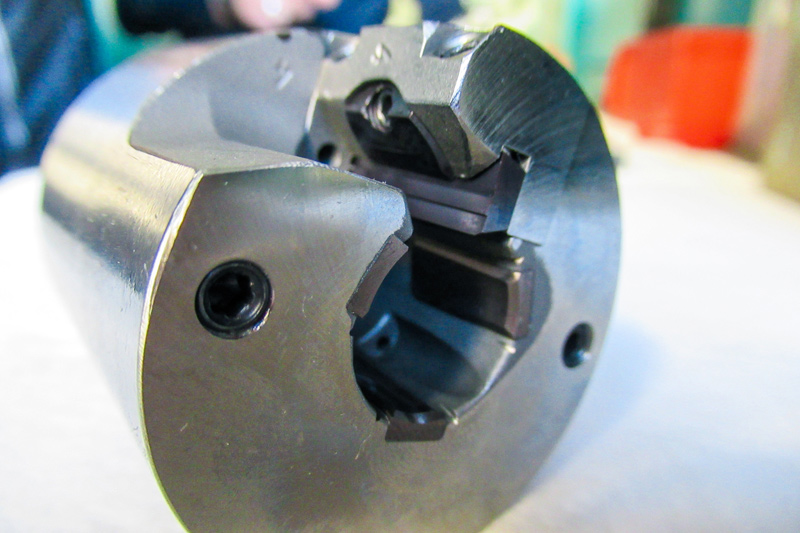
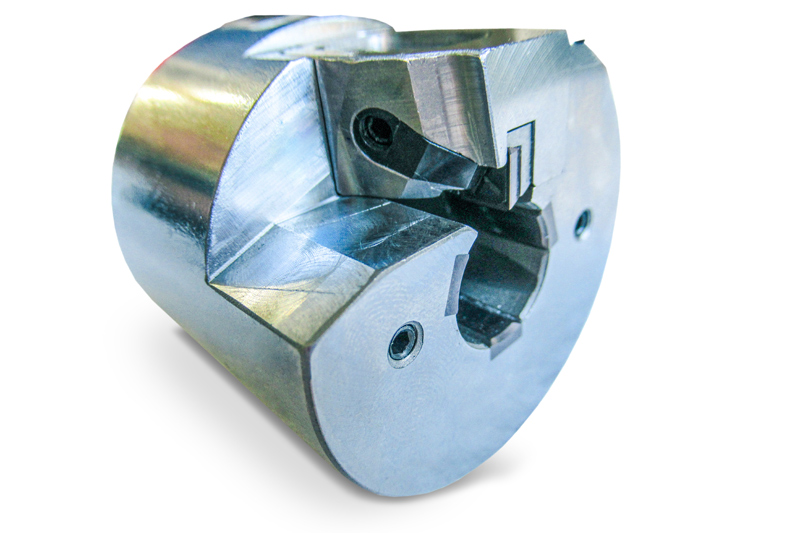
“In this situation we became aware of MAPAL’s external reamers, particularly a custom tool for external reaming,” recalls Alexander Hildt. The external reamer is equipped with three guide pads and an adjustable indexable insert. The key advantage of this solution is that the outer dimensions of the workpiece are represented by the inner dimensions of the tool. Machine-related influencing factors such as increased play in the machine kinematics or the bearing of the spindle or chuck, on the other hand, are practically irrelevant. The tool made it possible to reliably guarantee the required properties and to fulfil the production task satisfactorily.
„Allerdings gibt es in der Welt kaum etwas Gutes, das bei näherem Hinsehen nicht doch noch Wünsche offenlassen würde“, sagt Alexander Jaksch. Das neue Werkzeug funktionierte im Einsatz hervorragend. Allerdings ergaben sich aufgrund seiner Konstruktion gewisse Herausforderungen beim Einstellen der Schneidplatte nach einem Wechsel beziehungsweise beim Nachstellen, wenn das gewünschte Maß aus dem Toleranzbereich herauszulaufen drohte. Der zuständige Mitarbeiter führte die Schneidplatte zum Klemmen in das Werkzeug ein und justierte dort. Dazu musste ein Messtaster in den Innenraum des Werkzeugs eingefahren und an den Führungsleisten „abgenullt“ werden. Anschließend wurde der Taster auf die Schneide gefahren, um ganz innen den gewünschten Überstand und am Außenrand die Verjüngung einzustellen, und zwar beides mit einer Genauigkeit im µm-Bereich. Erschwert wurde dies durch die im engen Werkzeughohlraum stark eingeschränkte Sicht. Eine Verbesserung der Handhabbarkeit bei der Werkzeugeinstellung stand daher ganz oben auf der Wunschliste der Mitarbeiter.
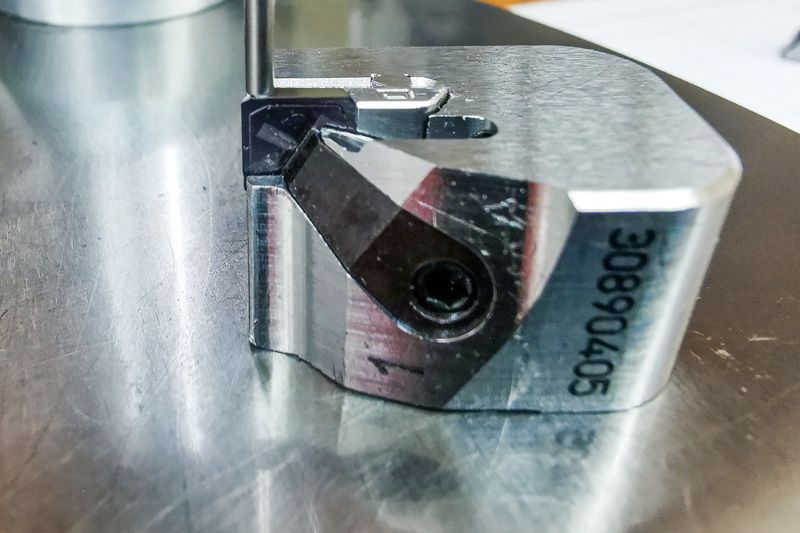
„Anfang 2019 kam unser Technischer Berater von MAPAL mit einer Neuentwicklung auf uns zu“, erinnert sich Emil Hugentobler. Das neue Werkzeug zum Außenreiben ist mit dem EasyAdjust-System ausgestattet. Bei der Lösung zur Außenbearbeitung kleiner Durchmesser wird die Schneidplatte extern in einer Kassette befestigt und auf einfachste Weise mit einer Messuhr eingestellt. Beim EasyAdjust-System bildet die Auflagefläche in der Kassette direkt den Verjüngungswinkel der Nebenschneide ab, sodass nur noch der Durchmesser manuell eingestellt werden muss. Die Einstellung wird dadurch so einfach und sicher, dass sie von jedem Mitarbeiter mit wenigen Handgriffen erledigt werden kann. Danach muss die Kassette nur noch ins Werkzeug eingesetzt und befestigt werden – fertig.
The new solution is particularly economical for W. E. Schultz, too, as Patrick Di Cataldo, Technical Consultant at MAPAL, highlights. Instead of the previous WP inserts with only one cutting edge, significantly cheaper TEC indexable inserts with four cutting edges are now used. Thanks to the higher number of cutting edges, the TEC insert achieves four times the tool life. “This solution reduced our cutting costs to around 25 percent and our set-up costs to as little as around 10 percent of the previous values,” says Alexander Jaksch with visible satisfaction.
In der aktuellen Ausgabe des Technologie-Magazins IMPULSE geht es neben der Verschmelzung der deutschen Standorte im Schwerpunkt um den Bereich Aerospace.