12.03.2025
Geballtes Wissen für hohe Produktivität
Customer Productivity as a Challenge für MAPAL und Kooperationspartner
Nutzen Unternehmen alle Daten, die bei der Zerspanung entstehen, so können sie damit rund zehn Prozent mehr Produktivität aus ihren Prozessen herausholen. Zu diesem Ergebnis kommt ein Projekt, in dem MAPAL zusammen mit Industriepartnern bislang verteiltes Wissen bündelte und als nutzbaren digitalen Mehrwertdienst zur Verfügung stellt.
Productivity as a Service als Teil des geförderten Großforschungsprojekts X-Forge
Im Rahmen des vom Land Baden-Württemberg geförderten Großforschungsprojekts X-Forge (Everything as a Service) ist Werkzeughersteller MAPAL Konsortialführer des Teilbereichs Productivity as a Service (ProdaaS). MAPAL kooperiert dazu mit dem Maschinenbauer F. Zimmermann und dem Messtechnikspezialisten Blum, um Kunden Lösungen aus einer Hand anbieten zu können.
Als weiterer Projektpartner hat das Fraunhofer IPA die Aufgabe übernommen, das dahinterliegende Geschäftsmodell zwischen den Partnern zu vermitteln und eine Bewertung des Kundenmehrwerts zu bestimmen. Ein erstes Pilotprojekt wurde Mitte 2024 nach insgesamt dreijähriger Laufzeit abgeschlossen. Davon ausgehend soll das digitale Serviceangebot in den kommenden Jahren sukzessive erweitert werden.
Strukturierte Wissensbasis für die Prozessplanung
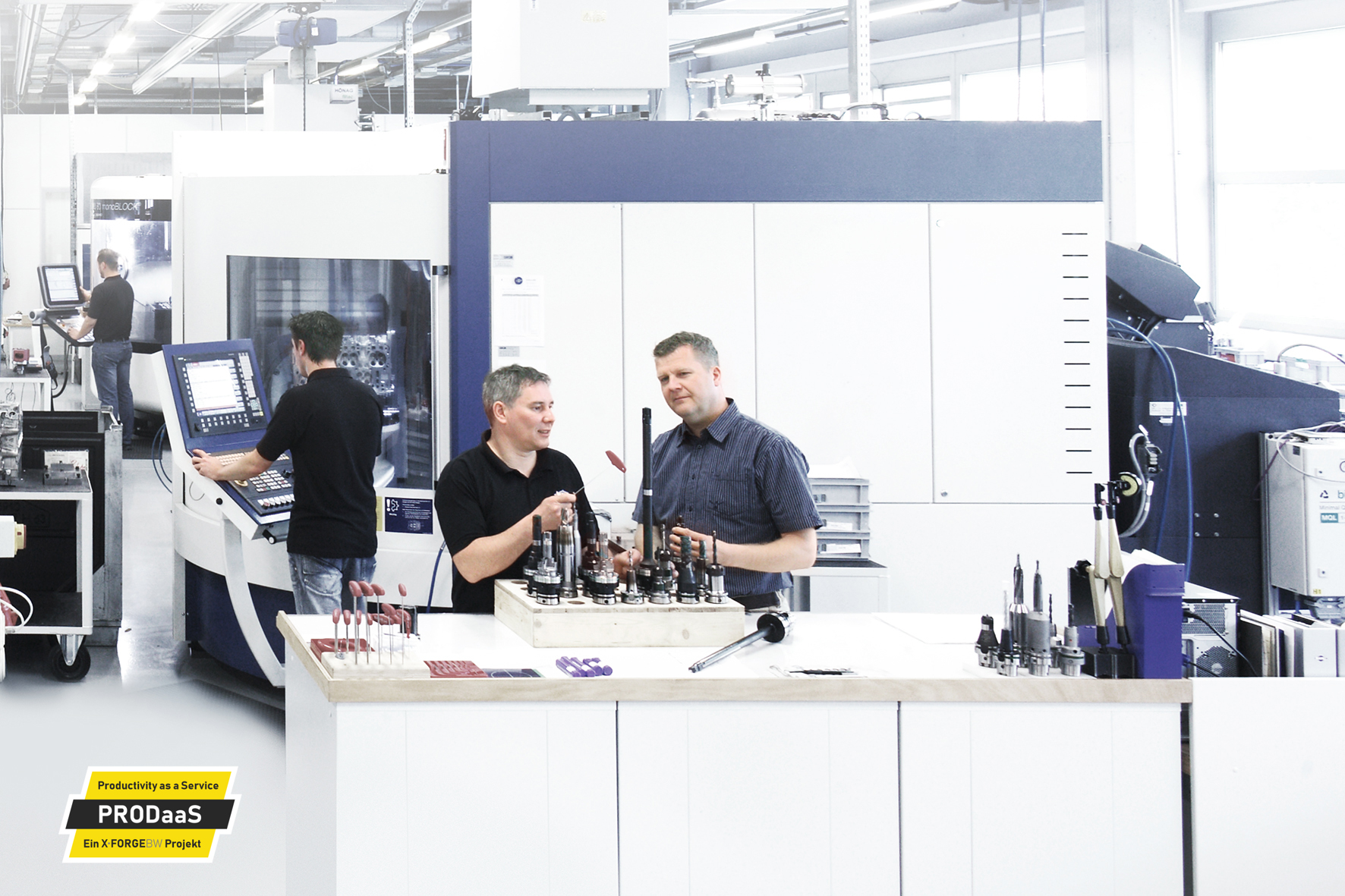
Eine CAM-Prozessplanung mit Werkzeugselektion, Bahnplanung und Wahl von Prozessparametern ist ein wesentlicher Hebel zur Produktivitätssteigerung. Beim Einfahren eines Bauteils ist anschließend auf der Maschine aber meist weitere Justage erforderlich, um zu optimalen Ergebnissen zu kommen. Heute ist der Bereich der Planung stark abgekoppelt von der Zerspanung. An der Maschine gewonnene Erkenntnisse fließen nicht automatisch zurück an die Prozessplanung. Das unzureichende Feedback hemmt Lerneffekte und sorgt dafür, dass der Maschinenbediener beim nächsten geplanten Bohrprozess wieder von vorne anfängt. Der CAM-Prozessplanung fehlt schlichtweg eine strukturierte Wissensbasis aus der praktischen Anwendung.
Zum “Productivity-as-a-Service”-Angebot für stabile und effiziente Zerspanungsprozesse steuern die Projektpartner unterschiedliche Informationen bei. Die Verschleißzustandsbewertung der Werkzeuge ist relevant, um zu verstehen, in welchem Zustand zum Beispiel eine Bohrung entstanden ist. Sie liefert auch Informationen über die aktuelle Standzeit des Werkzeuges und erlaubt Standzeitprogosen. Blum extrahiert die entsprechenden Daten in einen dedizierten Softwareservice und macht sie so nutzbar.
Pilotprojekt Tool Performance Optimizer
Beim Pilotprojekt, das bei Karl Walter Formenbau stattfand, ging es um einen Tool Performance Optimizer. Dem Anwender ist es damit gelungen, die Einstellung der Prozessparameter für das Bohren bei Abweichungen zu korrigieren, um Stillstandzeiten durch Bruch oder ungeplante Werkzeugwechsel zu reduzieren.
Weiterhin ist mit der Datenbank die Möglichkeit gegeben, auch bereits in der Planung für neue, bisher unbekannte Anwendungen mit Hilfe von Ähnlichkeitssuche auf strukturierte, methodisch gesammelte und bewertete Erfahrungen aus der Vergangenheit aufzubauen. Der Tool Performance Optimizer soll über zwei Absatzkanäle vermarktet werden. Neben dem klassischen Lösungsgeschäft mit einem Angebot aus einer Hand wird er auch auf einer großen Plattform zu finden sein, die als Datenökosystem auf Gaia-X basiert.
Ziel des nächsten Entwicklungsschrittes ist es, auftretende Abweichungen in einem Assistenzsystem zu erfassen und den Anwender gleich während des Betriebs mit einem Ampelsystem zu warnen. Für die kommenden Jahre sind noch selbstlernende Services für autonome Parameteroptimierung und Intelligente CAM-Prozessplanung vorgesehen. Schließlich soll ab 2029 auch eine durchgehende Automatisierung von der Zeichnung bis zum fertigen Bauteil möglich werden.

Kontakt
Kathrin Rehor Public Relations Kathrin.Rehor@mapal.com Tel.: +49 7361 585 3342