29.07.2025
Serienreife Lösung für die Statorbearbeitung
NILES-SIMMONS und MAPAL setzen neue Standards
Der vom Chemnitzer Werkzeugmaschinenhersteller NILES-SIMMONS und Werkzeughersteller MAPAL entwickelte Prozess zur Komplettbearbeitung von Statorgehäusen für Elektromotoren in Fahrzeugen ist in der Serienfertigung angekommen.
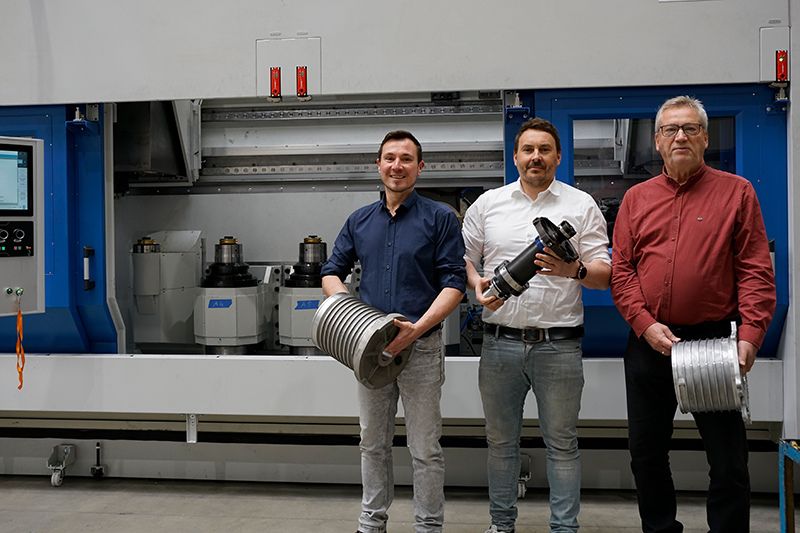
Die beiden Hersteller hatten vor kurzem in einem Entwicklungsprojekt demonstriert, dass auf einer Pick-Up-Drehmaschine eine sehr wirtschaftliche und hochpräzise Produktion von Statorgehäusen möglich ist. Die dünnwandigen Aluminiumbauteile werden für den Antrieb in Elektrofahrzeugen benötigt. Sie sind auf der Außenseite mit Rippen für den Kühlkreislauf versehen und werden in die größeren Motorgehäuse eingebaut.
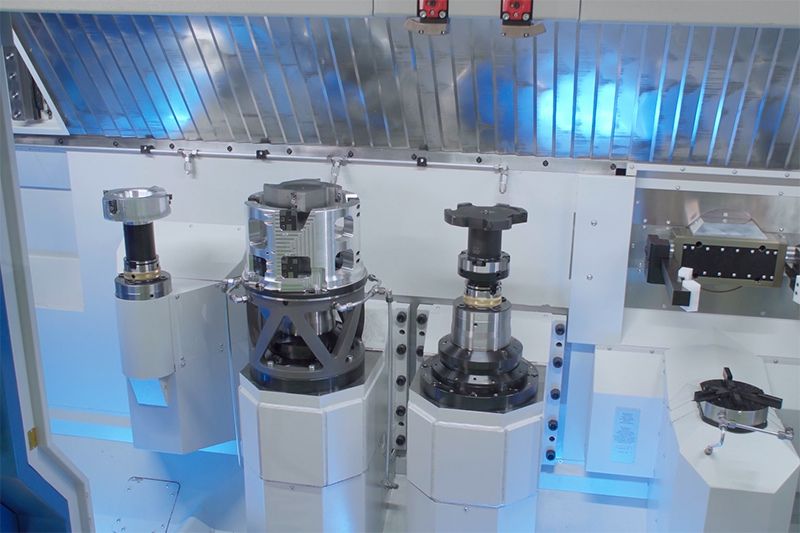
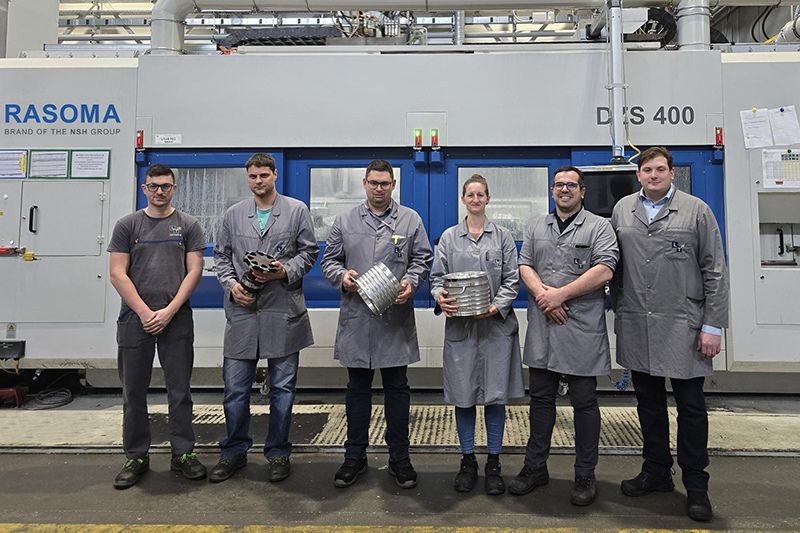
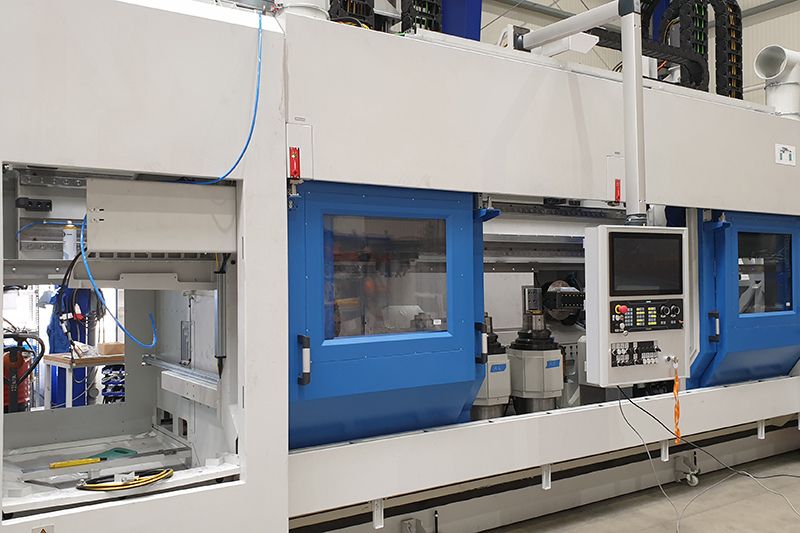
War während der Entwicklung bei NILES-SIMMONS noch mit einer dafür umgebauten modularen Drehmaschine gearbeitet worden, so kam nun eine eigens für die Statorfertigung konzipierte Maschine auf den Markt. Die Entwicklungsbasis bildete das Vertikalbearbeitungszentrum der Marke RASOMA, welche genau wie NILES-SIMMONS eine Marke der NSH Group (NILES-SIMMONS-HEGENSCHEIDT GmbH) ist. Beide Marken sind gemeinsam in der NSH Group Tochterunternehmung NSH TECHNOLOGY organisiert und haben die Entwicklung gemeinsam vorangetrieben. Die Bezeichnung RASOMA DZS 400-2 indiziert, dass sie mit zwei Werkstückspindeln arbeitet.
Für den Einsatz in der Serienfertigung wurde die Maschine an den Seiten mit einem Pickup-Bereich für die Rohteile und einem Dropdown-Bereich für die fertigen Teile versehen. Zu- und Abfuhr der Bauteile erfolgt über Transportbänder. Bei manueller Bestückung kann über die Automation ein Puffer von zehn bis zu 20 Bauteilen genutzt werden. So ist das Bedienen mehrerer Anlagen möglich, während der Mitarbeiter fertigungsbegleitend anderen Prozessen nachgehen kann. „Wir haben damit standardmäßig eine einfachste Automatisierung realisiert, für die keine Roboter oder Absperrungen an der Maschine benötigt werden. Der Bediener kann die Teile direkt auf ein Palettenband legen“, erläutert Thomas Lötzsch, Sales Manager bei NSH TECHNOLOGY. Eine vollautomatisierte Werkstückbe- und -entladung mehrerer Maschinen mit einem zentralen Fördersystem ist optional möglich. Die Maschine lässt sich leicht in eine bestehende Produktionsumgebung integrieren, wozu auch das relativ kompakte Aufstellmaß von 7,50 x 2,60 m beiträgt. Die Grundlage für die Gestaltung der RASOMA DZS 400-2 war in Zusammenarbeit mit LTH Castings entstanden, einem Partner mit langer Erfahrung im Bereich Gießen und Spezialist für die Zerspanung komplexer, hochwertiger und dünnwandiger Komponenten aus Druckguss-Aluminium. Die Ausgestaltung berücksichtigte so direkt Praxiserfahrungen und Anforderungen von Anwendern.
Komplettbearbeitung in zwei Aufspannungen
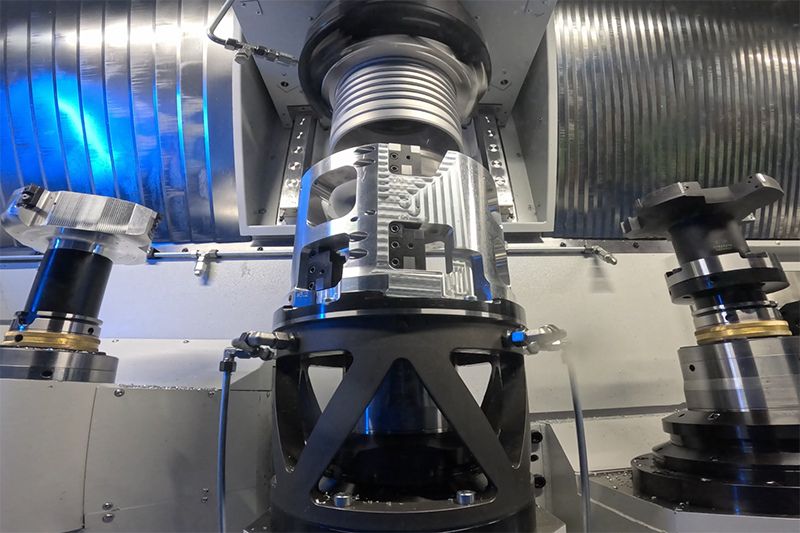
Zwischen Pickup und Dropdown erfolgt die Komplettbearbeitung der Bauteile auf der Vertikalmaschine in zwei Aufspannungen. Von oben nimmt ein Spannmittel das Werkstück zunächst auf und fährt es nacheinander an verschiedene Bearbeitungsstationen in der Maschine. Auf einer Umspannstation im Arbeitsraum wird das Teil um 180 Grad gedreht und von der zweiten Werkstückspindel für die Fertigbearbeitung aufgenommen. Während der zweiten Aufspannung beginnt parallel an der ersten Aufnahme die Bearbeitung des nächsten Bauteils.
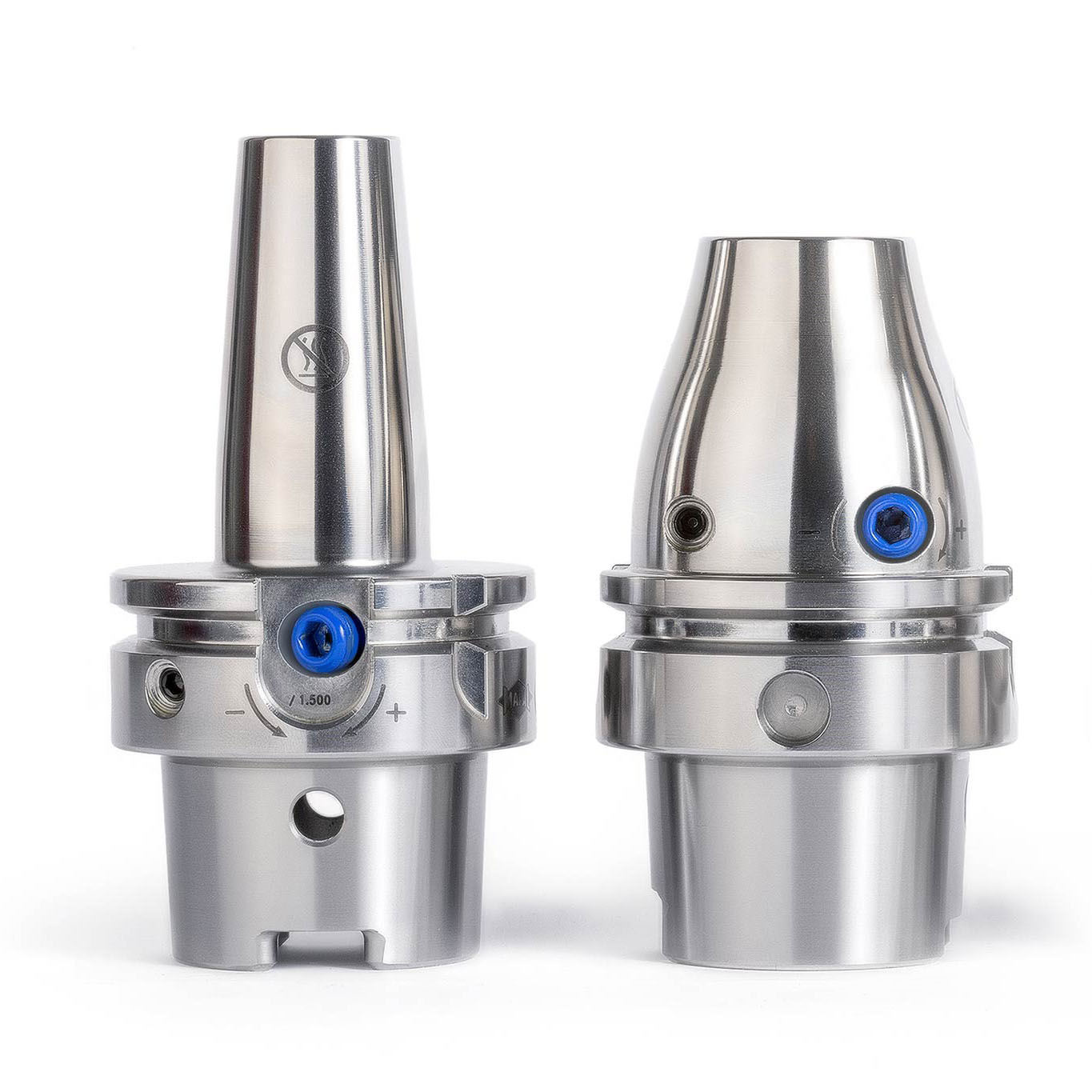
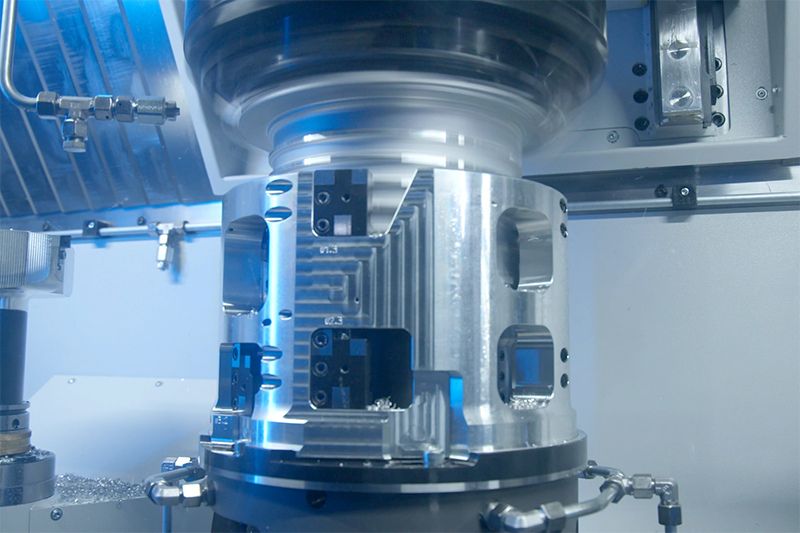
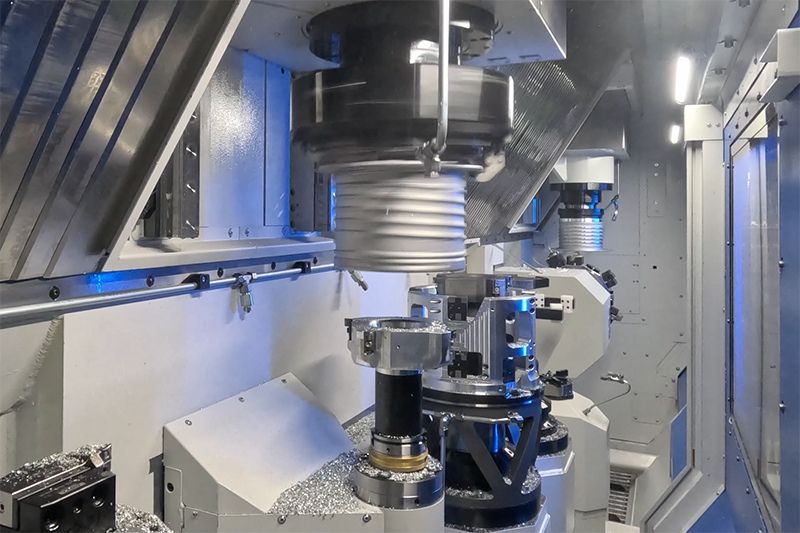
Wie auf einer Transferstraße im Kleinformat reihen sich die Bearbeitungsschritte aneinander. Der Prozess beginnt mit dem Vorschruppen der verschiedenen Innendurchmesser des Bauteils. Dabei steht das Werkzeug still und das Werkstück dreht sich. „Die Zerspanung mit einem vierschneidigen ISO-Aufbohrwerkzeug auf einer HSK-A 100 Spindel benötigt gegenüber dem herkömmlichen Drehen mit einer Schneide nur ein Viertel der Hauptzeit“, sagt André Ranke, Gebietsverkaufsleiter MAPAL. Äußerst effizient ist auch der nächste Bearbeitungsschritt, bei dem das rotierende Statorgehäuse innen und außen gleichzeitig mit jeweils vier Schneiden bearbeitet wird. Das Innenwerkzeug rotiert ebenfalls. Durch die Differenz der Werkzeugdrehzahl zur Werkstückdrehzahl ergibt sich die Schnittgeschwindigkeit an den inneren Schneiden.
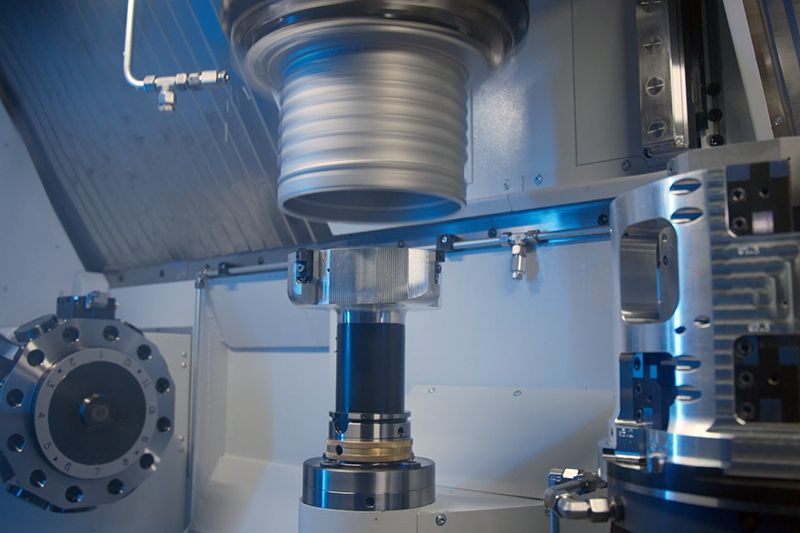
Das glockenförmige Außenwerkzeug steht still. Zur Bearbeitung wird das Bauteil in den Spalt zwischen Innen- und Außenwerkzeug gefahren. Dieses patentierte Verfahren reduziert auftretende Kräfte am Spannmittel. Um die dünnwandigen Bauteile präzise zu bearbeiten, kann so auf ein aufwändiges Werkstückspannmittel mit Schwingungsdämpfung verzichtet werden. „Bei der Werkzeugauslegung wurde besonderes Augenmerk auf das große Spanvolumen und die großen aufkommenden Kräfte gelegt, da untypischerweise am Innen- und Außendurchmesser gleichzeitig bearbeitet wird“, erläutert Michael Kucher, Component Manager E-Mobility bei MAPAL.
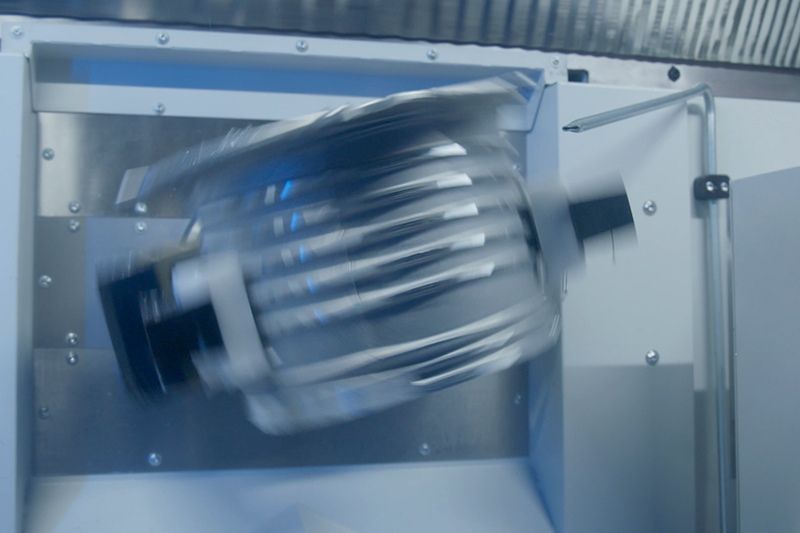
Bei der Fertigbearbeitung ist nur das Feinbohrwerkzeug angetrieben, während das Bauteil stillsteht. Damit wird verhindert, dass durch nicht rotationssymmetrische Werkstückformen Unwuchten im Material entstehen und sich negativ auswirken. Danach wird das Werkstück in der Maschine umgespannt und jener äußere Bereich bearbeitet, der zuvor im Flanschbereich gespannt war. Die Umspannstation kann dabei noch für einen weiteren Zweck genutzt werden: Das Werkstück wird hier vor dem Feinbohren zum Entspannen des Materials abgelegt. Die Maschine weist zusätzlich zwei Werkzeugrevolver für angetriebene Werkzeuge auf, die nach Bauteilanforderung weitere Bearbeitungen ausführen.
Schneller und stabiler als erwartet
„Unter dem Strich kombiniert die RASOMA DZS 400-2 das Beste aus zwei Welten, nämlich die Geschwindigkeit des Drehens für die Vorbearbeitung der Innen- und Außenkontur mit der Genauigkeit des Feinbohrens für das Schlichten der Innenkontur“, kommentiert Daniel Pilz, Project Leader von NSH TECHNOLOGY. Der Werkzeugmaschinenhersteller und MAPAL haben ihre jeweiligen Kernkompetenzen in diese Komplettlösung eingebracht. Mit der Serialisierung von Maschine, Werkzeugtechnologie und Prozess wurden die guten Ergebnisse des Prototyps noch weiter verbessert. Die erreichte Prozessstabilität übertraf die Erwartungen sogar, daher konnte die angepeilte Schnittgeschwindigkeit von 700 m/min noch weiter erhöht werden. „Die Erfahrungen, die NILES-SIMMONS aus der Technologievielfalt mitbringt, wirken sich bei dieser Aluminiumbearbeitung positiv auf die Gesamtstabilität von Werkzeugtechnologie und Maschine aus“, erklärt Michael Kucher, Component Manager E-Mobility bei MAPAL.
Die RASOMA DZS 400-2 erreicht eine wesentlich kürzere Span-zu-Span-Zeit als ein Fräsbearbeitungszentrum. Das erklärt sich daraus, dass alle Werkzeuge bereits im Arbeitsraum sind und nur durch Schwenkbewegung der Revolverscheibe in Arbeitsposition gebracht werden. Damit entfallen sämtliche Werkzeugwechsel, was die Nebenzeiten entscheidend reduziert. Mit der beschriebenen Technologie wurde bereits in den Studien eine Taktzeitreduzierung gegenüber der Standarddrehbearbeitung von 50 Prozent erwartet. Die Erhöhung der Schnittgeschwindigkeiten auf 1.000 m/min unter Einsatz der optimal geeigneten Schneidstoffe und die Optimierung der Nebenzeiten resultierte in einem Zeitgewinn von weiteren 20 Prozent.
Erfolgreich in der Großserie
Wie die meisten Automobilzulieferer stellt LTH Castings Komponenten für unterschiedliche Fahrzeugmodelle her. Bei der Fertigung von Statorgehäusen ist dabei die Flexibilität der RASOMA DZS 400-2 hilfreich, bei der nur Spannmittel und Werkzeuge umgerüstet werden müssen. „Mit einem einzigen System und unter Anwendung des neuen Prozesses wurde herstellerspezifisch sowohl in Quantität als auch Qualität eine Optimallösung entwickelt und zur Serienreife gebracht“, erläutert André Ranke. Die Produktion von Statorgehäusen ist damit bis zu einem Durchmesser von 500 mm und einer Bauteillänge von 500 mm möglich.
„Auf der RASOMA DZS 400-2 können alle Gehäuse hergestellt werden, die wir bisher gesehen haben, und wir haben schon sehr viele gesehen“, versichert Thomas Lötzsch. Dabei gab es auch für das Projektteam schon mal eine Überraschung, als für das Gehäusedesign eines großen Automobilherstellers ein Hinterschnitt an der Innenseite des Bauteils verlangt wurde. Das Musterbauteil von MAPAL, das für die Prozessauslegung eigens konstruiert und gefertigt wurde, wies diese Herausforderung nicht auf. Doch MAPAL hatte zusammen mit den Spezialisten der NSH Group sehr schnell eine gemeinsame Lösung parat: Anstelle des in der Praxis bewährten Feinbohrwerkzeugs wurde ein hochpräzises Aussteuerwerkzeug mit vier Schiebern aus dem Produktportfolio von MAPAL eingesetzt, das die gewünschte Innenkontur erzeugt. Maschinenseitig wurde in wenigen Tagen eine mit MAPAL abgestimmte Schnittstelle konstruiert, die schon beim laufenden Auftrag Serienreife erlangte. Durch die inzwischen sehr eng vernetzte Entwicklungskonstruktion sind die beiden Unternehmen in der Lage, kurzfristig auf neu entwickelte Konturen zu reagieren.
Neuer Maßstab für niedrige Cost per Part
Die RASOMA DZS 400-2 mit der Werkzeugtechnologie von MAPAL hat sich für die Serienproduktion etabliert und löst Qualitätsprobleme, die auf herkömmlichen Dreh-Fräsmaschinen und horizontalen Transferstraßen auftreten. Thomas Lötzsch sind Fälle bekannt, in denen die geforderten Form- und Lagetoleranzen nicht prozesssicher erreicht und stattdessen Ausschuss produziert wurde – bis zu 50 Prozent. Wo die Qualität stimmte, ließen wiederum die Taktzeiten zu wünschen übrig und verursachten höhere Werkstückkosten. Ein etablierter Prozess für die Fertigung der Bauteile fehlte.

Kontakt
Kathrin Rehor Public Relations Kathrin.Rehor@mapal.com Tel.: +49 7361 585 3342