Motore a combustione
Componenti chiave degli ICE
- Testa del cilindro
-
Testa del cilindro
Nelle autovetture, la testa del cilindro è solitamente realizzata in leghe di alluminio, con struttura e caratteristiche da lavorare che variano leggermente a seconda del carburante del motore. È posizionata sul corpo del cilindro ed è responsabile della fornitura di carburante e aria fresca. A causa dei requisiti di qualità e tolleranza estremamente elevati, la testa del cilindro è il componente più impegnativo da lavorare nella produzione di motori. Grazie al controllo preciso delle valvole nel sistema di distribuzione e agli attriti minimi dei cuscinetti dell’albero a camme, il consumo di carburante e, di conseguenza, le emissioni vengono ridotti già prima del processo di combustione.
Lavorazioni principali:
- Sistema di distribuzione
- Foro dell’iniettore
- Foro del cuscinetto dell’albero a camme
- Fresatura a spianare
- Foro della candela
- Cylinder crankcase
-
Cylinder crankcase
The cylinder crankcase, also known as the engine block, is the central element of every combustion engine. Depending on the vehicle model and engine size, there are a variety of different designs and sizes, from 2-cylinder in-line engines to 12-cylinder V-arrangements. Due to the weight advantage, aluminum alloys are predominantly used in the automotive sector today. However, this forces car manufacturers to use cast liners or wear-resistant coatings, especially for cylinder bores, in order to guarantee a high mileage. During machining, tool manufacturers are increasingly encountering mixed machining (cast aluminum) or extremely abrasive coatings. The increased combustion pressures of modern engines also increase the mechanical and thermal load requirements, which, among other things, leads to increasing quality requirements for the features to be machined.
Highlight machining:
- Cylinder bore
- Water pump bore
- Crankshaft bearing bore
- Connecting rod
-
High-strength steel materials such as 70MnVS4 or C70 are generally used for the connecting rods, which are subject to alternating heavy loads, in order to convert the linear movement of the pistons into a rotational movement of the crankshaft. In order to reduce the moving mass during engine operation, the components are reduced to a minimum weight. Over the years, this has resulted in an enormous number of variants with, for example, parallel, trapezoidal or stepped shapes, which entail a wide variety of tapping situations, especially when machining the small connecting rod eye. Due to the enormous production quantities, manufacturers are particularly focused on cost-effectiveness in series production.
Highlight machining:
- Large eye
- Small eye
- Screw hole drilling
- Turbocharger
-
Turbocharger
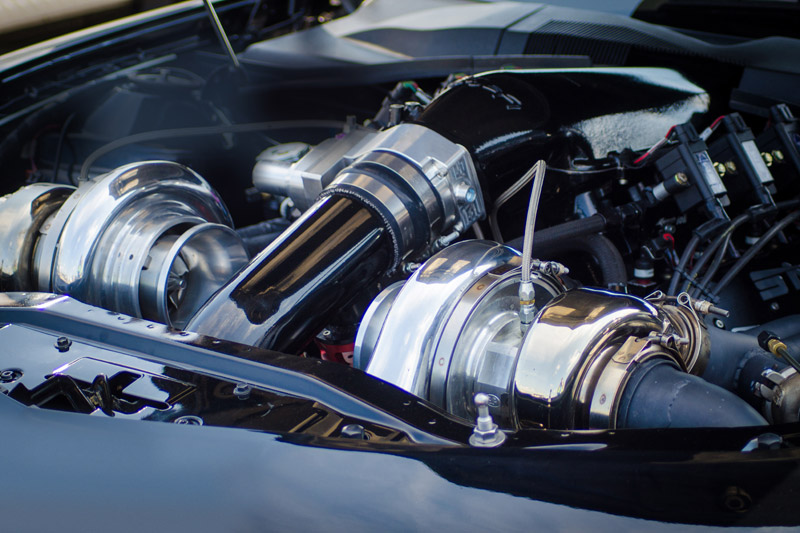
To increase the efficiency and performance of modern combustion engines, exhaust gas turbochargers are increasingly being used today. The compressed air supply via the turbocharger increases the efficiency of engines and at the same time reduces emissions. At speeds of up to 300,0001 rpm, it is imperative that quality requirements are met, especially with regard to coaxiality and roundness. Extremely abrasive high-alloy materials, especially on the exhaust gas side (turbine side), demand maximum wear resistance from the cutting tools. If the tool life quantities for the various machining operations are increased by even just a few components, this has an enormous cost benefit for the manufacturer.
Highlight machining turbocharger housing:
- Internal contour machining
- Exhaust manifold connection machining
- Control pin bore
- Turbocharger housing connecting Surface
- Shoulder milling of surfaces
Highlight machining Impeller / vane wheel:
Hot side:
- Shaft bore
- Balancing surface
Cold side:
- Shaft bore
- Balancing surface
- Vane machining
- Rocker/toggle lever
-
Rocker/toggle lever
The high-precision control of the valves for intake and exhaust is a decisive factor for the performance and efficiency of combustion engines. 4 valves per cylinder are usually controlled in the automotive sector, with 2 valves controlling the intake for fresh air or air/fuel mixture and 2 valves controlling the exhaust gas outlet. Depending on the engine design, various rocker arms or (roller) finger followers are used for OHV and SOHC valve actuation in order to minimize friction and the associated wear on the moving parts. In addition, the valve clearance can be set and readjusted via the integrated adjusting disks in order to maintain an optimum combustion process and prevent possible engine damage.
Highlight machining:
- Fitting bore
- Bearing bore
- Rail
-
Trilho
Conhecido como Common Rail nos motores a diesel, o combustível agora também é injetado na câmara de combustão de cada dois novos carros a gasolina por meio de sistemas eficientes de injeção direta. A mistura ar-combustível é inicialmente formada na câmara de combustão. Isto permite motores a gasolina mais potentes, com menor consumo de combustível e menos emissões de gases de escape. Os requisitos crescentes de pressão de até 2.500 bar são decisivos para o uso de materiais de usinagem moderada a difícil, como aço fundido ou aço inoxidável.
Usinagens em destaque:
- Furo trilho central
- Furo do injetor / transferência injetor
- Conexão de alta pressão
- Usinagem de pontas
- Eixo de manivelas
-
Eixo de manivelas
A concepção básica do eixo de manivelas é amplamente determinada pelo número de cilindros e pela disposição do motor. No entanto, os eixos, em sua maioria de aço forjado, devem se tornar cada vez mais leves para reduzir as emissões. Isto significa que são necessárias operações de usinagem adicionais no fabrico dos componentes já complexos. Além disso, devido às crescentes pressões de combustão dos motores modernos, o eixo de manivelas é constantemente exposto a maiores tensões de flexão e torção, o que resulta em maiores requisitos de qualidade.
Usinagens em destaque:
- Furo de escape central
- Furo de canal de óleo
- Usinagem de pontas
- Face and sealing surfaces
-
Face and sealing surfaces
Machining flat sealing surfaces in the combustion engine requires the utmost in dimensional accuracy, flatness and surface quality – often in dry conditions. MAPAL supplies high-performance face milling tools with maximum number of teeth, sturdy tool design and optimal chip removal. Whether roughing or finishing: The solutions are designed for cost-effectiveness, process reliability and component quality.
Case studies from the internal combustion engine sector
-
26.08.2025
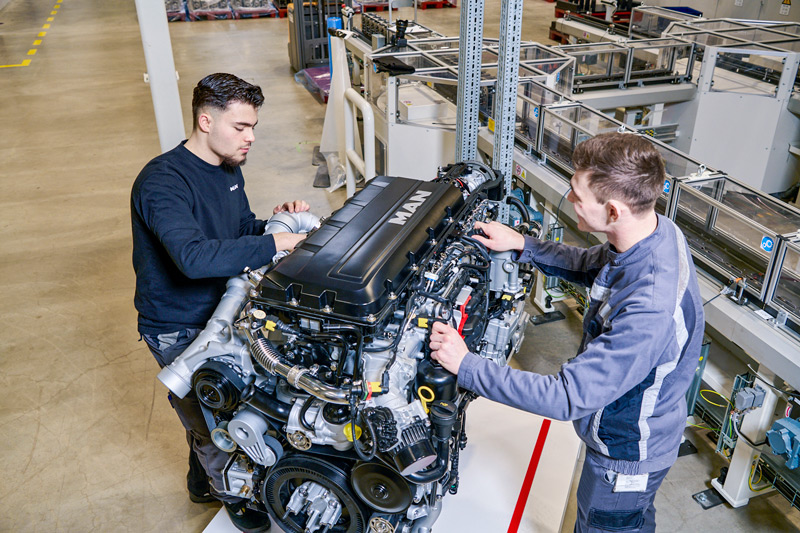
MAN uses MAPAL fine boring tools for machining cylinder heads
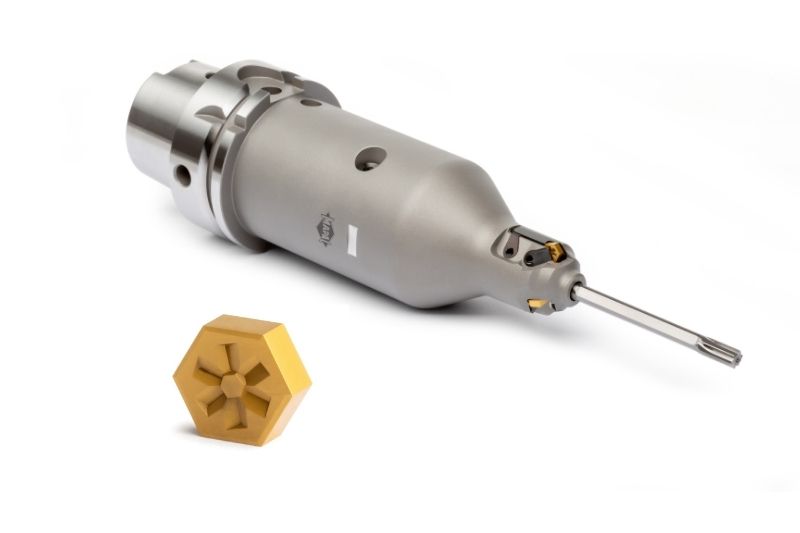
At MAN engines, fine boring tools from MAPAL are used to machine the valve guide and valve seat counterbores of cylinder heads."
#Alargar #Technology #Industries #Automotive #Reaming&FineBoring
-
22.07.2025
Crankshaft and valve seat machining: MAPAL sets standards
Optimised machining of crankshafts and valve seats: MAPAL offers innovative tool solutions for modern combustion and hybrid engines.
-
16.01.2025
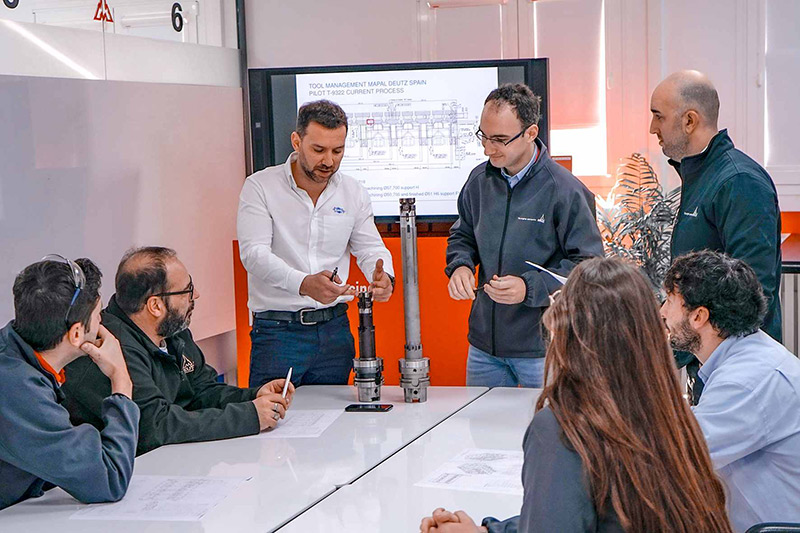
Tool management from MAPAL completed for DEUTZ in record time
MAPAL completed the entire engineering including tool design, cycle time study and cost calculation for the engine manufacturer Deutz in the Spanish plant in Zafra within a very short time.
#Produtos #Industries #CaseStudies #Technology #Serviços #Automotive #Reaming&FineBoring
-
23.03.2023
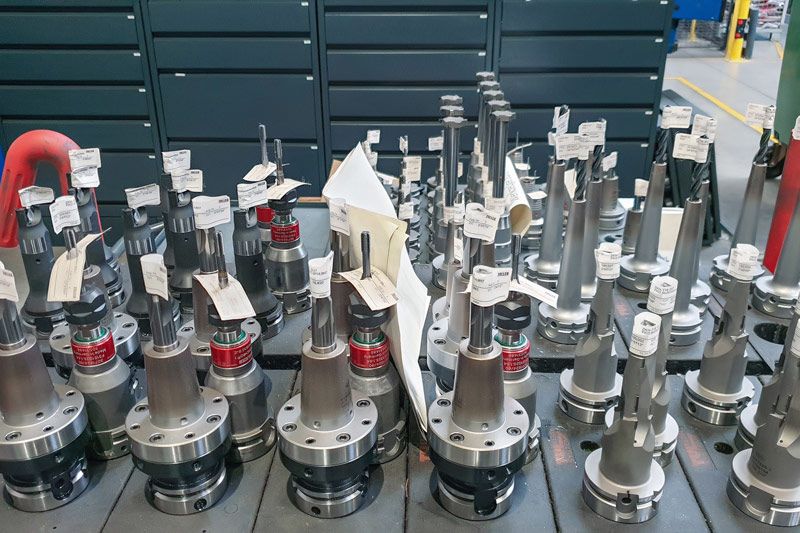
The production must go on
Digital tool management with more than 750 tools from MAPAL ensures smooth large-scale production at Schabmüller Automobiltechnik.
-
30.06.2022
Even more cost-effective turbochargers
How the complete machining of turbochargers becomes even more productive with indexable insert milling cutters from the NeoMill range.
-
09.12.2019
Highly precise machining of truck engine cylinder bores
High-precision MAPAL actuating tools and a special setting fixture ensure precise and economical production at Mercedes-Benz in Mannheim.