Carcaça para o abastecimento energético
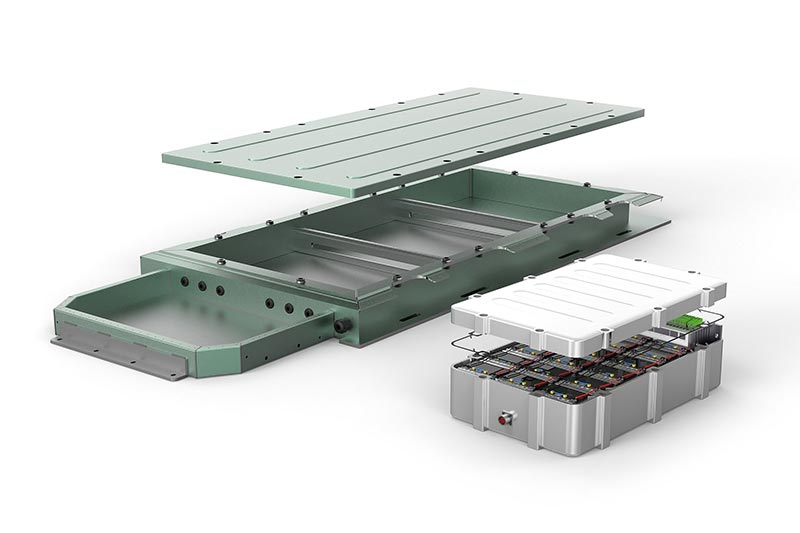
Para a proteção das peças eletrônicas como, por exemplo, sistema de baterias ou potência eletrônica, contra influências ambientais exteriores e para a fixação dos componentes no espaço interior a fim de garantir o funcionamento sem problemas durante a operação do veículo, são utilizadas diferentes carcaças. As exigências às carcaças dependem do sistema eletrônico e do conceito de acionamento. Atualmente, são utilizados diferentes materiais e processos de fabricação.
CARACTERÍSTICAS
- Componentes frágeis de parede fina (suscetíveis a vibração)
- Construção como um tanque fundido ou como uma construção em estrutura feita de perfis ocos
- Alumínio parcialmente com baixo teor de silício
- Grande área (2 × 3 m)
- Principalmente operações de furação e fresamento e rosqueamento
- Exigências de precisão e superfície para buchas de cabos e conexões de refrigeração


Visão geral das ferramentas
-
 1 / 9
1 / 9Programa standard para a usinagem de componentes estruturais de alumínio
- Geometria de corte altamente positiva
- Forças de corte reduzidas
- Corte de baixa vibração
-
2 / 9
OptiMill-SPM-Rough
- Usinagem em desbaste com poucas vibrações e com maior profundidade de corte
-
3 / 9
OptiMill-SPM
- Ideal para a produção de aberturas de cavidades
- Modelo em metal duro integral ou com lâminas de PCD soldadas
-
4 / 9
OptiMill-SPM-Finish
- Acabamento de grandes profundidades em etapa única
- Forte desempenho em caso de emaranhamento elevado
-
5 / 9
Tritan-Drill-Alu
- Criação de furos centrais
- Três arestas de corte para as maiores taxas de avanço
- Maior precisão de posicionamento por meio da aresta de corte transversal autocentrante
-
6 / 9
MEGA-Drill-Alu
- Broca de metal duro integral
- Furação com tempo de ciclo curto
- Foco na formação de cavacos
- Processos de perfuração eficazes com um maior número de diâmetros iguais
-
7 / 9
FaceMill-Diamond-ES
- Fresa de faceamento de PCD
- Desbaste e acabamento de superfícies planas
- Usinagem de superfícies planas com diferente sobremetal com uma ferramenta
- Possibilidade de usinagem de desbaste e de acabamento
-
8 / 9
OptiMill-Diamond-SPM
- Fresa PCD
- Operações de fresagem circular de vários diâmetros e superfícies
- Redução das trocas de ferramentas graças à utilização flexível da ferramenta
-
9 / 9
OptiMill-Alu-HPC-Pocket
- Fresa de esquadrejamento
- Fresamento de cavidade de materiais de alumínio
- Remoção ideal de cavacos
- Estabilidade otimizada


-
1 / 5
Fresa PCD para requisitos especiais de usinagem
-
2 / 5
Fresa de PCD com lâminas alternadamente dispostas
- Forças de corte reduzidas sobre toda a profundidade de usinagem
-
3 / 5
Spiralled PCD milling cutter
- Finishing of thin-walled structures
-
4 / 5
PCD Helix milling cutter
- Trimming with a large cutting depth
-
5 / 5
PCD face milling cutter
- Face milling for a cutting depth of up to 10 mm
- Creation of defined surface profiles for sealing and contact surfaces


Case studies from the energy supply sector
-
03.11.2022
Efficient deburring with robots
-
11.05.2023
A strategy for battery frames
MAPAL’s electric mobility experts have designed a generic component that encompasses the main machining operations of a battery frame.
-
12.07.2023
Milling instead of drilling
Why milling instead of drilling can be a sensible alternative? MAPAL shows how higher process reliability and shorter machining times can be achieved.