Sophisticated PCD tool concepts for machining aluminium
Economic, high-precision machining of forged aluminium parts
Highest precision and economical production – these aspects are the focus when Carl Hirschmann GmbH machines forged parts made of aluminium for sports vehicle chassis. Well thought-out, multi-stage combination tools from MAPAL have proven their worth here. The shape-adapted PCD cutting edges are particularly impressive. Those responsible at Carl Hirschmann are also impressed by the all-round support provided by their development partner MAPAL.
„Wir haben uns aus einem 1957 gegründeten Handelshaus zu einem internationalen Technologieführer bei der Herstellung von hoch belasteten Gleitlagern, Rundteiltischen und Spannsystemen entwickelt“, sagt Rainer Harter, Technischer Geschäftsführer der Carl Hirschmann GmbH im ländlichen Fluorn-Winzeln im Schwarzwald. Dank Kompetenz, Fleiß und Innovationsfähigkeit hat sich der ursprüngliche Lizenzfertiger zum Hersteller von Spitzenprodukten entwickelt.
Zu den Kernprodukten von Carl Hirschmann gehören Trag- und Führungsgelenke, beispielsweise für die Längs-, Quer- oder Dreieckslenker der Achsstrukturen von High-End-Sportfahrzeugen. Um diese Spitzenbauteile herzustellen, ist multidisziplinäres Know-how gefragt. Hier hat sich Carl Hirschmann einen exzellenten Ruf erworben und beliefert namhafte Sportwagenhersteller.
Entwicklungspartner der KFZ-Hersteller
Aufgrund der umfangreichen Erfahrung, die wir bei Achskomponenten für Sportfahrzeuge gesammelt haben, binden uns unsere Kunden als Partner bei der Entwicklung und Fertigung kompletter Achsbaugruppen ein“, sagt Rainer Harter. Branchenüblich erhalten die Experten von Carl Hirschmann hierbei vom Kunden ein umfassendes Lastenheft mit sämtlichen Angaben zum Bauraum sowie zu den Anforderungen und Spezifikationen. Hierzu entwickeln Carl Hirschmann und der Kunde gemeinsam eine optimal geeignete Baugruppe – für deren Herstellung und Lieferung Carl Hirschmann dann die Gesamtverantwortung übernimmt. Dazu gehören alle Prozessschritte von der Beschaffung und Bearbeitung aller Fremdkomponenten, wozu insbesondere die Aluminium-Schmiedeteile zählen, bis hin zur Lieferung der kompletten und geprüften Baugruppen just-in-time an die Fertigungslinie des Kunden. Dazu hat Carl Hirschmann seine IT-Systeme direkt mit denjenigen der Kunden vernetzt, sodass Abrufe direkt von der Fertigungsplanung des Kunden, eines Sportwagenherstellers, in das hauseigene ERP-System eingespielt werden können.
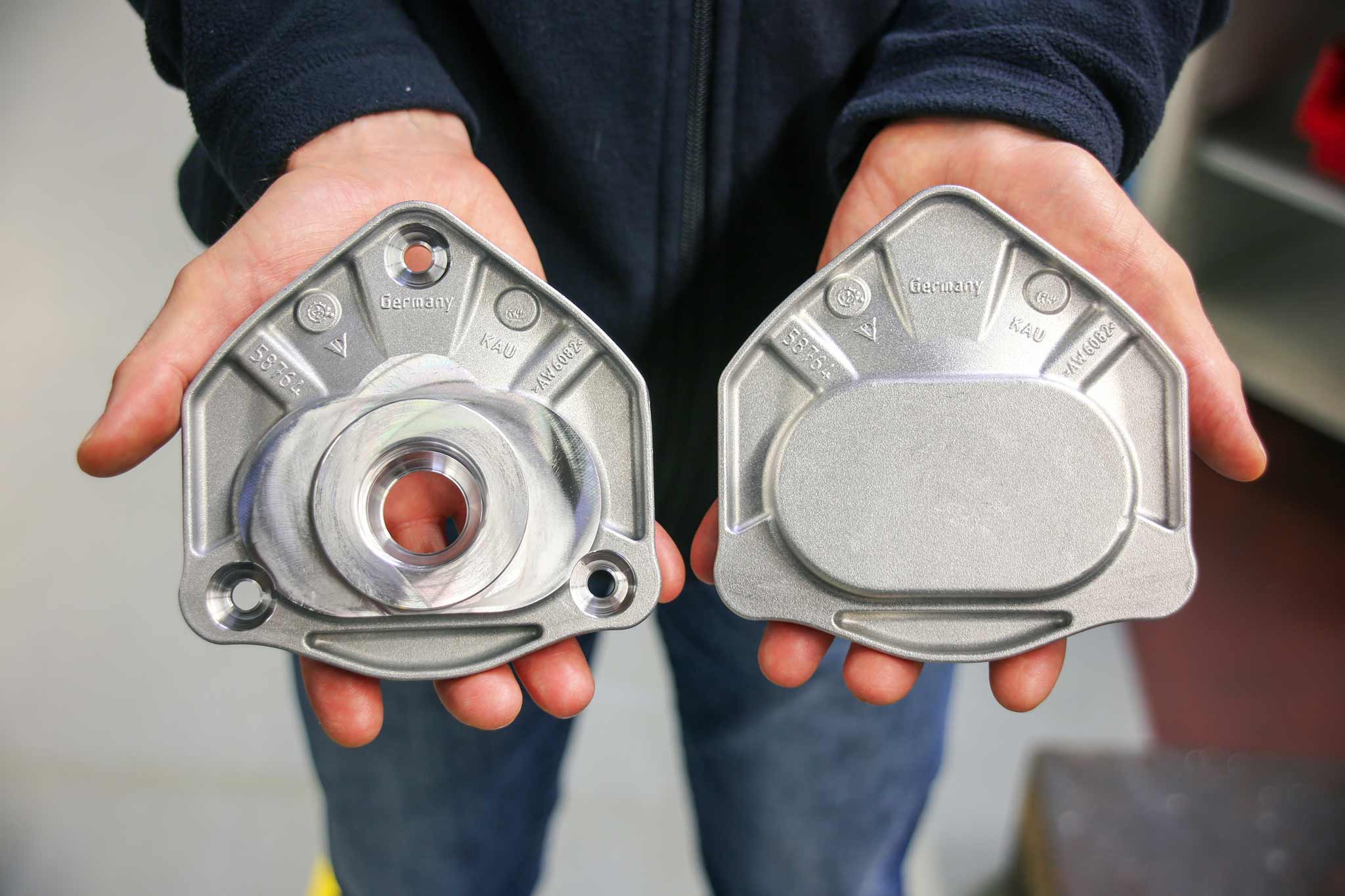
Forged aluminium strut mounts for connecting the spring strut rod end of a vehicle axle to the chassis.
The challenge of precision machining
In addition to technical perfection, the cost-effectiveness of the process plays an essential role in component machining. And this, in turn, requires the smooth supply of well-thought-out high-performance tools. Carl Hirschmann has brought tool manufacturer MAPAL on board for just this purpose.
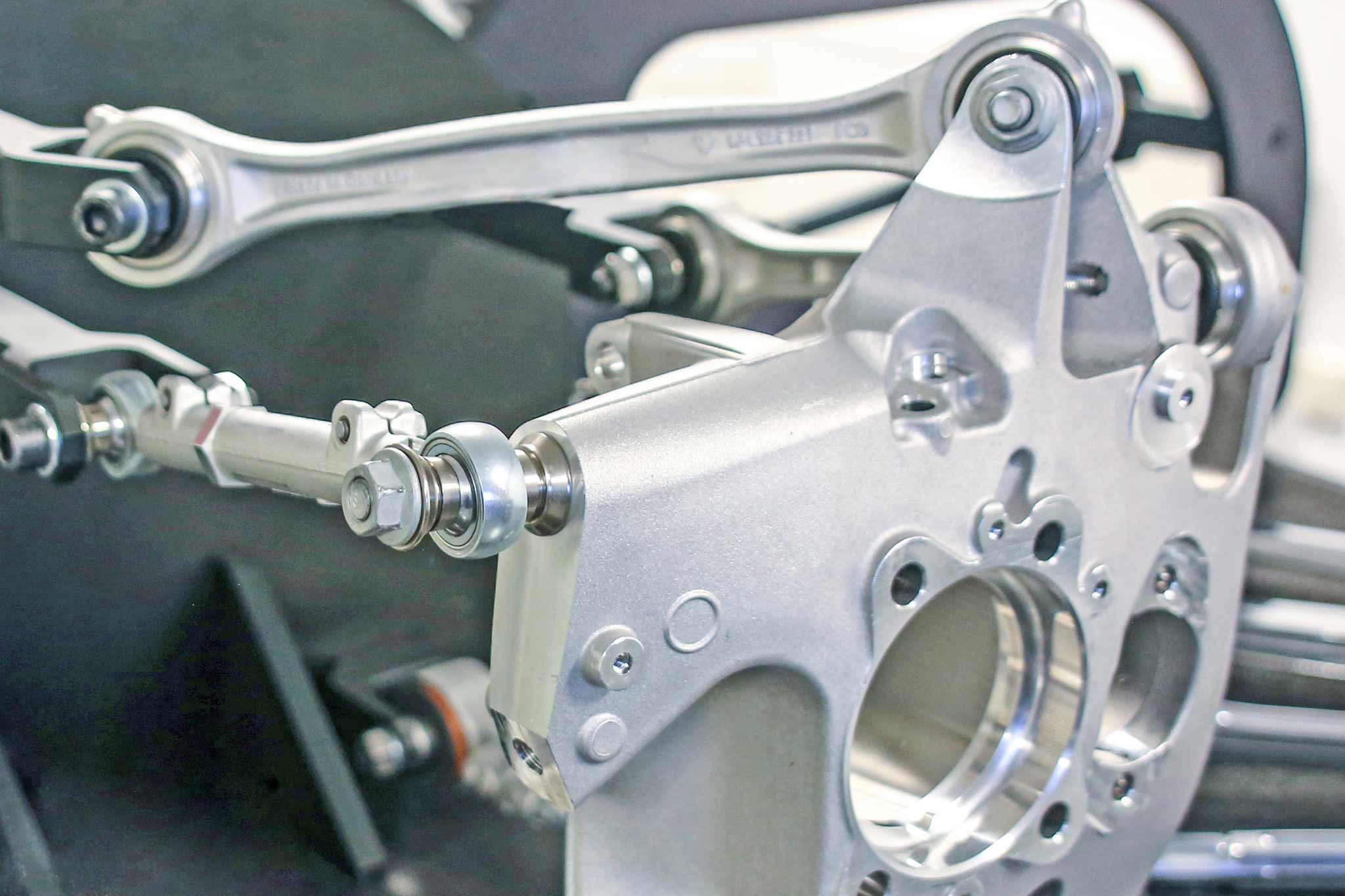
„The axle structures in top sporting vehicles must be as light as possible and withstand the enormous dynamic loads. This means that lightweight designs are required for these safety parts, right to the limit of what is feasible - with the corresponding demands on machining,“ said Thomas Kuner, Technical Advisor at MAPAL in Aalen. The forged parts are therefore made of high-strength aluminium alloys. These workpiece materials are long-chipping and difficult to machine. The machining must also be extremely precise because of the tight tolerances required. A maximum deviation of ± 5 μm is permitted in critical areas such as the seat of the bearing shells.
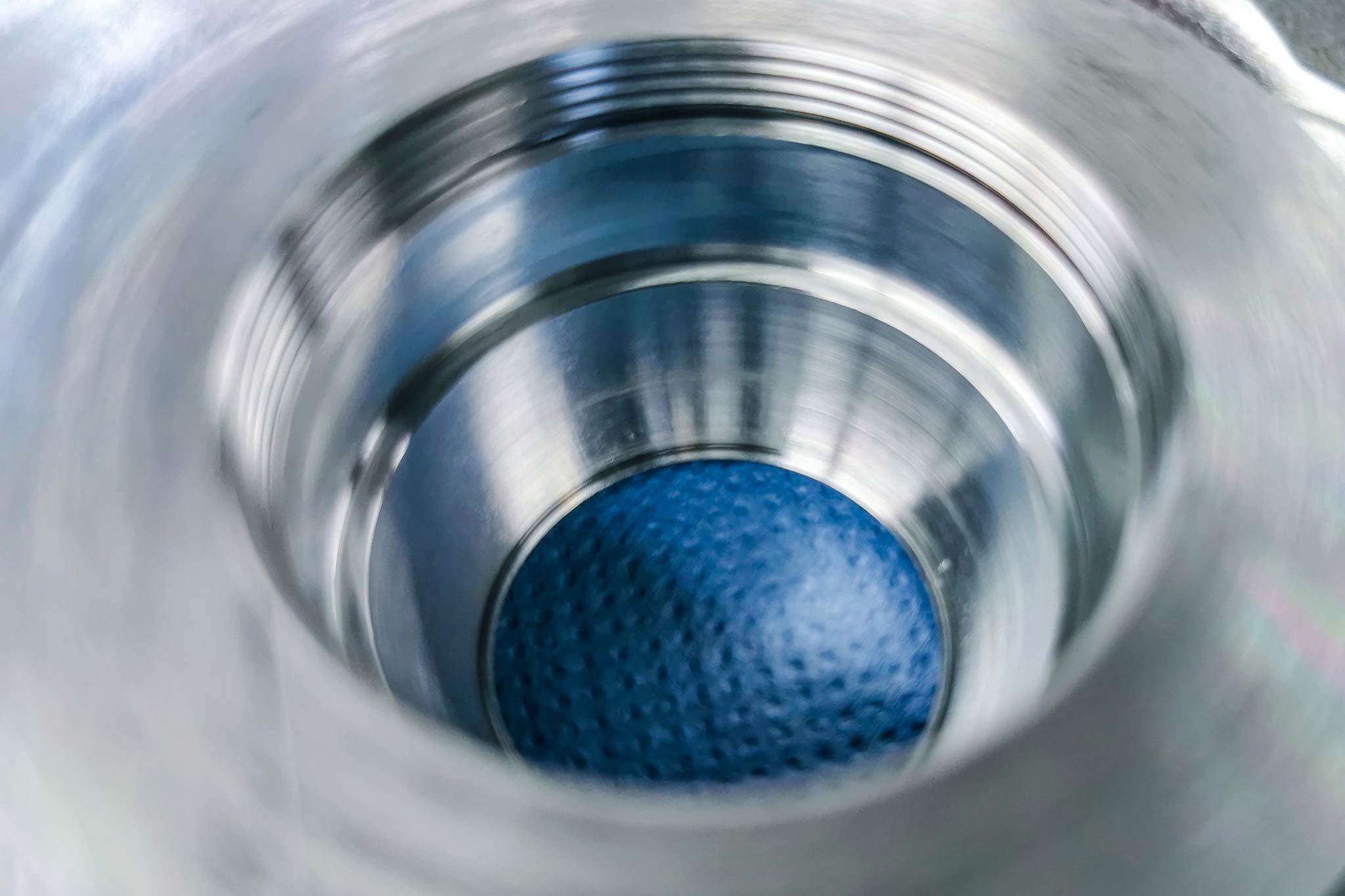
Close tolerances of up to ± 5 µm must be maintained when machining the dome bearing. Extremely tight tolerance specifications also apply to the fine thread.
In order to manufacture economically despite this, Carl Hirschmann uses customised stepped and combination tools from MAPAL, which the tool manufacturer equips with various shape-adapted blades. High-precision calottes, slots, threads or undercuts can be produced with comparatively few feed movements. This is much quicker than the time-consuming „multipass milling“ with standard tools. The preferred tool cutting material is polycrystalline diamond (PCD). The cutting edges are usually brazed in.
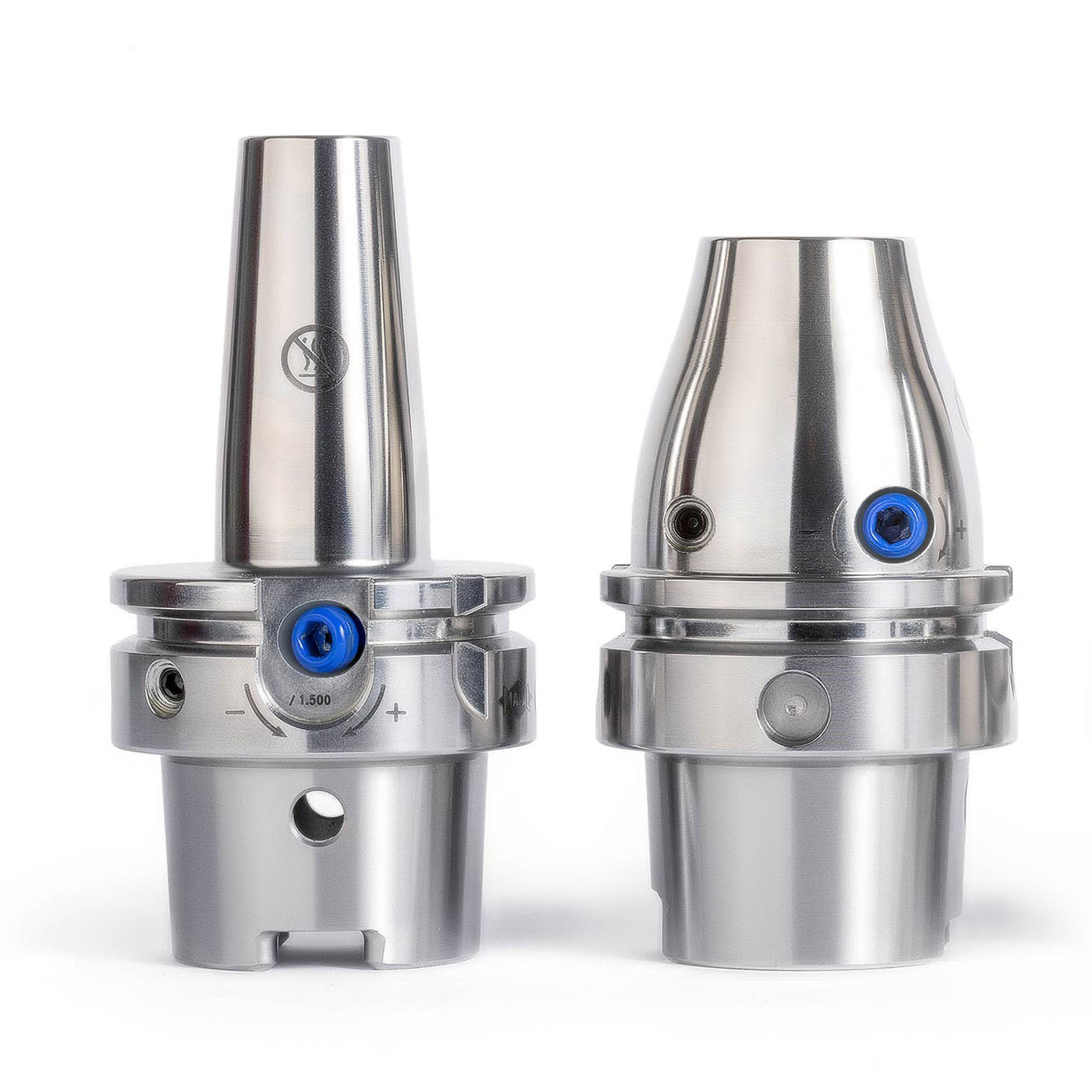
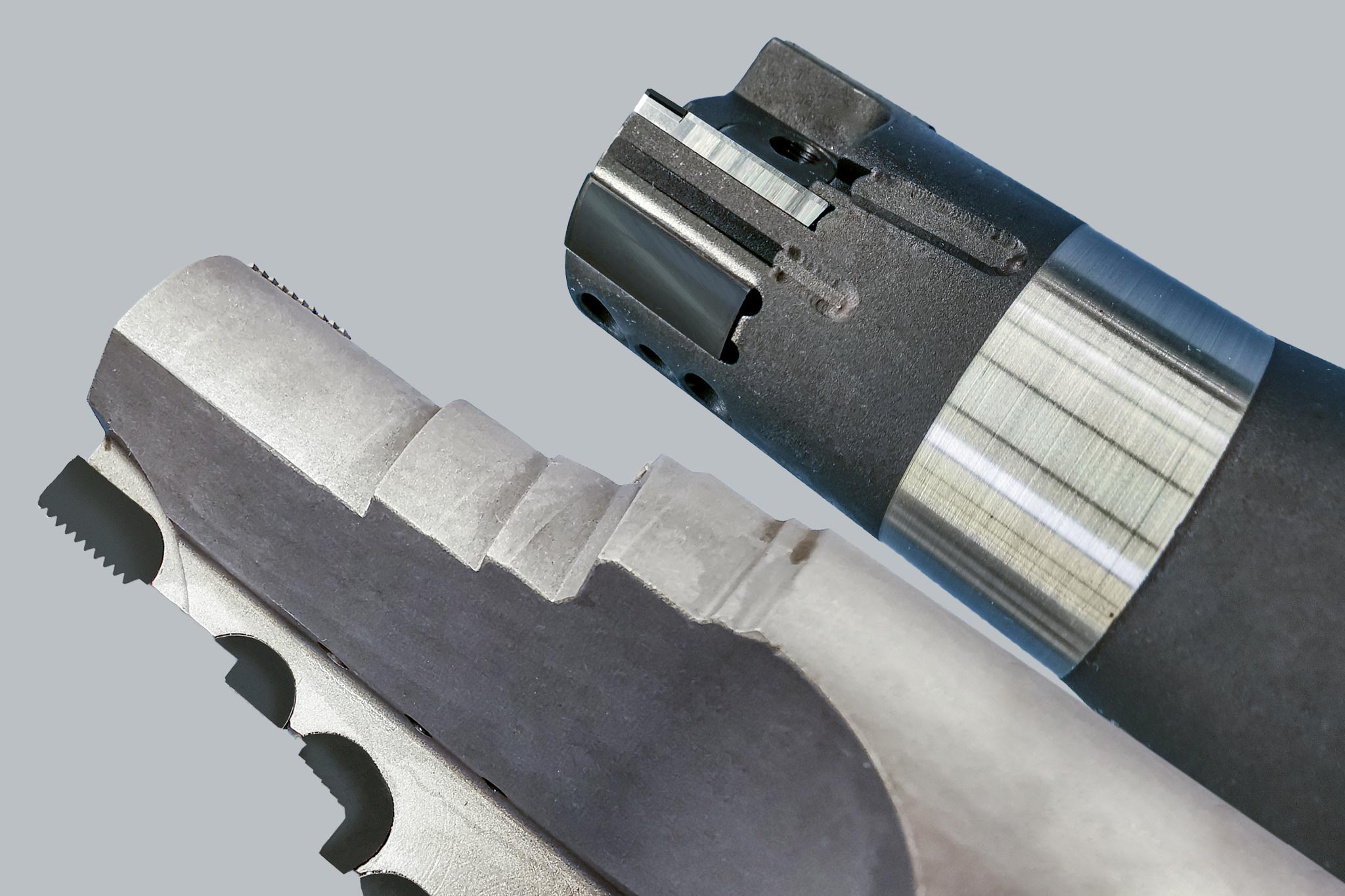
PCD multi-stage tool (l) is used to pre-machine the calotte, and to drill out and circularly mill the fine thread. The fine boring tool (r) machines the seat of the bearing shell. In the centre you can see the ring-shaped concentricity control point.
Thanks to the sophisticated step and combination tools, Carl Hirschmann can implement numerous different machining processes without changing tools. Another advantage of combination tools is the fact that there are fewer alignment deviations as a result of tool changes. „We also achieve the best combination of dimensional accuracy and tool life with PCD tools“, said Thomas Maier, Milling Team Leader. In addition, the cutting edges are convincing due to their reliability. „This is even more important for us because we have to meet just-in-time delivery deadlines to our customers“, Thomas Maier explained. The demands on the stability of the production processes are therefore correspondingly high.
Development partnership with MAPAL
„We have been working closely with MAPAL on the development and delivery of such tools since 2013“, Thomas Maier explained. Here, the experts from both companies take a precise look at the relevant specifications for the requested assemblies and components and define which tool designs, cutting edge geometries and NC strategies they will use to achieve the desired results as efficiently and economically as possible. „MAPAL contributes profitably at all times thanks to its far-reaching understanding of the process“, Thomas Maier confirmed.
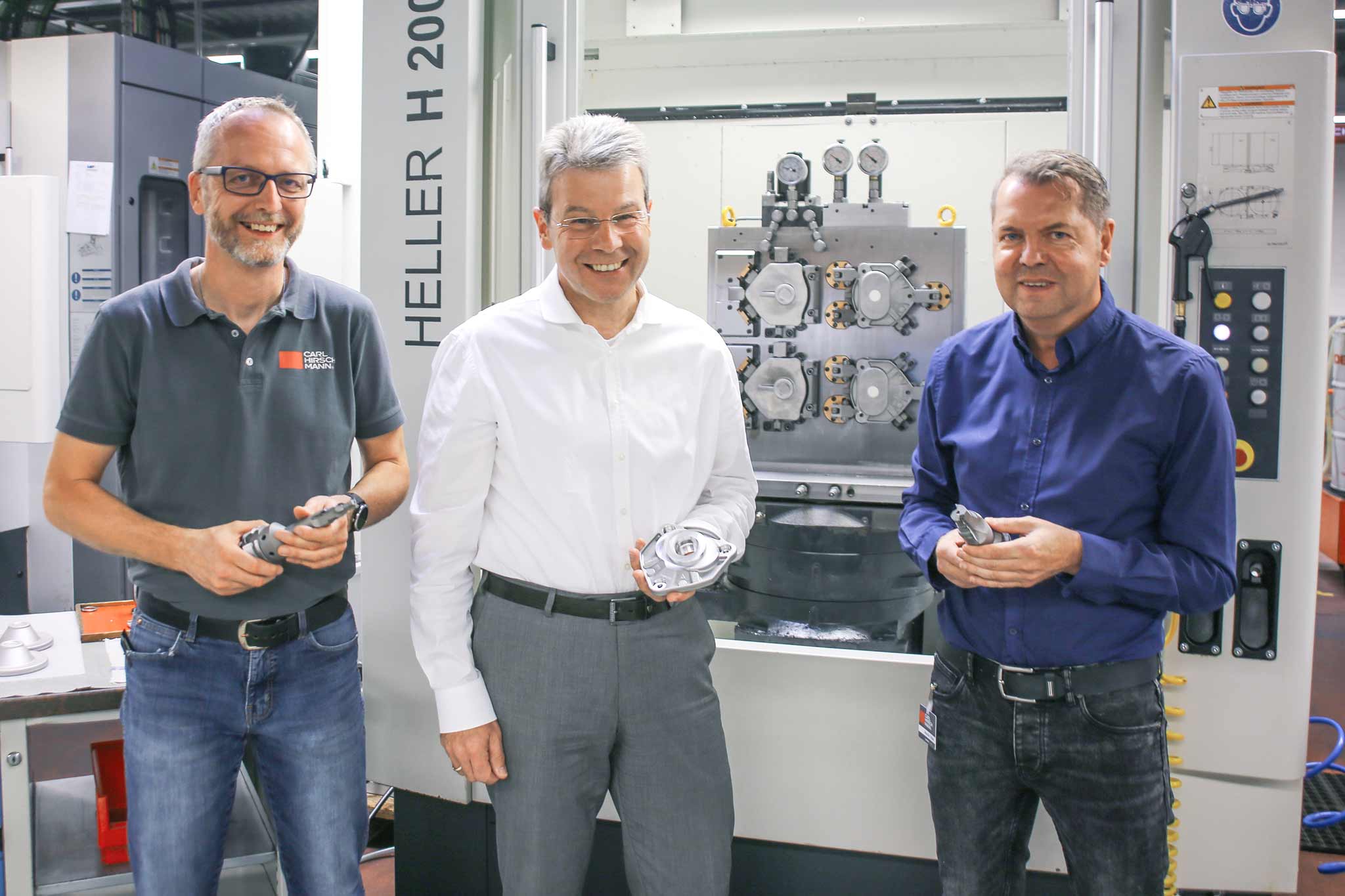
Satisfied with the results: Thomas Maier (Team Leader Milling, Carl Hirschmann), Rainer Harter (Technical Managing Director, Carl Hirschmann) and Thomas Kuner (Technical Consultant, MAPAL) (from left).
Gute Erfahrungen auch beim Support
„Ein wesentlicher Bestandteil der Versorgung mit Werkzeugen ist für uns auch der von MAPAL geleistete Support“, bekräftigt Thomas Maier. Dieser umfasse zusätzlich zur Zusammenarbeit bei der Entwicklung auch alle anderen Aspekte wie die Lieferzeiten bei Neu- oder Nachbestellungen, die Standzeiten beziehungsweise die Standmengen der Werkzeuge und der Schneiden sowie die Reaktionsschnelligkeit bei der Instandhaltung, der Wiederaufbereitung und der Reparatur von Werkzeugen. „Wir fühlen uns bei MAPAL rundum gut aufgehoben“, bilanziert Thomas Maier.
In der aktuellen Ausgabe des Technologie-Magazins IMPULSE geht es neben der Verschmelzung der deutschen Standorte im Schwerpunkt um den Bereich Aerospace.