29.07.2025
Stator machining solution ready for series production
NILES-SIMMONS and MAPAL set new standards
A process for the complete machining of stator housings for electric motors developed by the Chemnitz machinery manufacturer NILES-SIMMONS and tool manufacturer MAPAL has made it to series production.
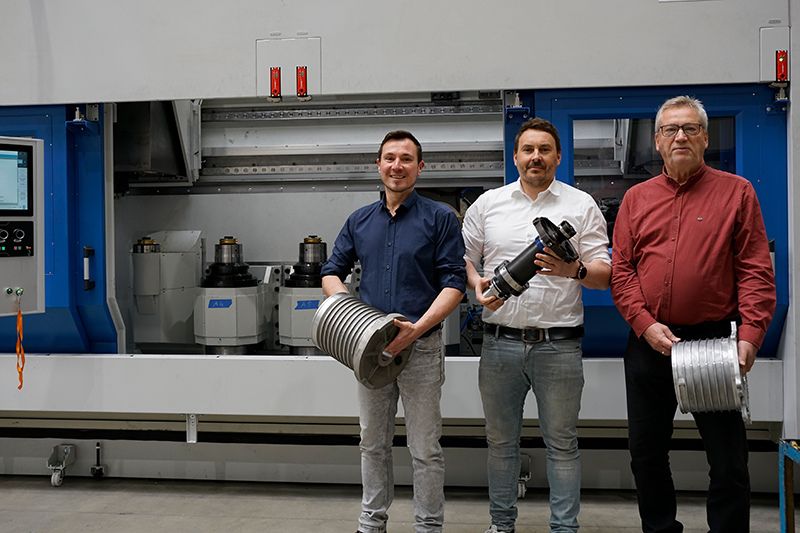
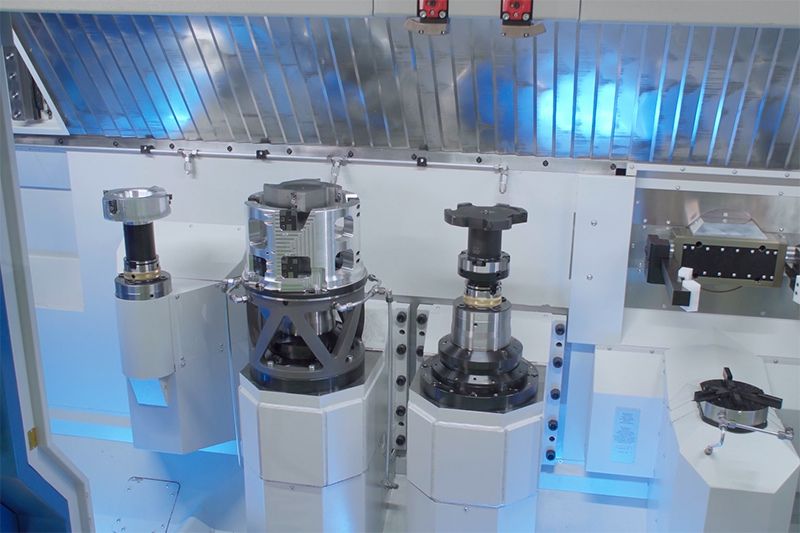
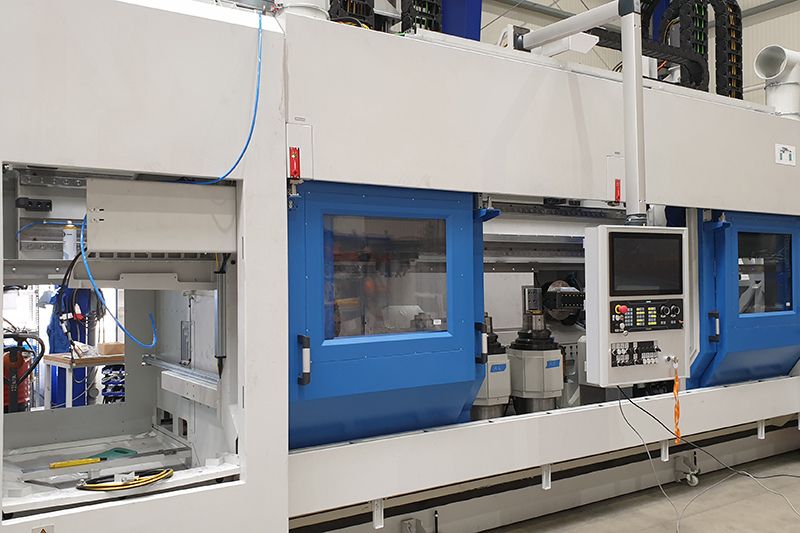
While a converted modular lathe had been used by NILES-SIMMONS during the development stage, a machine specifically designed for stator production now hit the market. The basis for development was the vertical machining centre from the RASOMA brand, which, like NILES-SIMMONS, is an NSH Group (NILES-SIMMONS-HEGENSCHEIDT GmbH) brand. Both brands are organised together in the NSH Group subsidiary NSH TECHNOLOGY and have pressed ahead with the development together. The name RASOMA DZS 400-2 indicates that it operates with two workpiece spindles.
For use in series production, the machine was equipped on the sides with a pick-up area for raw parts and a drop-down area for finished parts. The components are supplied and removed via conveyor belts. With manual assembly, a buffer of ten to twenty components can be used via automation. This makes operating multiple systems possible while the employee can pursue other processes alongside production. “We have realised highly simple automation as standard. No robots or blocks on the machine are required. Operators can place the parts directly on the pallet belt”, explains Thomas Lötzsch, Sales Manager at NSH TECHNOLOGY. Fully automated workpiece loading and unloading for several machines with a central conveying system is optionally available. The machine is easy to integrate into an existing production environment. The relatively compact installation dimensions of 7.50 x 2.60 m contribute to this. The basis for the design of the RASOMA DZS 400-2 was created in collaboration with LTH Castings, a partner with lengthy experience in casting and a specialist in machining complex, high-quality and thin-walled components from pressure die cast aluminium. Therefore, the design directly took practical experience and user requirements into consideration.
Complete machining in two clamping systems
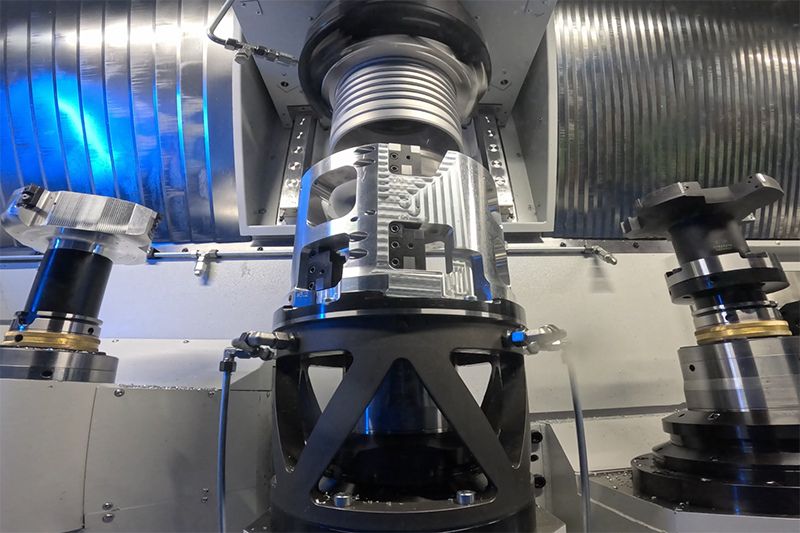
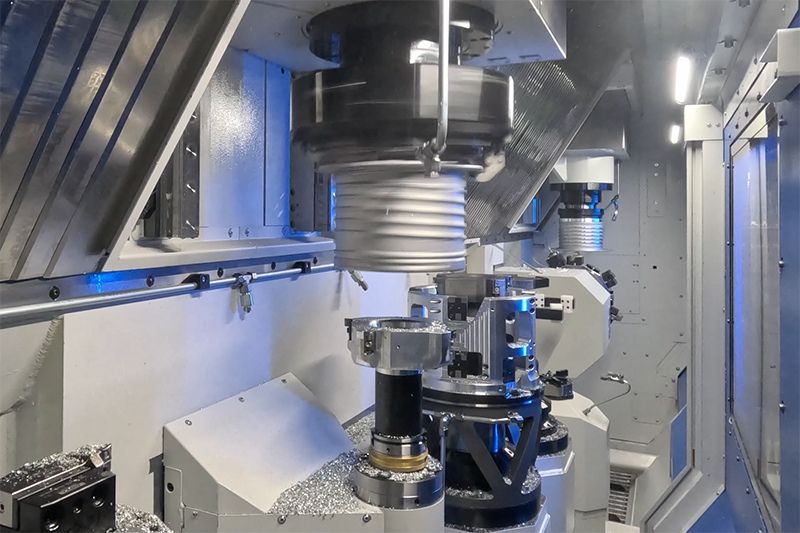
Between pick-up and drop-down, the complete finishing of the components takes place on the vertical machine in two clamping systems. A clamping device first of all picks up the workpiece from above and moves it to various machining stations in the machine one after another. At a re-clamping station in the working area, the part is turned 180 degrees and picked up by the second workpiece spindle for finishing. During the second clamping, machining of the next component begins at the same time at the first pick-up.
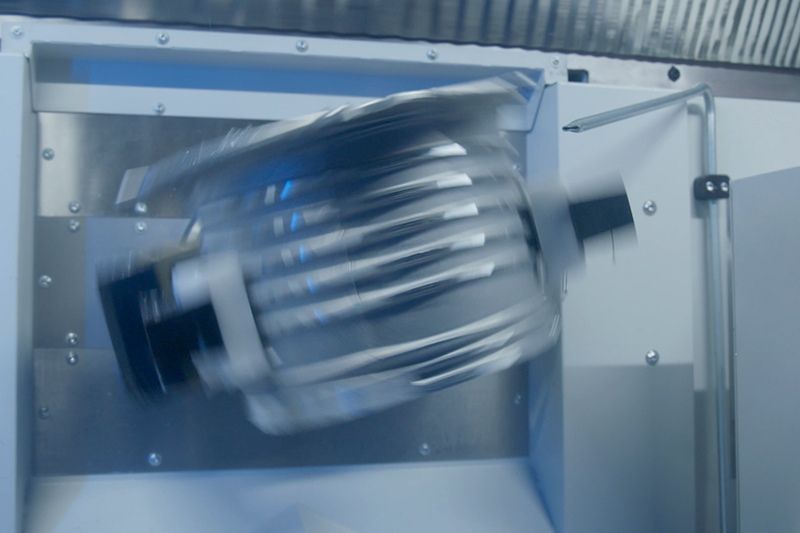
The machining steps follow one another, like on a miniature transfer line. The process begins with the pre-roughing of the component’s various inner diameters. The tool stands still and the workpiece rotates. “Unlike conventional turning with a blade, machining with a four-blade ISO boring tool on an HSK-A 100 spindle takes just a quarter of the productive time”, says MAPAL regional sales manager André Ranke. The next machining step, in which the rotating stator housing is machined inside and outside simultaneously with four blades each, is also extremely efficient. The inner tool also rotates. The difference in the tool speed and the workpiece speed produces the cutting speed at the inner blades.
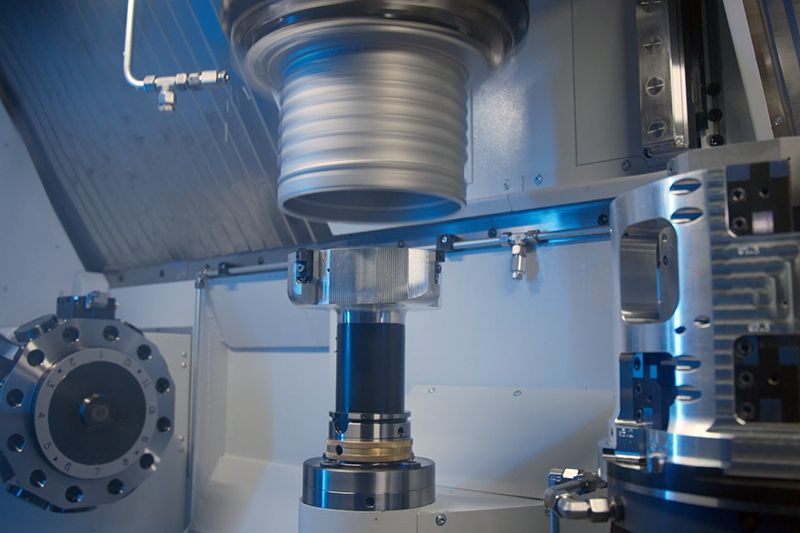
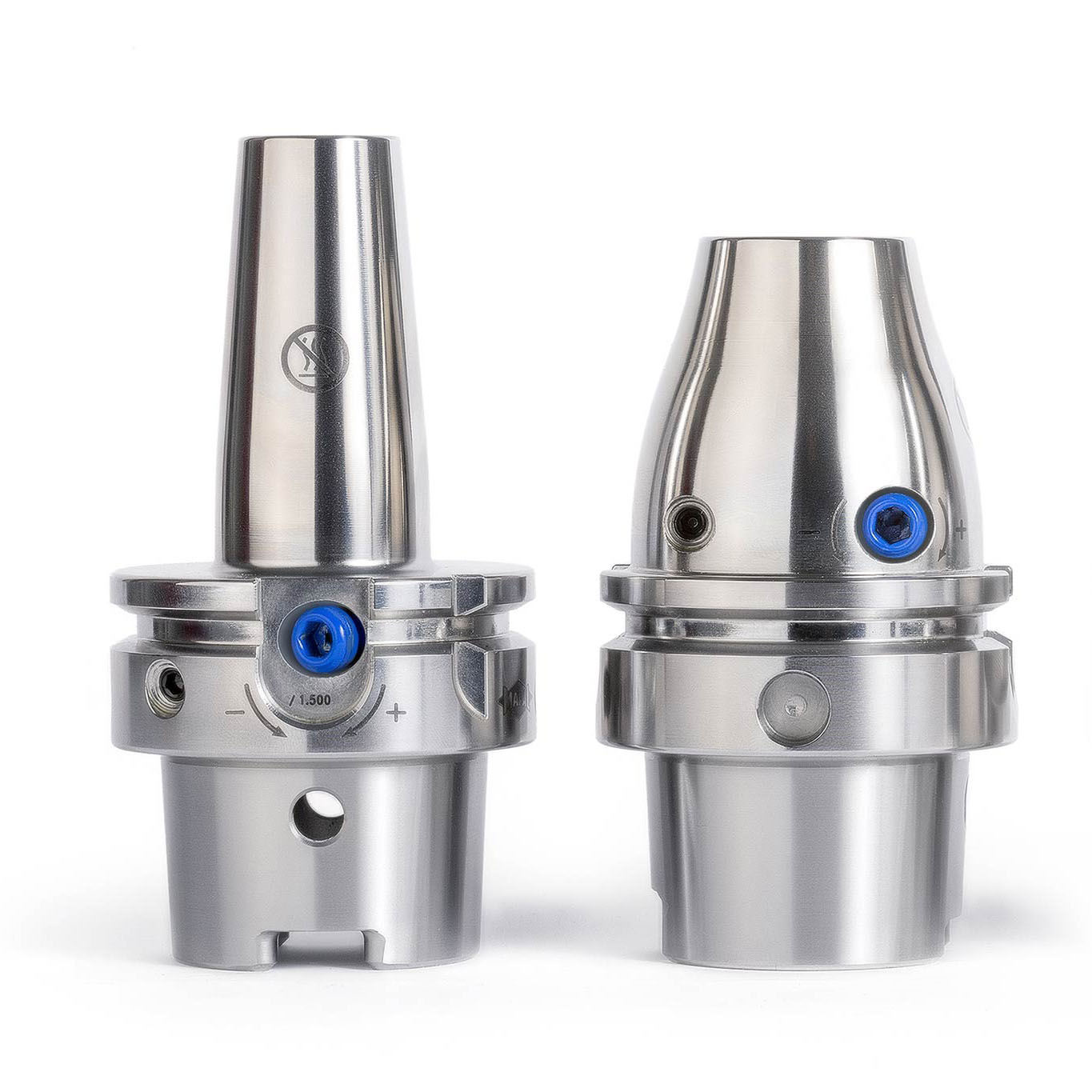
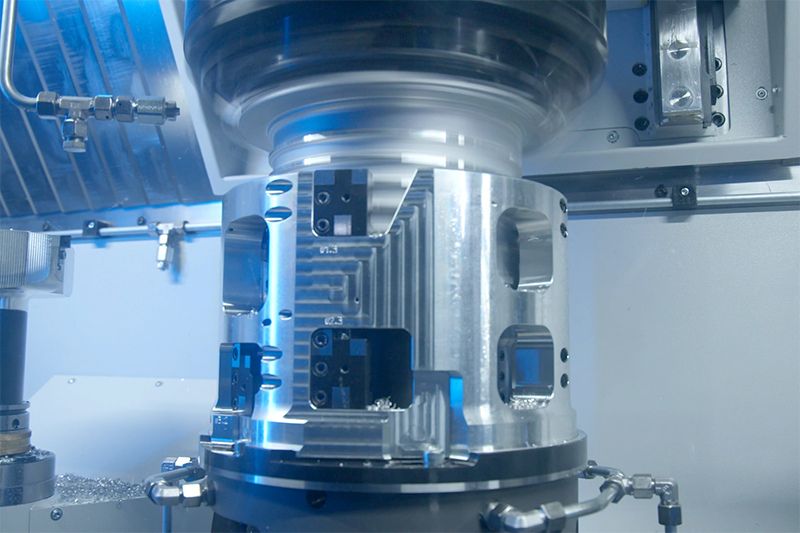
The bell-shaped outer tool stands still. The component is placed in the gap between the inner and outer tool for machining. This patented process reduces forces that occur on the clamping system. This makes it possible to avoid using a complex workpiece clamping device with vibration damping for precise machining of the thin-walled components. “When designing the tool, particular attention was paid to the large chip volume and the significant forces generated, as it is unusual for the inner and outer diameters to be machined simultaneously”, explains Michael Kucher, Component Manager E-Mobility at MAPAL.
During finishing, only the fine boring tool is driven, while the component stands still. This prevents workpiece shapes that are not rotationally symmetrical from causing imbalances in the material and having a negative impact. The workpiece is then reclamped in the machine and the outer area that was previously clamped in the flange area is machined. The re-clamping station can also be used for another purpose: the workpiece is placed here before fine boring to relax the material. The machine has two tool revolvers for driven tools that carry out further machining based on component requirements.
Faster and more stable than expected
“The bottom line is that the RASOMA DZS 400-2 brings together the best of both worlds: the turning speed for pre-machining inner and outer contour with the accuracy of fine boring for finishing the inner contour”, says Daniel Pilz, Project Leader at NSH TECHNOLOGY. The machine tool manufacturer and MAPAL contributed their respective core competences to this complete solution. With the serialisation of the machine, tool technology and process, the positive results of the prototype were improved even further. The process reliability achieved even exceeded expectations, allowing the targeted cutting speed of 700 m/min to be increased even further. “For this aluminium machining, the experience NILES-SIMMONS brings from the diversity of technology has a positive impact on the overall reliability of the tool technology and machine”, explains Michael Kucher, Component Manager E-Mobility at MAPAL.
The RASOMA DZS 400-2 achieves a much shorter chip-to-chip time than a milling centre. This is because all tools are already in the working area and are only brought into working position by swivelling the revolver disc. This does away with all tool changes, reducing non-productive time substantially. Using this technology, a cycle time reduction of 50% versus standard turning was already anticipated in studies. During process optimisation, cutting speeds of 1,000 m/min were achieved using optimal cutting material. The additional optimisation of non-productive time resulted in even more time saving of 20%.
Successful at high volumes
Like most automotive suppliers, LTH Castings manufactures components for various vehicle models. The flexibility of the RASOMA DZS 400-2, in which only clamping devices and tools need to be re-tooled, is useful for the production of stator housings. “With a single system and using the new process, an optimum solution, manufacturer-specific in quantity and quality, was developed and brought to series production maturity”, says André Ranke. Stator housing production is therefore possible up to a diameter of 500 mm and a component length of 500 mm.
“Every kind of housing we’ve seen can be manufactured on the RASOMA DZS 400-2 – and we’ve seen plenty of them”, says Thomas Lötzsch. The project team also got a surprise when a major car manufacturer’s housing design required an indentation on the inside of the component. The sample component from MAPAL, specially designed and produced for the process design, did not present this challenge. Yet MAPAL very quickly had a joint solution ready with the NSH Group specialists: Instead of the tried-and-tested fine boring tool, an ultra-precise actuating tool with four slides from the MAPAL product portfolio was used to create the desired inner contour. On the machine side, a connection designed in coordination with MAPAL was ready in a few days. It already achieved series production maturity during the ongoing order. As their development structure is now tightly networked, the two companies are able to react quickly to newly developed contours.
New benchmark for low costs per part
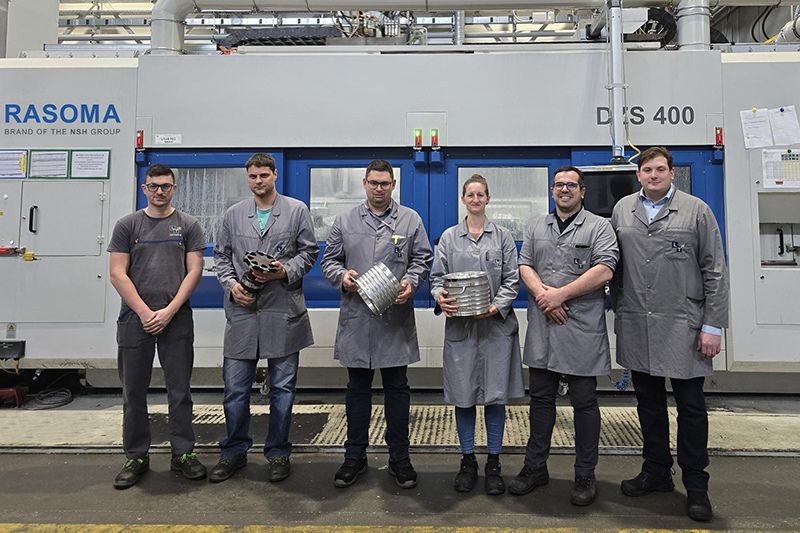
As competition on price is tough among automotive suppliers, when the RASOMA DZS 400-2 was being developed, the focus was on keeping unit costs as low as possible from the outset. This goal was achieved with a combination of high machine availability, short cycle times, machined component quality and production with reliable processes. Current calculations indicate that machining, including tool costs, can achieve economical costs per part as a result.

Contact
Kathrin Rehor Public Relations Kathrin.Rehor@mapal.com Phone: +49 7361 585 3342