01.01.2020
Complete Supplier in Tool and Mould Making
Not only does MAPAL deliver tools and clamping technology to our customers but also complete processes and the way into the digitalized production
Companies that make dies and moulds expect high process and product expertise from their cutting tools manufacturer. They require their tools to o®er the highest levels of precision, a long tool life, and – above all – process reliability. It is precisely these aspects that make MAPAL successful in sectors such as the automotive industry, machine engineering and the aerospave industry. So it shouldn’t come as a surprise that the precision tool manufacturer is now also taking o® in the field of die and mould making.
Structural changes to the market in fields such as the automotive industry are prompting many suppliers to strategically reposition themselves. “That’s why we have begun to develop in sectors other than our largest source of trade – the automotive industry – years ago. We have established ourselves in the aerospace sector within just a few years”, explains Dr Jochen Kress, President of the MAPAL Group. MAPAL is now planning to do something similar in the die and mould sector.
MAPAL has always offered tools that are also used in die and mould. “However, we hadn’t yet developed the market penetration or comprehensive portfolio we needed”, says Dr Jochen Kress. MAPAL has therefore gradually built up both its portfolio and relevant expertise, most recently by integrating the company voha-tosec into the MAPAL Group. In taking over
the company from Lindlar, MAPAL not only gained sound, deep knowledge of the market, but also products that complement the existing portfolio. New tools were developed in close cooperation.
the company from Lindlar, MAPAL not only gained sound, deep knowledge of the market, but also products that complement the existing portfolio. New tools were developed in close cooperation.
New milling cutters made from solid carbide
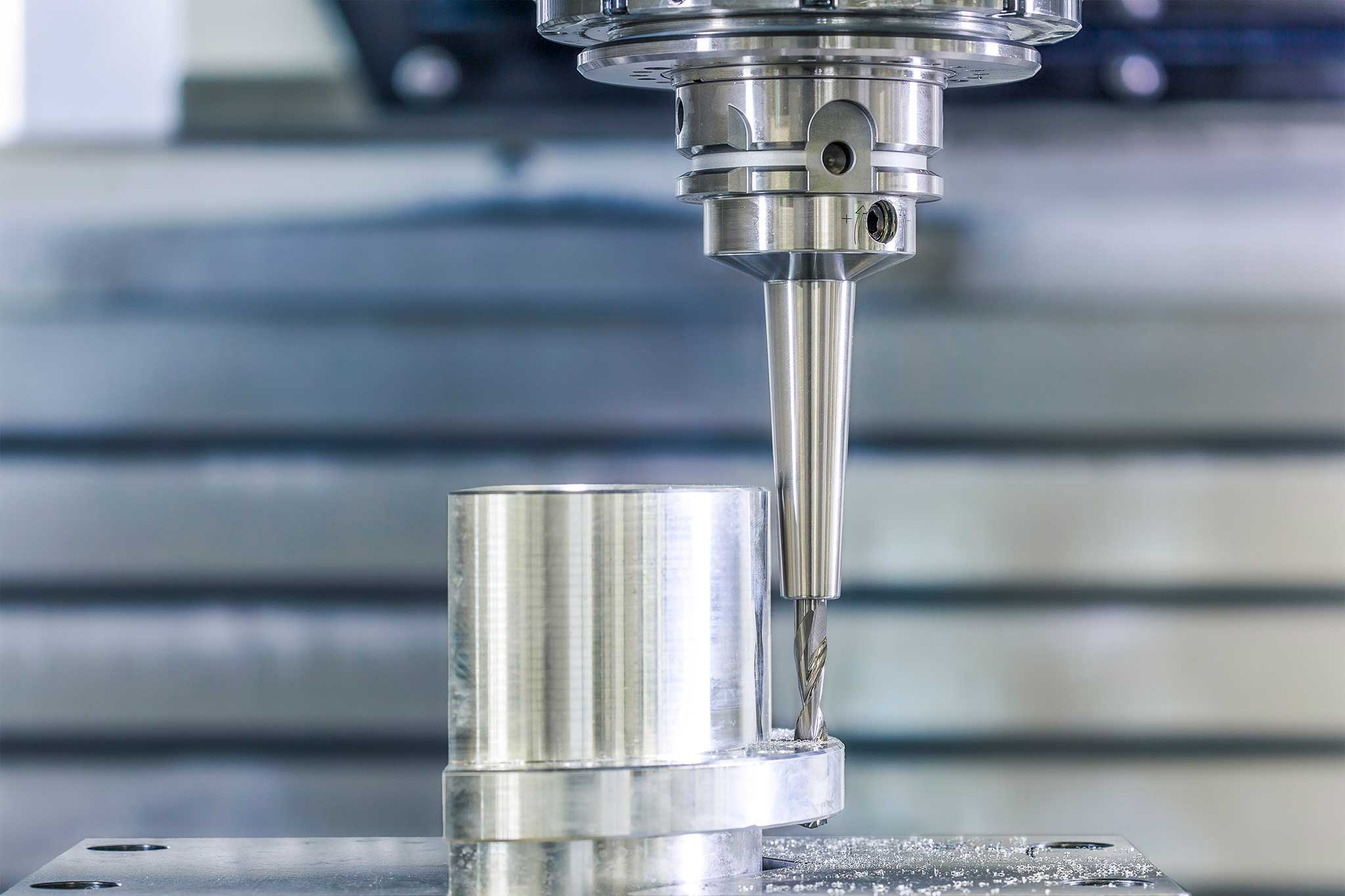
MAPAL has introduced a new, powerful range of solid carbide milling cutters specifically developed for die and mould under the product name OptiMill-3D. “In addition to extremely heat-resistant coatings and special carbide substrates, these tools are characterised by their dimensions and geometries, which are specially adapted to mould”, explains Carsten Klein, who is responsible for the die and mould making market segment.
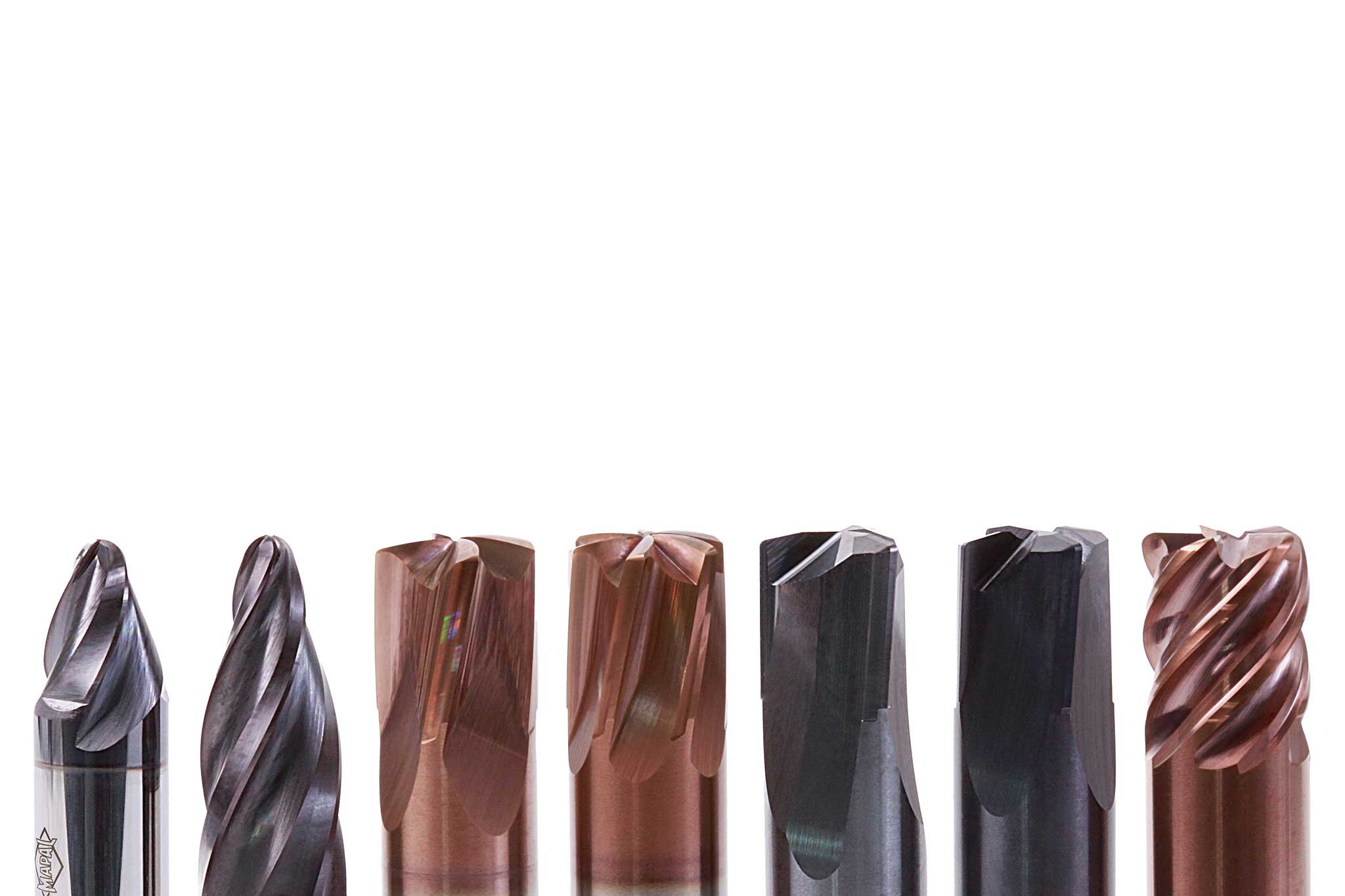
The range includes tools with special face geometry for milling hardened components, a shoulder radius milling cutter for finishing 3D shapes up to a hardness of 66 HRC and new circular radius milling cutters for use in deep cavities or for complex free-form surfaces.
Greater cost-effectiveness with ISO tools
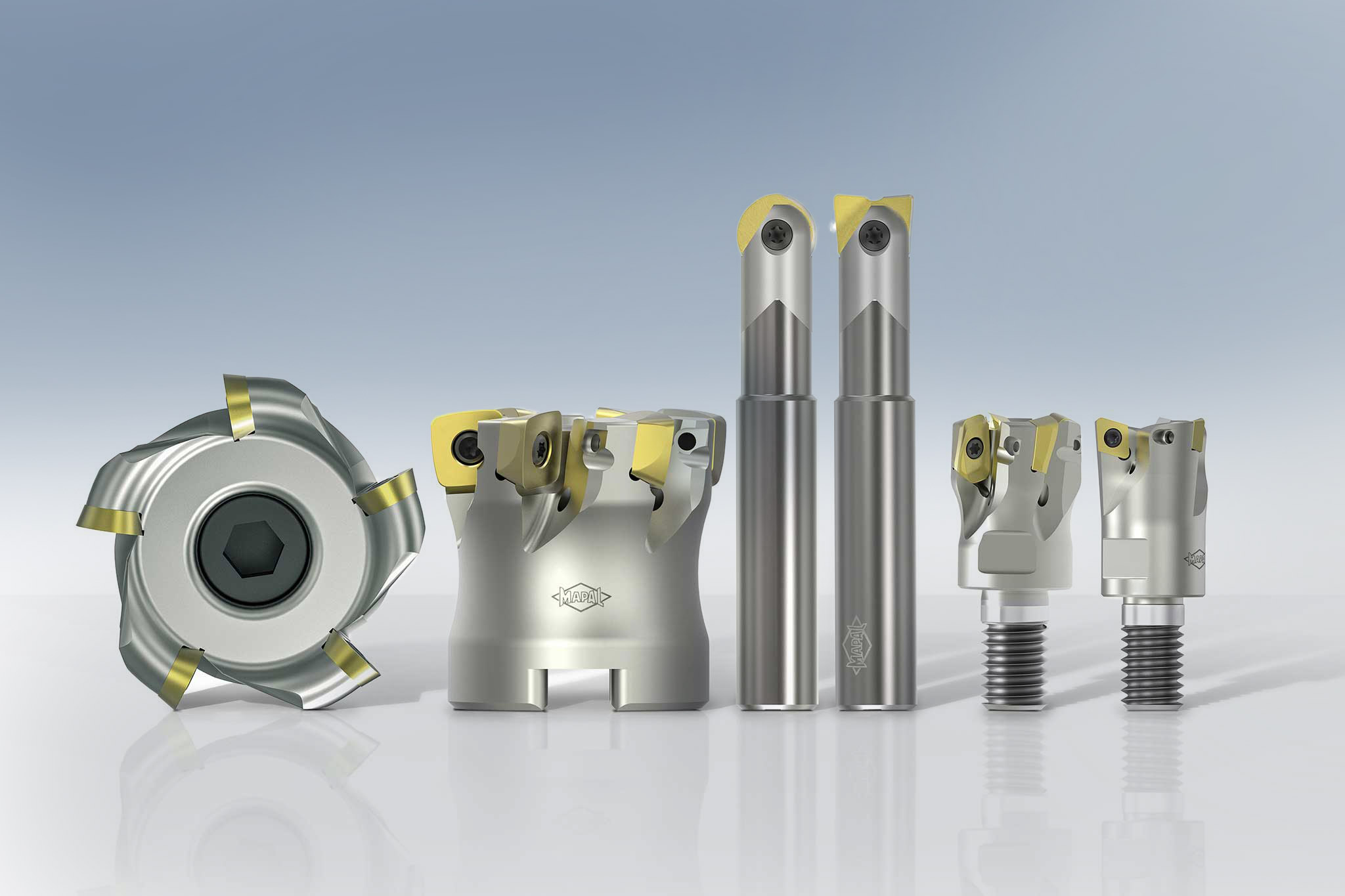
A new range of milling cutters with ISO indexable inserts was also presented at EMO. The programme includes round insert milling cutters, high-feed and 90° shoulder milling cutters, ball and toric end milling cutters and finishing milling cutters. As such, the range of ISO indexable inserts covers the workpiece materials cast iron, steel, stainless steel, non-ferrous metal
and hardened workpiece materials up to 65 HRC. Different cutting materials and coatings are used depending on requirements and the material to be machined.
and hardened workpiece materials up to 65 HRC. Different cutting materials and coatings are used depending on requirements and the material to be machined.
Nearly 100 % coverage – and not just for tools
“Today, we are able to cover almost 100 percent of the needs of companies that make die and moulds,” says Carsten Klein. This includes not only the milling cutters mentioned above, but also the complete range for drilling and reaming. However, when it comes to many milling tasks in die and mould making, the focus is not just on tool technology. Another decisive factor is the programming of the machine, which is a complex matter. MAPAL supports customers in this task and works closely with the relevant software manufacturers to do so.
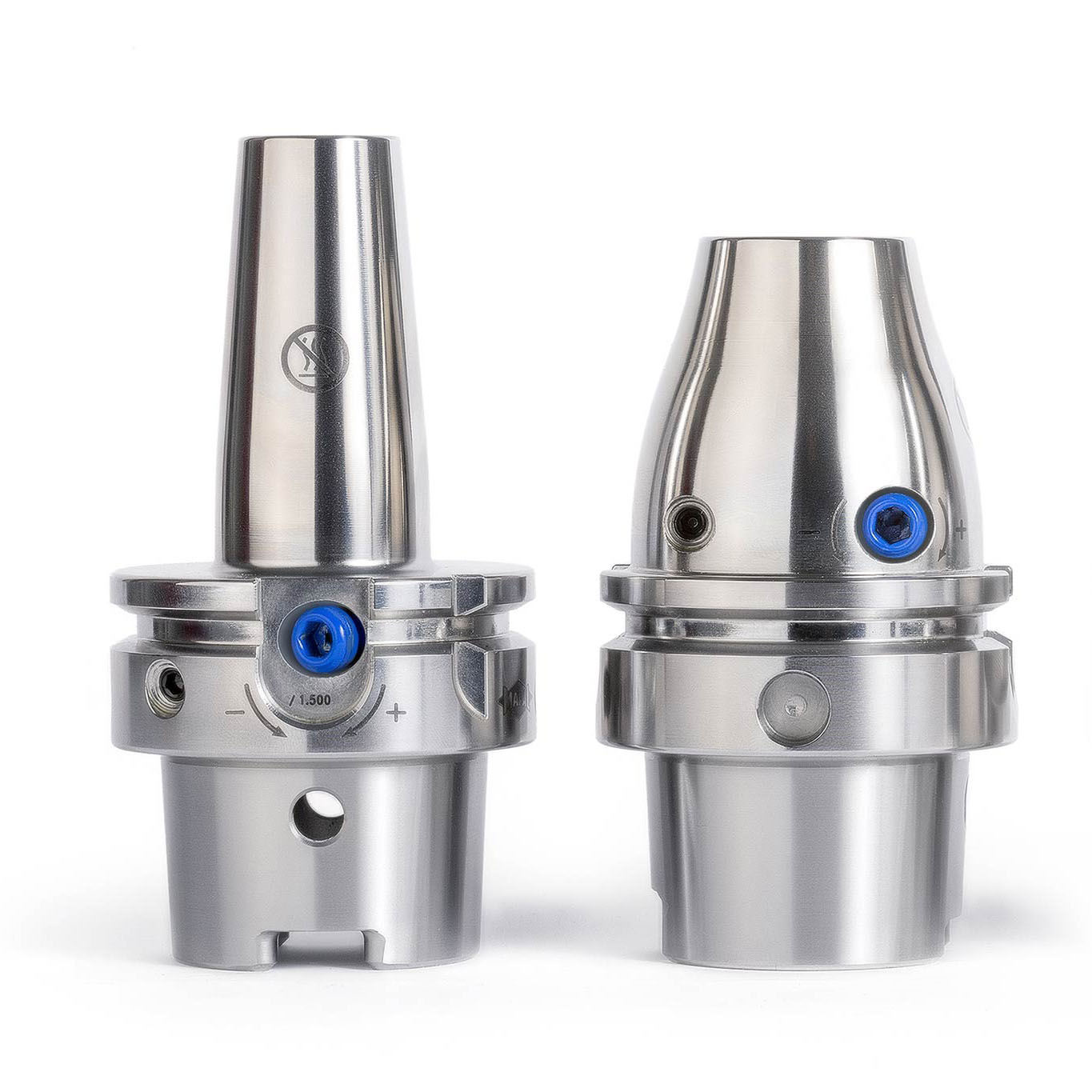
As a full-service supplier, MAPAL’s oerings extend beyond the tool and its programming: MAPAL wants to be a technology partner for its customers. For this reason, the company also supplies the appropriate clamping technology – among other things. The portfolio for this area includes everything needed for clamping. “Our 3-degree chuck in particular has proven itself
in die and mould making”, says Kress. This innovative high-performance chuck boasts a special feature: the HighTorque Chuck (HTC) with a slender contour combines the advantages of hydraulic expansion technology (such as the highest possible accuracy) with the three-degree back taper known from shrink chucks.
in die and mould making”, says Kress. This innovative high-performance chuck boasts a special feature: the HighTorque Chuck (HTC) with a slender contour combines the advantages of hydraulic expansion technology (such as the highest possible accuracy) with the three-degree back taper known from shrink chucks.
Individually adapted chucks
Individually adapted chucks are made possible by additive manufacturing. This process enables the soldered connection between the sleeve and tool body previously necessary to be dispensed with. This was a limiting factor not only in terms of chuck geometry, but also in terms of thermal stability and torque transmission. Thanks to its geometrical freedom, the hydraulic expansion clamping technology can also be used in the case of parts with large tool restrictions or for deep cavities in places that are di¨cult to access, which previously required the use of shrink chucks. “We individually adapt our chucks to each customer’s machining”, explains Carsten Klein. This means that it is often possible to use standard tools instead of costly specialised tools.
In addition to tools, programming and clamping devices, the MAPAL portfolio includes the complete range of peripherals for adjusting and measuring tools, as well as dispensing systems for storing and managing components. “And on top of that, we support our customers with comprehensive services”, says Klein. One example of these services is Tool Management 4.0, which is offered using the open-cloud platform c-Com as a basis. “This means the customer no longer has to worry about the tools – we take care of storing, provisioning, purchasing and reconditioning the tools”, Klein explains. And it all takes place with 100 percent transparency for the customer.
“In the end, the market will decide how strong a foothold we will gain in die and mould making”, says Dr Kress. That being said, MAPAL has high hopes: “We are able to win over potential customers not just by being a full-service provider, but by supporting them with our decades of cumulative experience.” Being on site, solving problems and meeting high expectations have always been of great importance to MAPAL.
For the time being, the company is focusing on die and mould manufacturers within Germany. “Our aim is to gain even more experience in the industry, and then incorporate that experience as we strengthen our engagement globally”, says Dr Jochen Kress.