02.03.2023
The overall process makes the difference
Comparative test at Umformtechnik Radebeul with resounding success
In the die & mould sector, it’s usually difficult to directly compare precision tools from different manufacturers because there are always different parts with different requirements to be produced. When MAPAL was given the opportunity to take over the complete machining of a die at Umformtechnik Radebeul GmbH, the manufacturers were amazed at how much time could be saved.
Die Umformtechnik Radebeul (UFT) ist Spezialist für geschmiedetes Aluminium. Eine besondere Stärke des Unternehmens sind dünnwandige Gesenkschmiedeteile mit verzwickter Geometrie, die gefragt sind, wenn hochwertige Produkte mehr Stabilität benötigen als gegossenes Aluminium bieten kann.
Alles in allem besteht die Fabrik in Radebeul seit 120 Jahren, in denen sich Besitzverhältnisse und Geschäftsfelder wiederholt veränderten. Die neuere Geschichte beginnt 1957 mit der Erbauung einer Gesenkschmiede, aus der die heutige Umformtechnik Radebeul GmbH entstand. 2001 wurde die Produktionsstruktur auf Aluminiumschmiedeteile umgestellt. Seine heutige Form bekam das Unternehmen, das zwischenzeitlich in Teilen als „Aluminiumtechnik Radebeul GmbH“ firmierte, 2006 mit den Bereichen Werkzeugbau, Prototypenfertigung, Teilebearbeitung und Montage.
2017 wurde der Radebeuler Hersteller von der UKM Fahrzeugteile GmbH aus Reinsberg übernommen. Die Geschäftsfelder der Firmen ergänzen sich. Die UKM Gruppe ist Zulieferer der Automobilindustrie mit Fokus auf der Hochpräzisionsbearbeitung von Metallbauteilen. Die UFT fertigt komplexe Aluminium-Schmiedeteile für viele unterschiedliche Anwendungsbereiche. Mit rund 60 Prozent machen dabei Bauteile für Motorräder den größten Anteil aus.
Motorrad-Schmiede mit großer Fertigungstiefe
UFTは主要メーカーのバイク向けに、トリプルクランプ、フットブレーキ、フットシフトレバー、サイドサポート、フットレストプレートなどを製造しています。デリケートな形状や複雑な形状の場合もあるほか、機械加工では厳しい表面設計が課題となります。ラーデボイルでは二輪車部品に加え、日よけのジョイントやコネクター、スキーのビンディング、消防車のホースカップリングやその他の部品も生産しています。同社は、航空宇宙産業の顧客も獲得してきました。
一般的な注文数量は1万から10万個の間です。しかし、少量生産や高品質のプロトタイプは、ラーデボイルの工場が特に得意とするところです。UFTは短納期を特徴としています。
製造ホールを見学すると、その製造の奥深さに驚かされます。自社の工具工場では、鍛造用工具、プレスブレーキ用工具、フライス用治具、UFTの鍛造用測定・検査装置などを製造しています。試作品はブランクから機械加工されます。焼入れ工場も建物内にあり、部品に最終的な外観を整え、部分的に組み立てる機械製造施設もあります。表面処理のみ、近隣の協力会社が行っています。
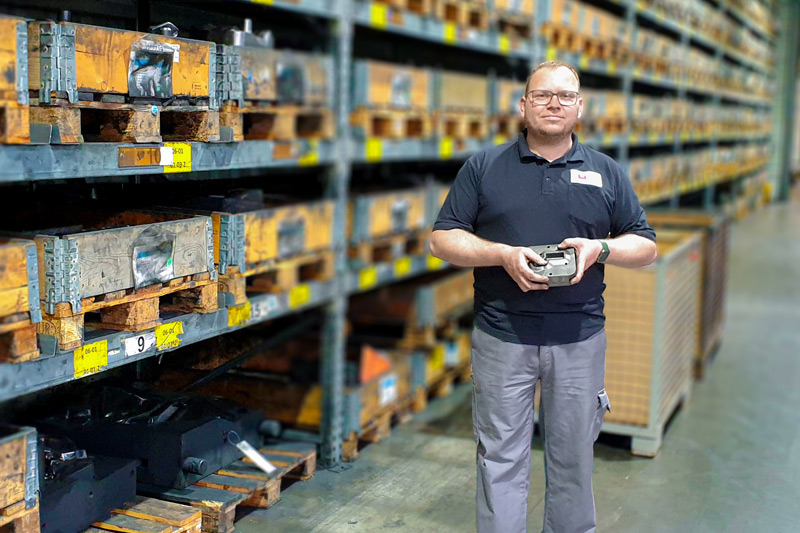
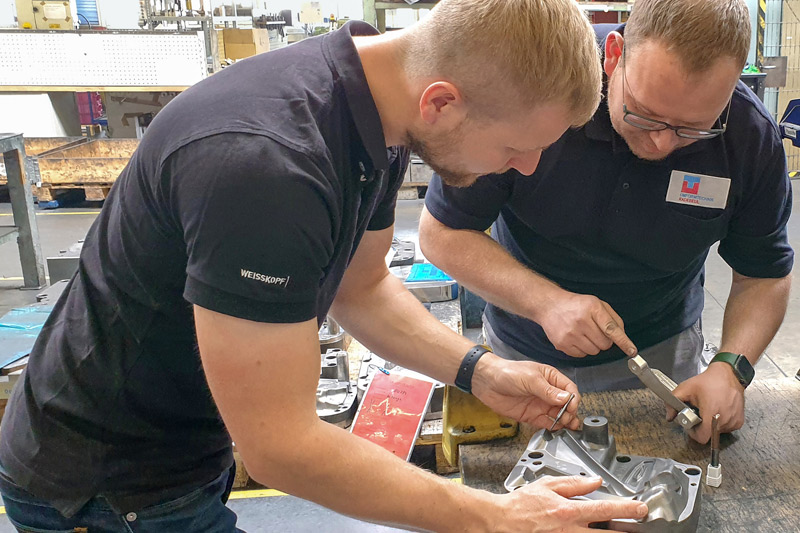
At UFT, 15 of the total 170 employees work in toolmaking. “They are all trained cutting machine operators”, says Steffen Albrecht, Head of Tool Production at UFT, explaining the efficiency of this area. Occasionally, tools are also produced for external customers, but the majority are intended for internal use. UFT has around 500 finished forging tools in stock at any given time, and with every new part more are being added. For the spare parts market of some customers, the tools have to be kept in stock for up to 15 years.
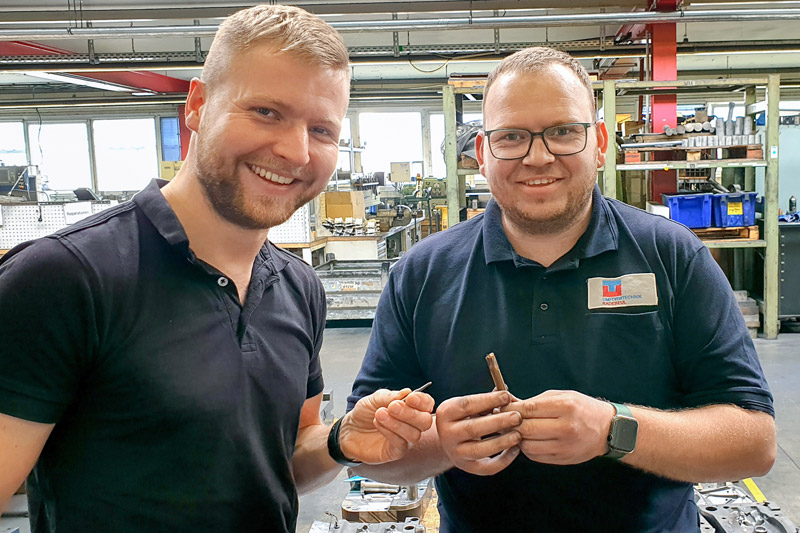
The toolmakers mill the forging tools out of blocks of tool steel. Felix Wendler, Product Specialist Die & Mould at MAPAL, used his many years of personal contact with the manufacturers to encourage them to try out new tools for their machining. Because at UFT, they were quite satisfied with the existing cutting tools.
This did not immediately change, even when a ball nose milling cutter from MAPAL was tested. “The milling cutter from MAPAL was no worse, but also no better than the one we already had”, states Albrecht. Even an improved version of the milling cutter from MAPAL could not persuade the toolmakers to jump ships. “That was certainly also due to the fact that we are already working at a very high level”, explains Albrecht.
Comparative test under identical conditions
Doch MAPAL sollte noch eine richtige Chance zur Bewährung bekommen. Zwar kommt es auch bei der UFT laut Steffen Albrecht sehr selten vor, dass zwei gleiche Teile zu fertigen sind, doch als es um Schmiedewerkzeuge zur Produktion von Fußrasten für einen großen Motorradhersteller ging, sollten dafür gleich zwei Gesenke hergestellt werden. Bei sehr brisanten Werkzeugen verwendet die Produktion Wechseleinsätze, um den Prozess ohne große Störungen laufen lassen zu können. Von den Fußrasten stellt die UFT 20.000 Stück pro Jahr her. Ein Gesenk schafft etwa 10.000 Teile, ehe es ausgewechselt werden muss.
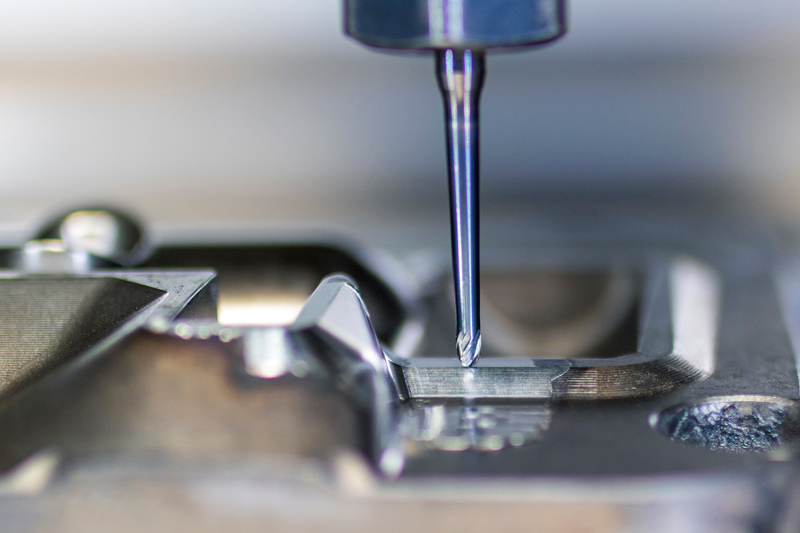
Eine ideale Gelegenheit, um die Werkzeuge zweier Hersteller unter identischen Bedingungen gegeneinander zu testen – mit denselben Aufnahmen und auf derselben Maschine, einer Hermle C40. Zudem handelte es sich um ein anspruchsvolles Bauteil mit einer aufwendigen Bearbeitung. Beim Zerspanen des Gesenks bleibt am Ende weniger als die Hälfte des Materials stehen. Um alle Konturen herzustellen, tauchen relativ kleine Werkzeuge teilweise tief ins Material hinein.
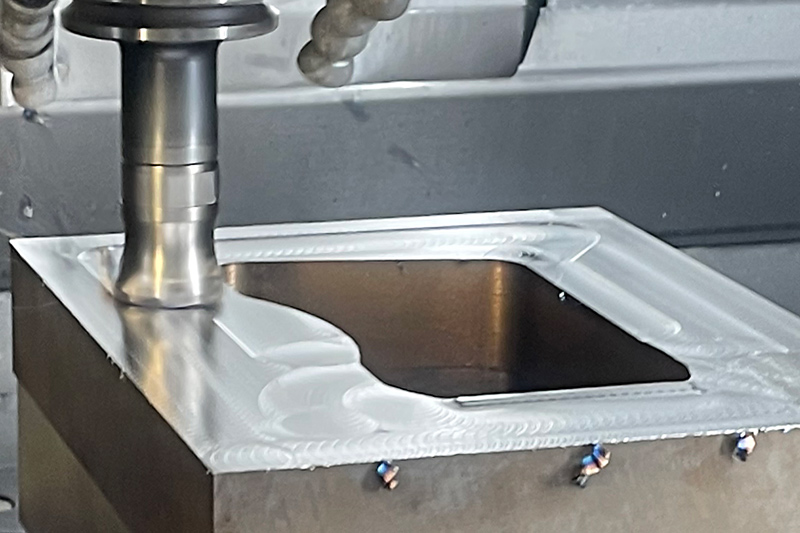
„Wir haben beschlossen, MAPAL ein Bauteil komplett von A bis Z bearbeiten zu lassen, um festzustellen, was der Werkzeughersteller tatsächlich kann“, so Albrecht. „Von den Testbedingungen her hätte das besser nicht sein können.“ Wendler nutzte den eingeräumten Freiraum und erarbeitete eine Bearbeitungsstrategie. Um Geometrien abzugleichen und Probleme mit Abmaßen und Störkonturen zu vermeiden, orientierte er sich dabei an den bislang eingesetzten Werkzeugen und wählte 18 passende Werkzeuge aus dem Portfolio von MAPAL aus, die dagegen antreten sollten. Gegen den bewährten klassischen Rundplattenfräser schickte MAPAL seinen Hochvorschubfräser NeoMill-4-HiFeed-90 ins Rennen.
Das Ergebnis verblüffte die Fertiger in Radebeul: Die Bearbeitungszeit konnte mit den MAPAL Werkzeugen um 28 Prozent reduziert werden. „Uns kam das große Erwachen, als wir feststellten, dass wir bei einem einzigen Bauteil so viel Arbeitszeit und damit Geld einsparen können“, räumt Albrecht ein.
Auf die richtige Vorarbeit kommt es an
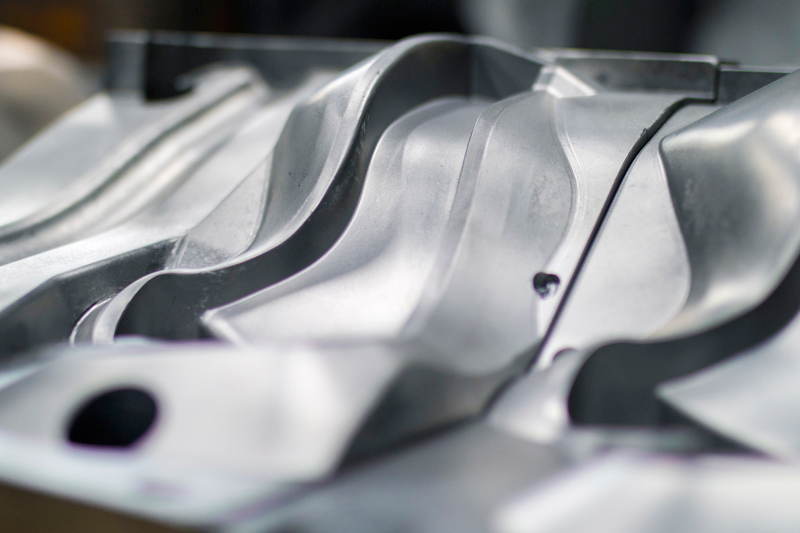
In order to create the best conditions for the subsequent machining steps, Wendler used a 35 mm milling cutter instead of the previous 52 mm cutter. Production Manager Albrecht was very surprised about this: “I was sceptical because with that size difference I didn’t think the small tool could work faster.” But Wendler had his reasons. The 52 mm milling cutter is simply too large for the existing SK40 machines, and the potential of the larger tool cannot be fully exploited. The smaller NeoMill-4-HiFeed-90 high-feed milling cutter he chose, on the other hand, was able to run exactly the cutting data needed. With less cutting width and cutting depth, work was faster in the end.
There was also another factor that contributed to the time savings in the process. The smaller diameter of the milling cutter allows for closer contour machining, leaving less residual material in the corners. This reduces the effort required for further machining. According to Wendler, this is crucial: “Shorter times can hardly be achieved in finishing alone, because the machine is the limiting factor for most users. So I try to create the best conditions already during roughing to gain time overall.”
Thanks to the extremely positive outcome of the project, UFT wants to expand cooperation with MAPAL and tackle further machining work together. “With MAPAL, we have a partner who knows what it is doing. Unfortunately, that’s becoming rarer and rarer”, Albrecht praises. “Having a permanent contact person who can help or give tips if we ever have a problem is a good basis for cooperation.”
The workers have their favourite tool
One milling cutter from MAPAL has become the favourite of machine operators within a short space of time: the OptiMill-3D-HF-Hardened, an extremely powerful solid carbide roughing tool that can be used from soft mild steel to 68 HRC hard powder metallurgical tool steel. “If a tool can actually make the operator beg to be allowed to use it, then we’re really on to something”, Albrecht comments. There are reasons why the tool is so well received: It’s quieter than its predecessor, cuts more smoothly and is therefore more pleasant in terms of volume alone. Operators know up to which tool life they can work with the tool without hesitation before they have to listen more closely during machining.
Another joint project under discussion is the introduction of the UNIBASE-M tool dispensing system, which could be used not only by the UFT tool shop but also by the mechanical finishing department right next door. Tools from MAPAL are also used there, but it is also possible to store third-party tools in the system. The tool stock can be monitored and kept in line with requirements via the digital tool management system c-Com. The adaptive system ensures that as few tools as possible are stored, but that the customer is always fully capable of action – after all, production should run smoothly.

Contact
Kathrin Rehor Public Relations Kathrin.Rehor@mapal.com Phone: +49 7361 585 3342