Machining thin walls and ribs

Plastic injection moulds and die casting moulds often have ribs and thin walls. Ribs, for example, are increasingly being milled, as this process is more cost-effective than EDM (spark eroding). As a rule, long or extra-long carbide tools with small diameters are used. Customer-specific solutions (RibCutter) to match the respective rib shape are also possible here
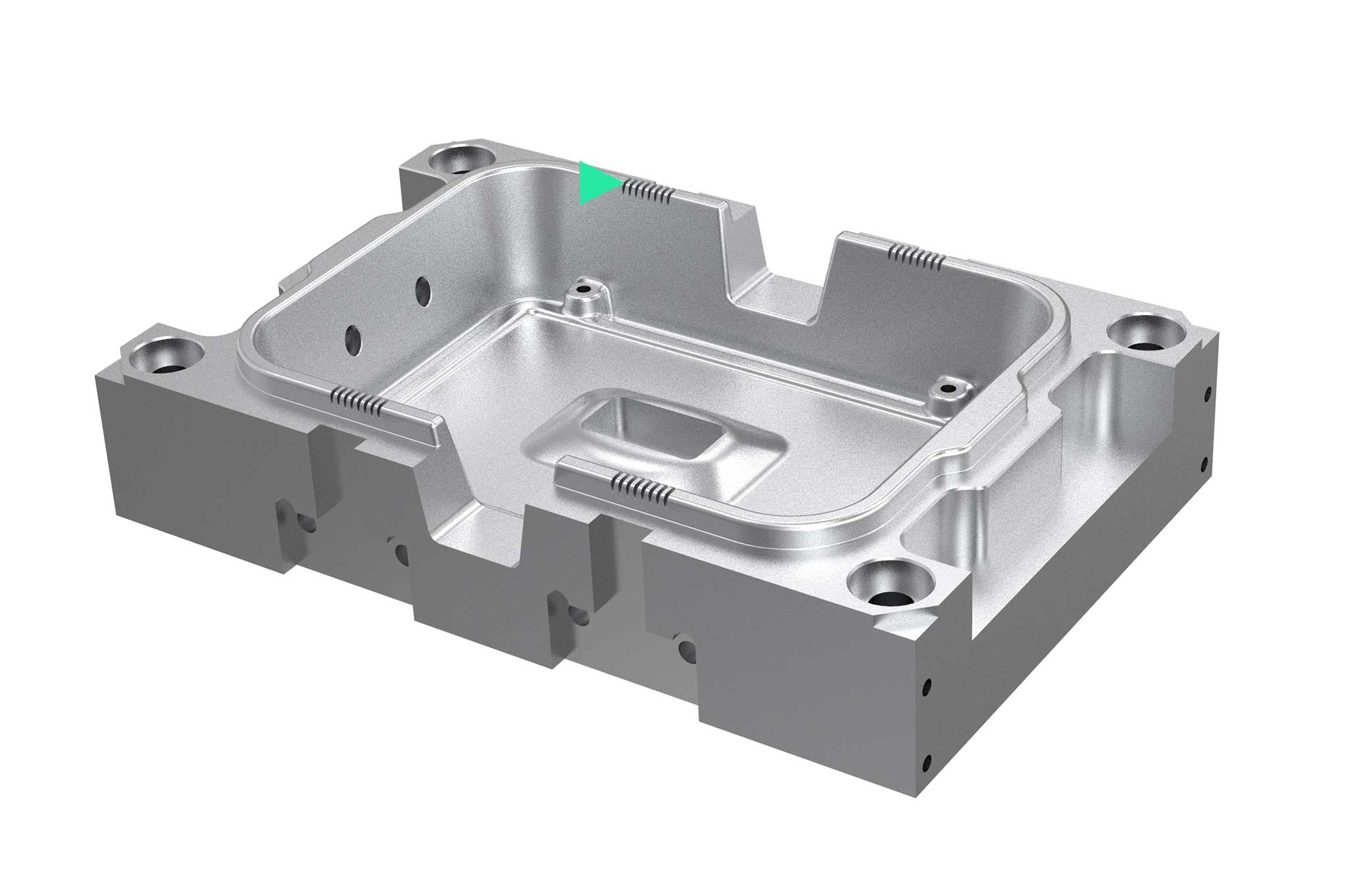
On a rendered example component, an operation is highlighted.
Tool overview for the following machining steps:
  1. Roughing
  2. Finishing​​​​​​​

Roughing

Roughing operations are responsible for most of the chip removal capacity. Special milling strategies such as high-feed machining or trochoidal milling can reduce machining time and thus increase profitability. In addition to tools with indexable inserts and solid carbide milling cutters, high-performance milling cutters with special roughing geometry are used.
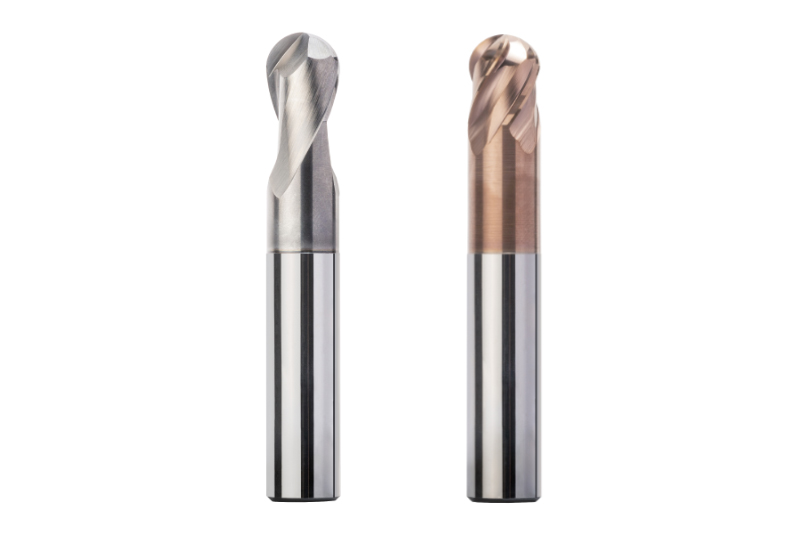
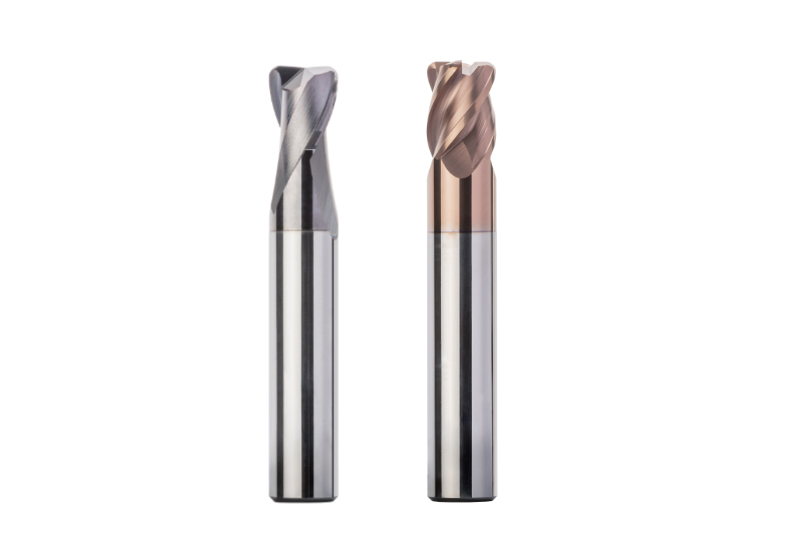
  • OptiMill®-3D-BN

    Solid carbide ball cutter
    • High precision machining of 3D contours
    • High precision milling cutters with a high level of radius accuracy
    • Wide selection for hard and soft machining of steel
    • Variants z=2 und z=4, with and without working depth
    • Available in cylindrical and conical forms

  • OptiMill®-3D-CR

    Solid carbide corner radius milling cutter
    • Finishing of 3D moulds with a high-precision corner radius
    • High precision corner radius with high level of radius accuracy
    • Wide selection for hard and soft machining of steel
    • Different numbers of teeth available
    • Available in cylindrical and conical forms

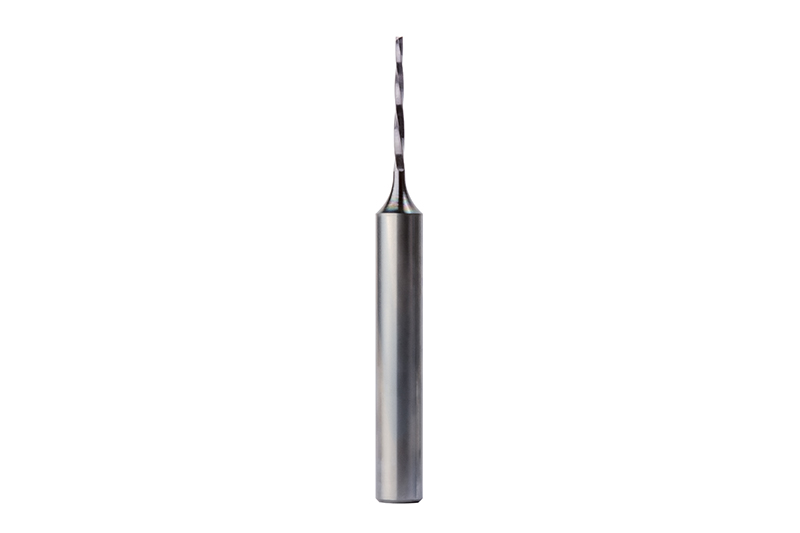
  • RibCutter

    Solid carbide special milling cutter
    • For the machining of deep ribs and contours
    • Special cutting edge geometry
    • Excellent surface finish
    • Extreme time savings due to the elimination of time-consuming multi-pass milling
    • Available as a ball/corner radius milling cutter and with a straight face


Alisado

El mecanizado de alisado nivela la medida restante para conseguir la forma final. Tras el mecanizado de semiacabado, serán 0,05-0,1 mm en el caso de los materiales templados o 0,1-0,3 mm en el de los materiales blandos. La elección correcta serán la fresa esférica y la fresa de radio angular, en función de los perfiles finales de la pieza.
  • OptiMill®-3D-BN

    Fresa esférica completa en metal duro
    • Mecanizado muy preciso de contornos 3D
    • Fresas muy precisas con gran precisión de radio
    • Gran selección de mecanizado templado y blando de acero
    • Variantes z=2 y z=4, con y sin profundidad de trabajo
    • Formas cilíndricas y cónicas

  • OptiMill®-3D-CR

    Fresa de radio angular completa en metal duro
    • Alisado de formas en 3D con un radio angular muy preciso
    • Radio angular muy preciso con gran precisión de radio
    • Gran selección de mecanizado templado y blando de acero
    • Disponible con distinto número de dientes
    • Formas cilíndricas y cónicas

  • RibCutter

    Fresado especial completo en metal duro
    • Para el mecanizado de nervaduras y perfiles profundos
    • Geometría especial de corte
    • Calidad extraordinaria de la superficie
    • Ahorre muchísimo tiempo al prescindir del costoso planeado
    • Disponible como fresa de radio angular y esférica con frontal recto