08.07.2026
Efficient tools and process solutions for the ramp-up of aircraft production
Interview with Laurent Benezech and Frédéric Estrat about the growth market aerospace industry
Laurent Benezech (Global Head of Segment Management Aerospace & Composites) and Frédéric Estrat (Global Key Account Manager Airbus and Sales Director MAPAL France) report in the interview why the aerospace industry is a perfect fit for MAPAL and how the company is positioning itself as a global process partner. The subsidiary in France has a pioneering role: the experience gained there serves as a proof of concept for the global rollout of the strategy.

What is MAPAL's strategic focus in the aerospace industry?
Laurent Benezech: In terms of sales, MAPAL still has a large focus on the automotive industry but is significantly expanding its presence in the global aerospace industry. The strategy is based on process-based solutions for final assembly and part machining. The Global Organisation for Assembly is responsible for final assembly activities, while in part machining we work with Generic Components for pattern-based reference processes. MAPAL France was a pioneer within the company group for the aerospace industry. The experience and structures gained there are scaled across the group.
What makes the French example special?
Frédéric Estrat: Certainly our twenty years of experience in working with the aerospace industry, including as a Rank 1 supplier to Airbus. To put this in perspective: In France, we currently generate almost half of our turnover in the aerospace sector. France is the pilot market for Final Assembly: this is where we pool testing and production capacities and transfer methods and standards to other regions. In this way, we create speed in validation and predictability in rollout.
How do MAPAL's competences in the aerospace industry compare to automotive? How quickly can you provide a new tool?
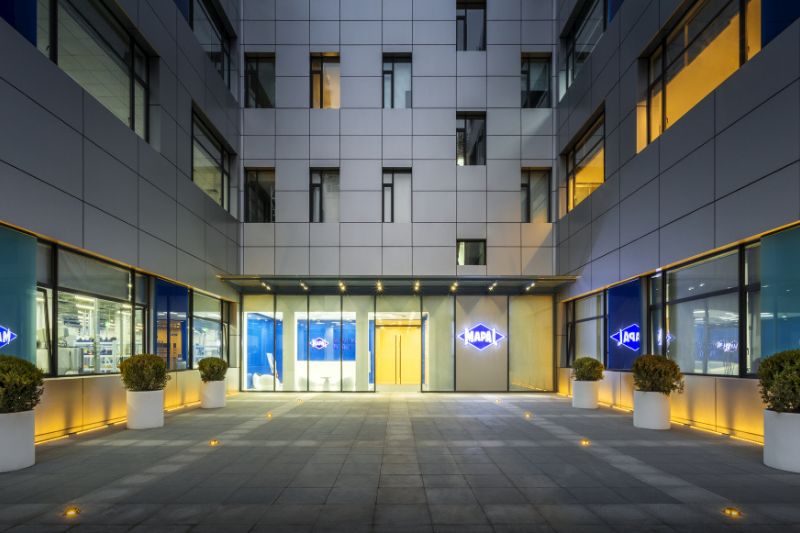
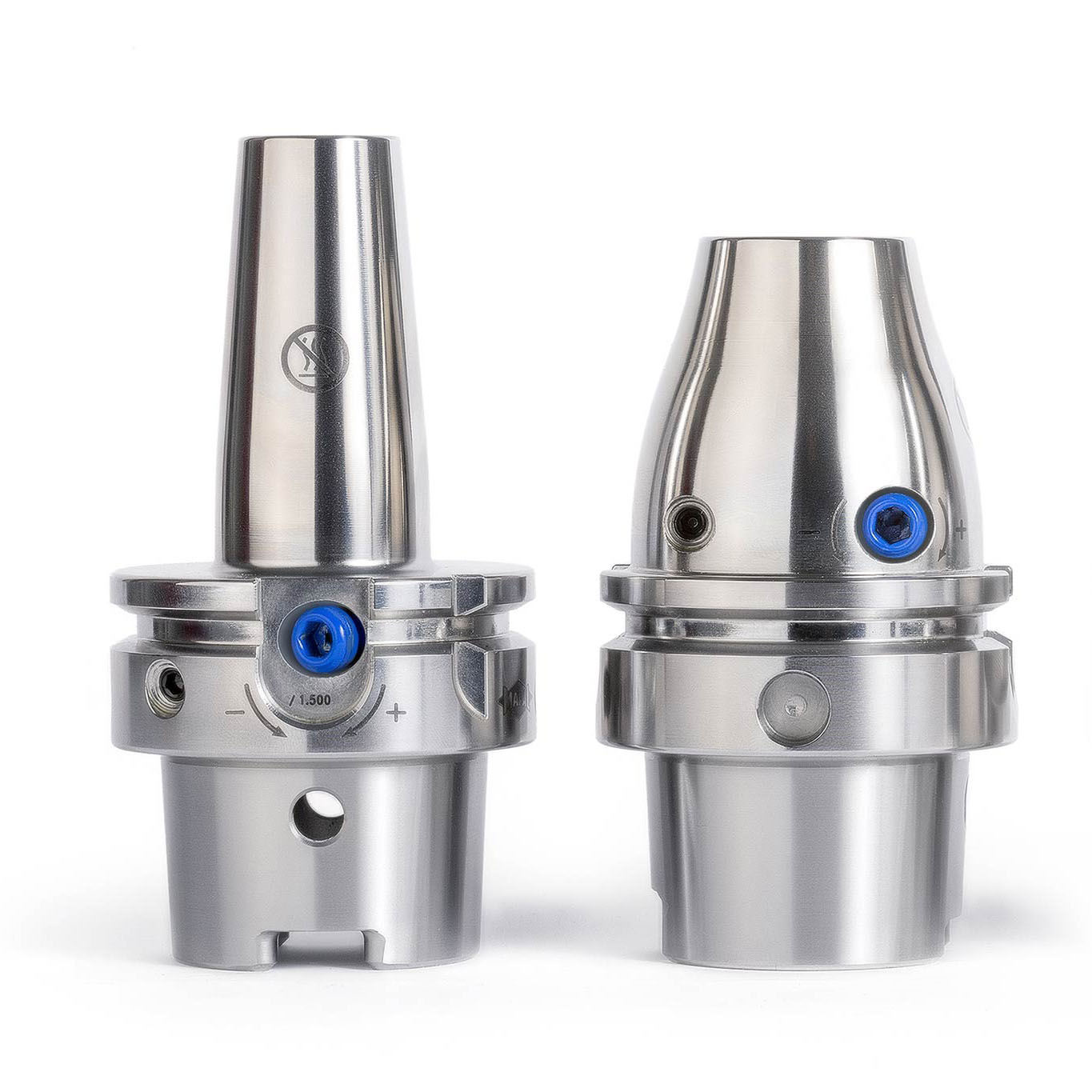
Benezech: We see ourselves at an equally leading level here: We offer our customers a complete process including the entire tool layout. We produce the tools ourselves and have the capacity and skills to regrind or optimise them within a very short time – and this expertise is available in all the important markets. The aerospace industry needs fast response times with regard to test tools and quick optimisation cycles. With our setup we could reduce lead times of test tools down to two weeks for uncoated versions and three weeks for coated tools. Testing can be carried out either directly at the customer's premises or at our test centre here in France. On the other hand, traditional validation takes quite a long time before the products are finally adopted to production. This is a significant difference to the automotive industry, where process optimisations are included seamlessly in production. We have aligned our organisation accordingly: rapid provision of test tools combined with the ability to support validations worldwide.
How do you assess the market development in general?
Estrat: When people talk about the aerospace market, they usually mean the number of aeroplanes sold or the number of passengers. The potential market for cutting tools is very different. By way of comparison, when assessing growth in the automotive market, you can gain a good insight into how tool consumption is developing. It's different in the aerospace industry. In 2025, there was not more money spent on tools than in the previous year, even though more aircraft were built. One reason for this is that the industry is realising cost-saving potentials by optimising processes and increased tool regrinding. After all, the cost of a bore can be reduced by more than half with a reground tool. We are also seeing a tendency where machining operations that were previously carried out manually are now being automated using Advanced Drilling Unit (ADU) or robots. The industrialisation of production is a major lever for further increasing production volumes. The aim is to produce 10 per cent more aircraft than the previous year, which is quite a lot. It is expected that twice as many aircraft will be flying by 2040 as there are today.

What does that mean for MAPAL?
Benezech: The aerospace industry needs to invest in new machines and production lines in order to meet its ambitious goals. This also applies to the modernisation of existing production facilities. We assume that the demand for tools will increase, but not in proportion to aircraft production. However, the tools will need to be technically more advanced. This creates additional potential for MAPAL - not only as a tool manufacturer, but also as an integrated technology partner that measurably increases productivity and quality with process analysis, design, validation and series transfer.
Estrat: In the past, aircraft manufacturers primarily focused on the price of a tool, which sometimes resulted in extremely high cost per part. By using MAPAL’s modern tool technologies, these costs were reduced by a factor of ten. The industry has consequently moved away from low-cost tools, particularly in the area of assembly. The focus has shifted to productivity and quality. This is particularly important for applications where stack materials with composites made of CFRP, titanium and aluminium are machined in a single operation. Moreover, the major manufacturers could sell more aircraft than they can currently produce at the moment. In both assembly and parts production, there is therefore a need for tools that enable higher productivity and can keep pace technologically with the increasing industrialisation of processes. And delivering the right solutions for these prerequisites is one of MAPAL's core strengths.Which of the two areas is more important for MAPAL: Final assembly or part machining?
Benezech: Assembly and part machining are equally important for MAPAL, even if the requirements are different. MAPAL has built up a great deal of expertise in assembly in recent years and has been very successful with the major manufacturers, especially in France. We are therefore consistently transferring the technical solutions and expertise we have developed to other markets via the Global Organisation for Assembly. In parts production, we draw on experience from Germany and the UK, among other countries. The focus is on process-stable, reproducible machining solutions for titanium, aluminium and composites - designed for industrialisation and series stability.
Wie erfüllt MAPAL weltweit die Ansprüche der jeweiligen Kunden?
Benezech: Wichtig ist, dass wir uns jeweils an den lokalen Kontext anpassen. Wir erfassen die Anforderungen der Kunden direkt vor Ort und hören genau zu, was erwartet wird. Es ist ja seit jeher wesentlicher Bestandteil der MAPAL DNA, nahe beim Kunden zu sein und die Werkzeuglösungen von den Kundenbedürfnissen her maßzuschneidern. Wir verfügen über die Fähigkeiten und die Kapazitäten, alle Ansprüche zu erfüllen - vom einfachen Werkzeug bis zur Auslegung komplexer Prozesse. Damit das weltweit reproduzierbar gelingt, setzen wir auf drei Bausteine:
1.
In der Teilefertigung stehen für die Marktbearbeitung unsere strategischen Generic Components zur Verfügung. Sie bilden alle relevanten Zerspanungsschritte ab, dienen als Referenzprozesse, die schnell und kundenspezifisch adaptiert werden können und international Planungssicherheit schaffen. Wir arbeiten zudem eng mit Maschinenherstellern zusammen, um Werkzeug‑ und Maschinenleistung optimal aufeinander abzustimmen. Ziel ist es, neue Leistungsgrenzen in der Zerspanung - insbesondere bei Aluminium‑Strukturbauteilen - unter Serienbedingungen zu validieren und diese Erkenntnisse weltweit verfügbar zu machen.
2.
Für die Endmontage bündelt die Global Organisation for Assembly zentral Angebotsabwicklung, Entwicklung und Testing und stellt über lokale Prozessexperten schnelle Reaktionen, Prozessanpassung, Validierungsbegleitung und die Überführung in die Serie sicher. Zur Absicherung unserer Endmontageprozesse betreiben wir in Frankreich eine moderne Test‑ und Analyseumgebung, die die Erkenntnisse weltweit zur Verfügung stellt.
3.
Für eine weltweit homogene Marktbearbeitung sind spezialisierte Vertriebsexperten für Aerospace vor Ort entscheidend, die im technischen Support vernetzt zusammenarbeiten. Dadurch profitieren unsere Kunden von kurzen Reaktionszeiten, konsistenter Prozessauslegung und einer schnellen Überführung validierter Lösungen in die Serie – unabhängig vom jeweiligen Standort.
Haben Sie solche Spezialisten bereits überall?
Estrat: In den strategisch wichtigsten Märkten ja. In Deutschland, Frankreich, Polen, Italien, Spanien, Belgien, UK, USA, China und Marokko sind unsere Teams gut aufgestellt und erzeugen Wachstum. Aber natürlich arbeiten wir eng mit allen MAPAL Tochtergesellschaften und Vertriebsvertretungen weltweit zusammen.
Stehen für MAPAL die großen Flugzeughersteller besonders im Fokus oder auch die kleineren und die Zulieferer für die Branche?
Benezech: Mit unserem globalen Vertrieb und unserer technischen Kompetenz sind wir gut aufgestellt, um die Anforderungen der großen OEMs und Tier 1 & Tier 2 Zulieferer zu erfüllen, was auch weiterhin unser oberstes Ziel bleiben wird. Gleichzeitig unterstützen wir selbstverständlich die Zulieferer entlang der Wertschöpfungskette. Unsere agile Organisation ermöglicht es, uns leicht an die unterschiedlichen Anforderungen unserer Kunden anzupassen.
Sie hatten es erwähnt, die Flugzeugbranche tendiert dazu, laufende Prozesse nicht mehr zu verändern. Wie kann man dennoch in diesen Markt Neuheiten einbringen?
Estrat: Heute ist die Branche nicht mehr ganz so konservativ wie sie einmal war, die Prozesse werden durchaus in einem gewissen Rahmen justiert. Die Hersteller sind dazu gezwungen, wenn sie ihre ehrgeizigen Wachstumsziele erreichen wollen. Dabei geht es nicht nur um den Austausch von Zerspanungswerkzeugen, sondern tatsächlich um komplett neu aufgesetzte Prozesse, für die auch neue Maschinen beziehungsweise unter Umständen Roboter angeschafft werden. Dabei sind zwangsläufig auch neue und vor allem leistungsfähigere Werkzeuge gefragt, darunter auch solche, die mehrere Bearbeitungsschritte in einem Arbeitsgang ausführen. Produktivität ist inzwischen ein wichtigeres Kriterium als der Preis. Das eröffnet MAPAL große Chancen.
Warum sollten Unternehmen der Luft- und Raumfahrtindustrie mit MAPAL zusammenarbeiten? Was hebt MAPAL von der Konkurrenz ab?
Benezech: MAPAL ist ein echter Technologiepartner, der umfassend mit dem Kunden zusammenarbeitet. Wir decken alle Schritte von der Kundenanfrage bis zur Implementierung ab und richten die Lösung konsequent an den Zielkriterien der Kunden aus. So sind wir zum strategischen Lieferanten verschiedener Hersteller geworden.
Estrat: Die Industrie findet bei keinem anderen Anbieter die Lösungsqualität, die MAPAL bietet. Wir decken ein sehr breites Spektrum ab, in der Endmontage und in der Teilefertigung. In beiden Bereichen unterstützen wir unterschiedliche Bearbeitungskonzepte: Von der Fertigung auf CNC-Maschinen über manuelle und halbautomatische Prozesse bis hin zu ADU- und Roboterbearbeitungen. Unsere Stärke liegt darin, diese Technologien mit maßgeschneiderten Werkzeug- und Prozesslösungen zu verbinden, und dieses Leistungsangebot weltweit zur Verfügung zu stellen.
Danke für das Gespräch.

Kontakt
Kathrin Rehor Public Relations Kathrin.Rehor@mapal.com Tel.: +49 7361 585 3342