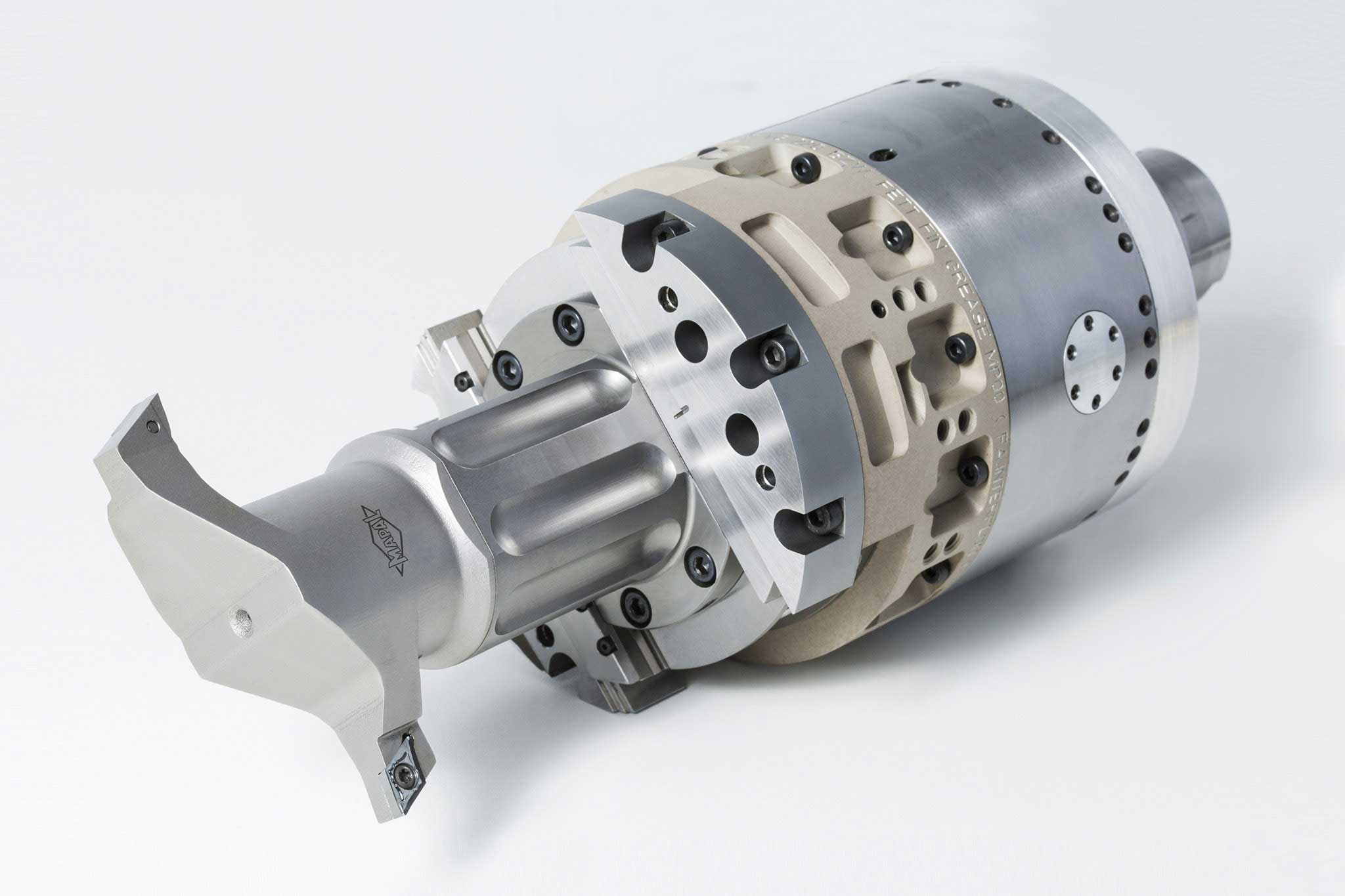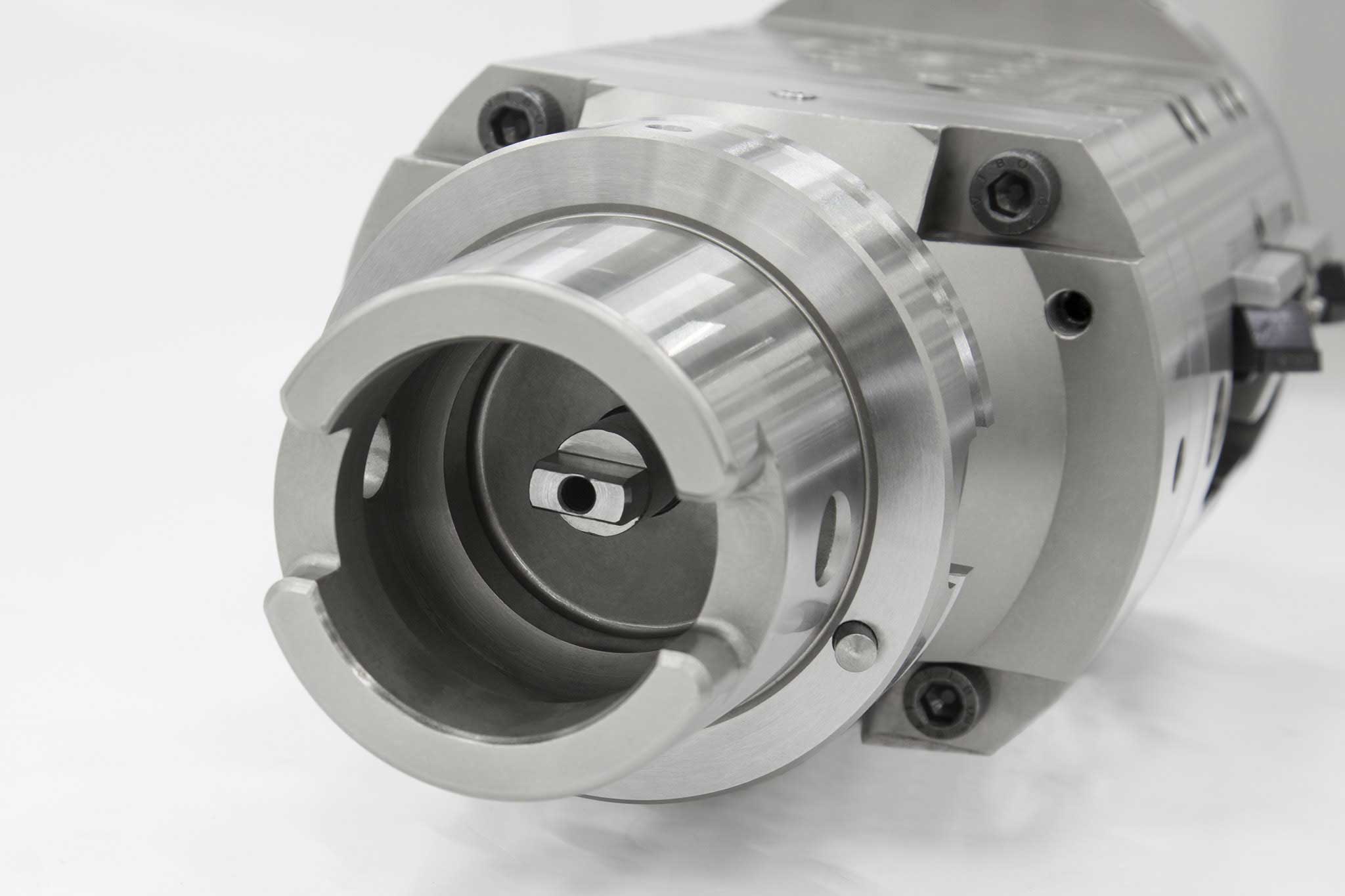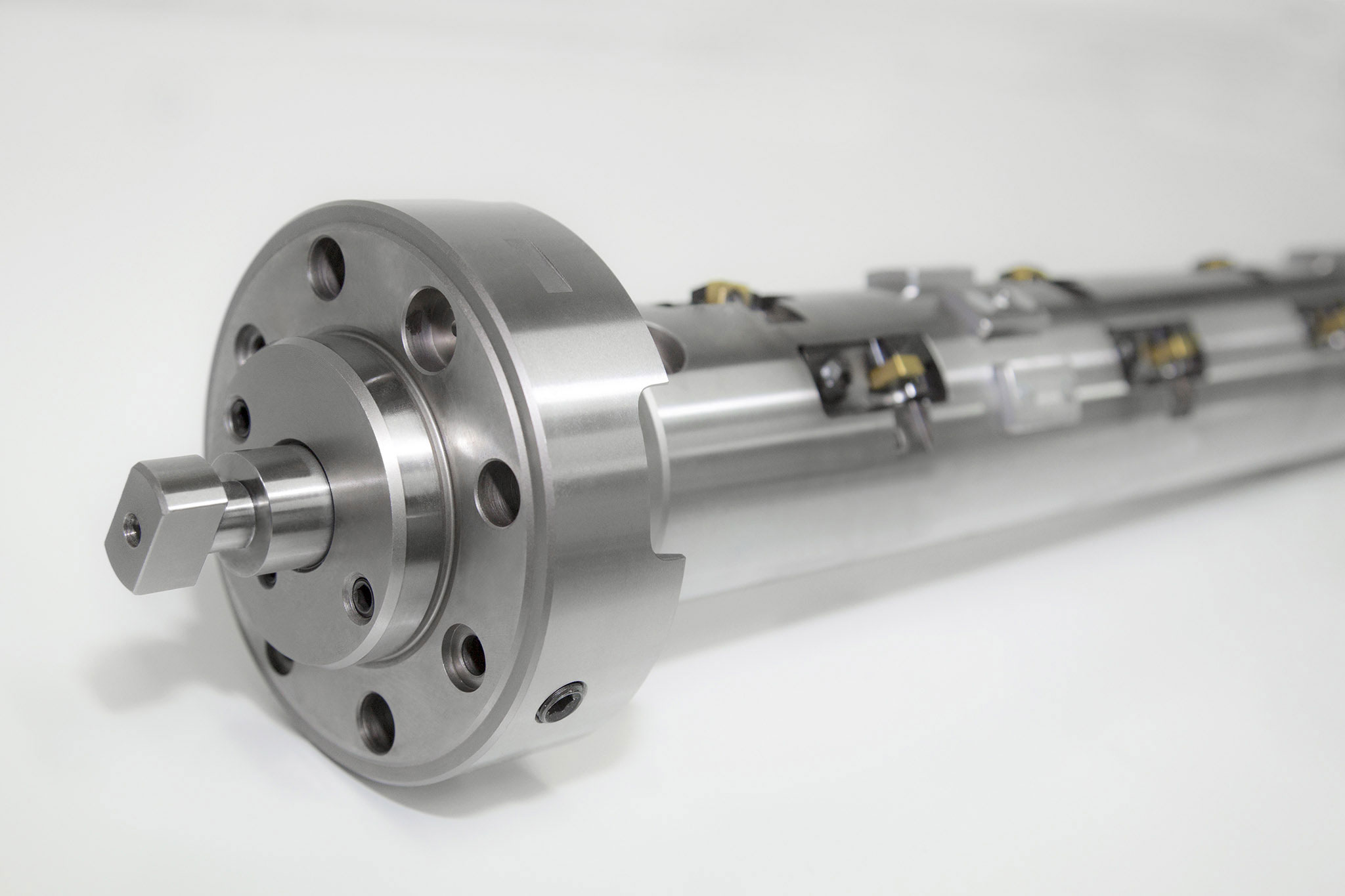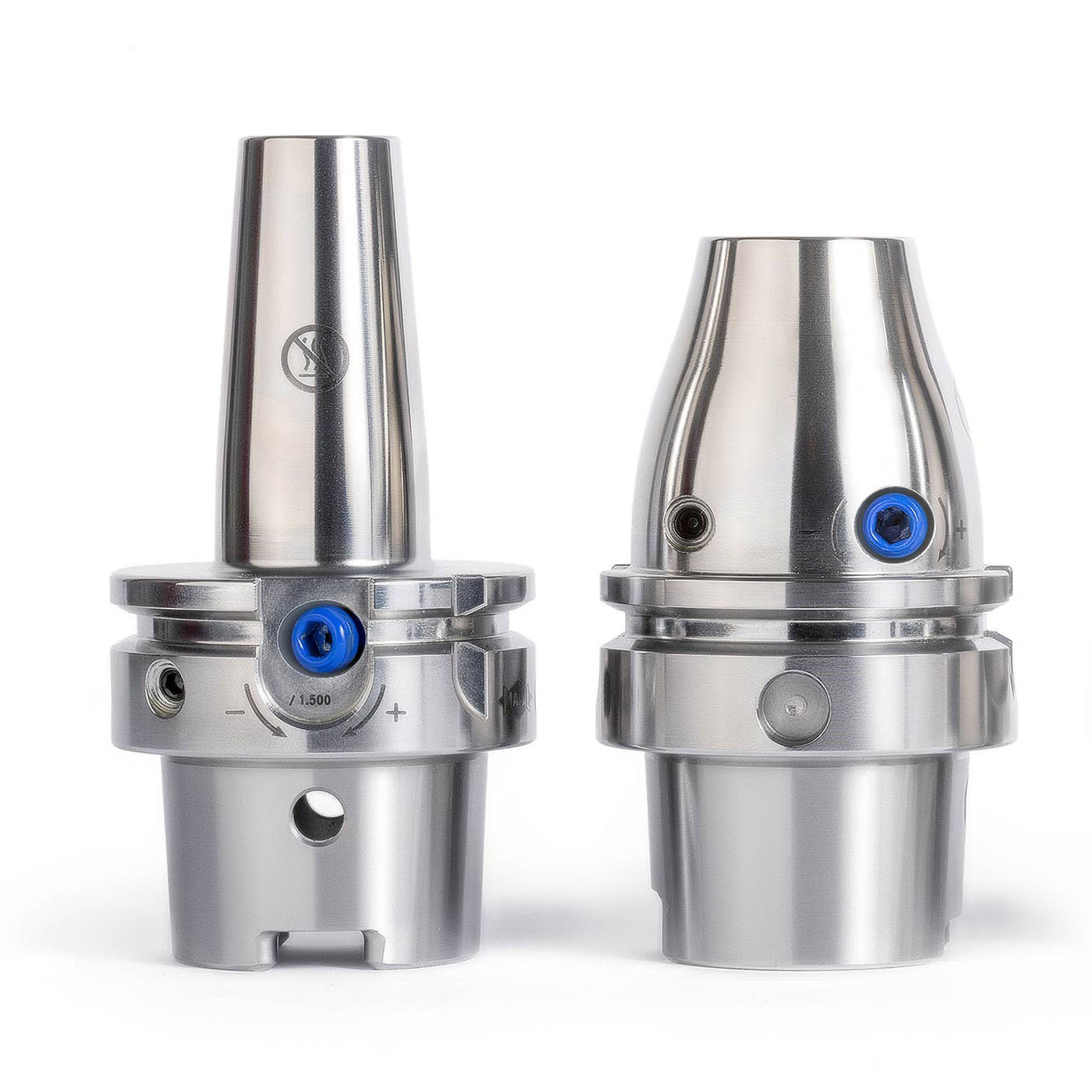
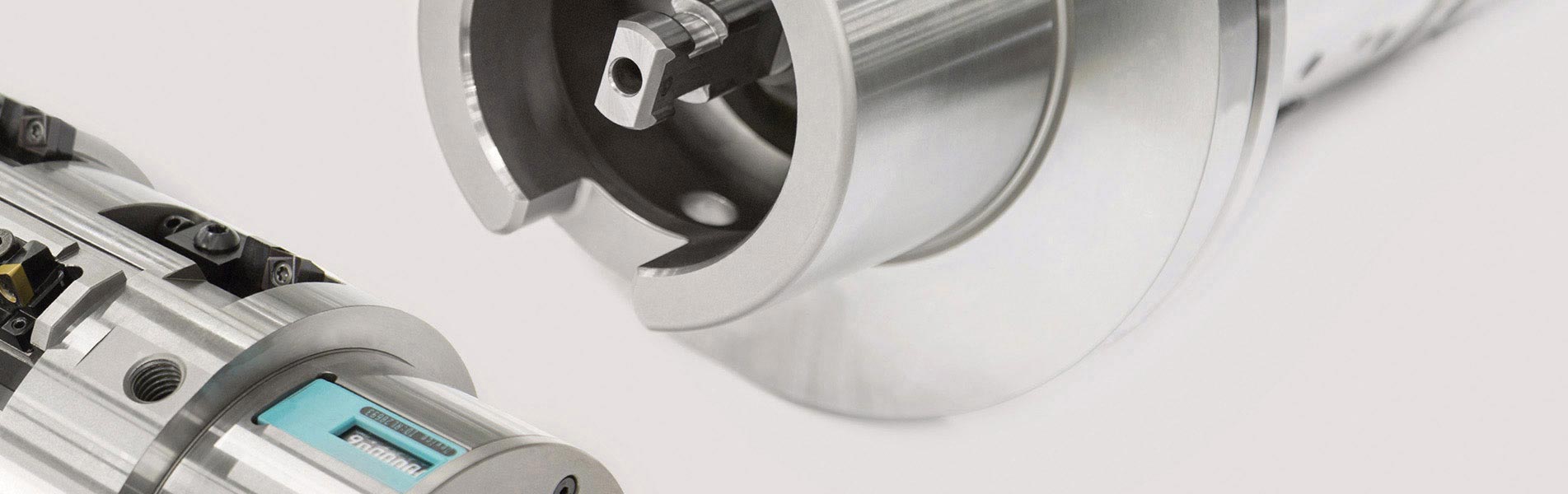
Different types of input and output are combined depending on the requirements of the application.

Types of input and output

MAPAL uses five different types of input to link actuating tools and the machine tool. In addition to the machine type (machining center or special machine), the decisive factor is whether the machine used has a control function or not.

Six types of output are divided into the areas of 'moving and controlling' as well as 'compensating and lifting'.

A wide range of possible combinations result from these types of input and output. The most suitable combination is selected in close coordination between the MAPAL product specialists and the customer.

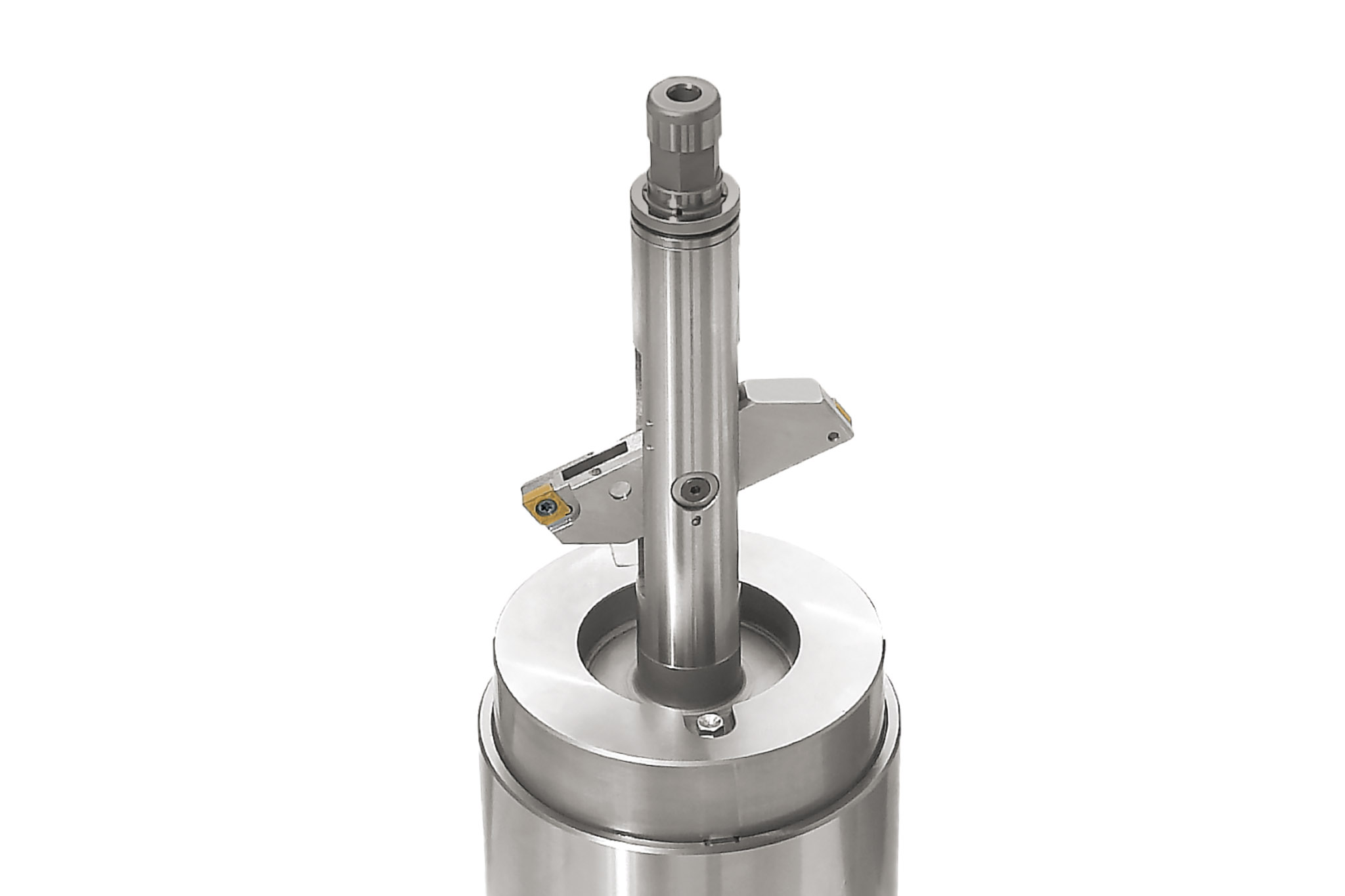
Types of input in detail

  • An actuation tool from MAPAL that uses coolant pressure as drive type.

    Input by means of coolant pressure

    The coolant pressure regulates the actuation of the slide or the positioning of the inserts.
    The feed rate is set manually via a regulator valve. Slides or inserts are returned via an internal spring.

    Tools actuated by coolant pressure can be used in machining centres without actuating function due to their variable connection.

  • An actuating tool from MAPAL with input by means of contact stop.

    Input by means of contact stop principle

    With this principle the contact stop socket comes into contact with the fixture or the workpiece. As a consequence the tool adapter is pressed into the tool and the slide actuated. The feed rate is defined by the machine axis. The slide is retracted by an internal spring. 

    Tools actuated by contact stop can be used in machining centres without actuating function due to their variable connection.

  • In this case, the TOOLTRONIC U axis is used as type of input for actuating tools.

    Input by means of TOOLTRONIC U axis / U axis spindle integration

    As a self-contained drive module, TOOLTRONIC represents a fully-fledged NC axis integrated into the machine control system that makes possible a wide range of applications using inductive energy and bidirectional data transmission.
    The slide is actuated by an actuating motor in the tool. 

    As a general rule, actuating tools that were activated in the past by coolant pressure, the contact stop principle or using a drawbar, can be driven and controlled both on machining centres and special machines without actuating function with TOOLTRONIC.

  • Una herramienta de accionamiento de MAPAL para su uso en máquinas con sistemas de eje en U.

    Input by means of the machine's U axis

    The slide is actuated via the U axis on the machine tool. The feed rate is set via the U axis. As a rule this axis is rotary and a fully functional NC axis.

    Wherever machining centres are equipped with U axis systems, suitably prepared controllable tools can be used.

  • Herramienta de accionamiento MAPAL accionada por la barra de tracción/empuje.

    Accionamiento mediante barra de jalar - empujar

    En una máquina especial puede utilizarse la barra de tracción central para accionar las correderas o el posicionamiento de los filos. La velocidad de avance se ajusta por medio del eje-U. El retroceso se realiza también por medio de este eje (control NC).
     

Tipos de barra de tracción detallados

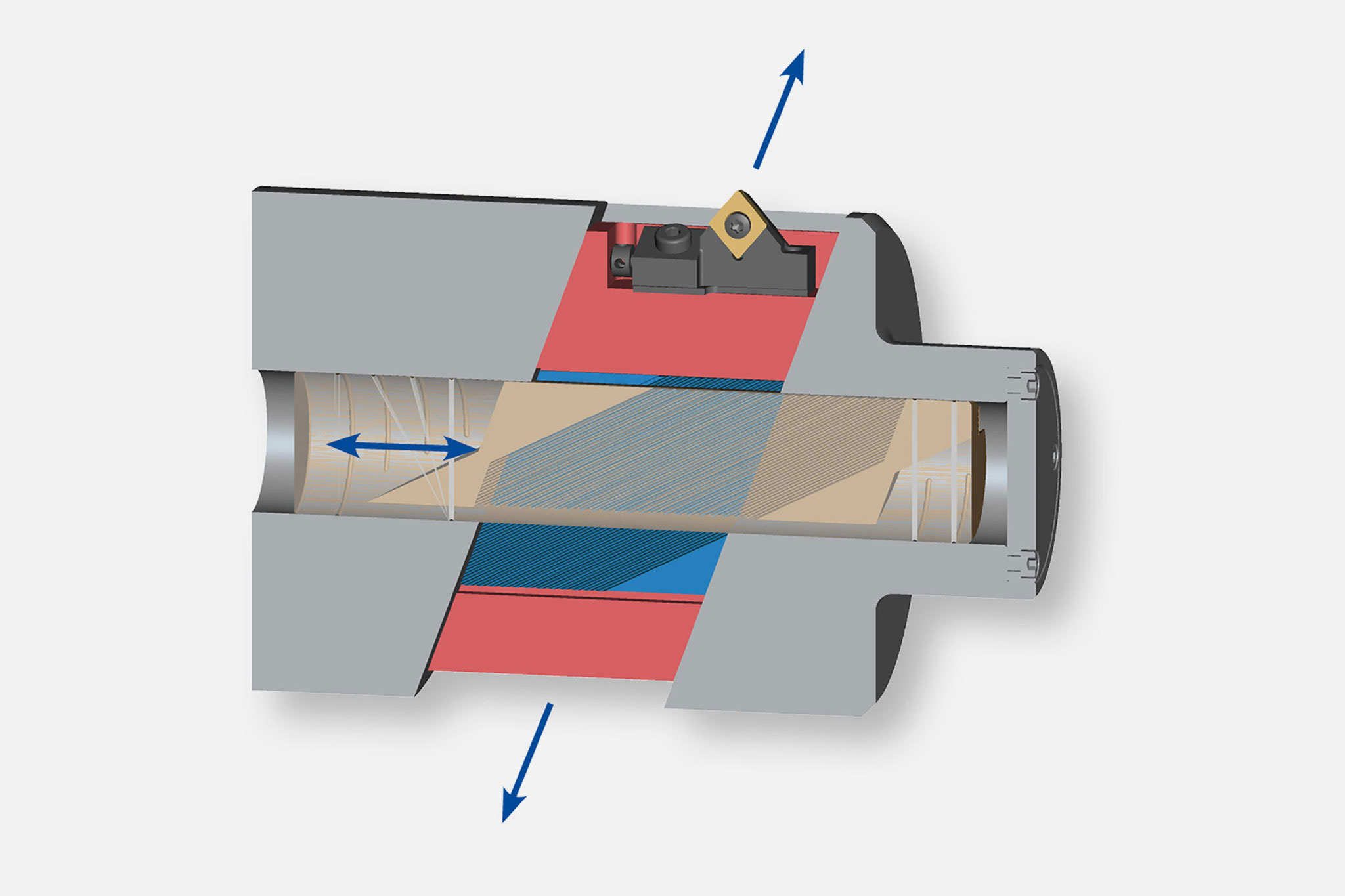
  • Representación esquemática de un accionamiento por corredera lineal de herramientas de accionamiento MAPAL.

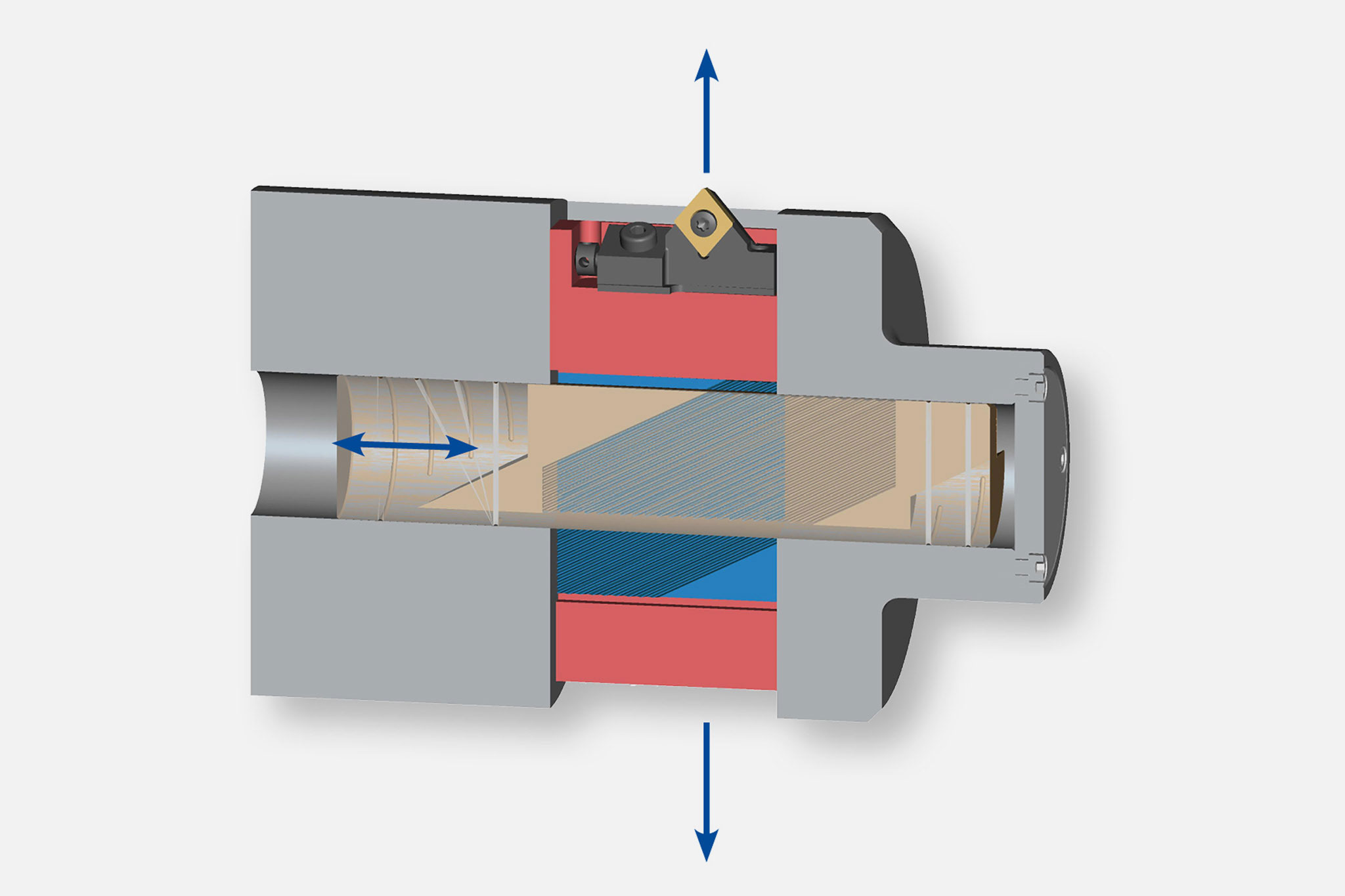
    Corredera linear

    Por medio de un dentado diagonal en la barra de tracción se controla la corredera linear, que se encuentra perpendicular al eje central de la herramienta. 

    Mecanizados: 
    • Tronzar
    • Tornear contornos
    • Refrentar
    • ​​​​​​​Tornear apoyo axial


  • Representación esquemática de un accionamiento de corredera angular de herramientas de accionamiento MAPAL.

    Corredera inclinada

    Funcionamiento como con la corredera linear, pero el ángulo de corredera no es igual a 90° respecto al eje central de la herramienta.

    Mecanizados: 
    • Tronzar
    • Biselar
    • ​​​​​​​Torneado cónico


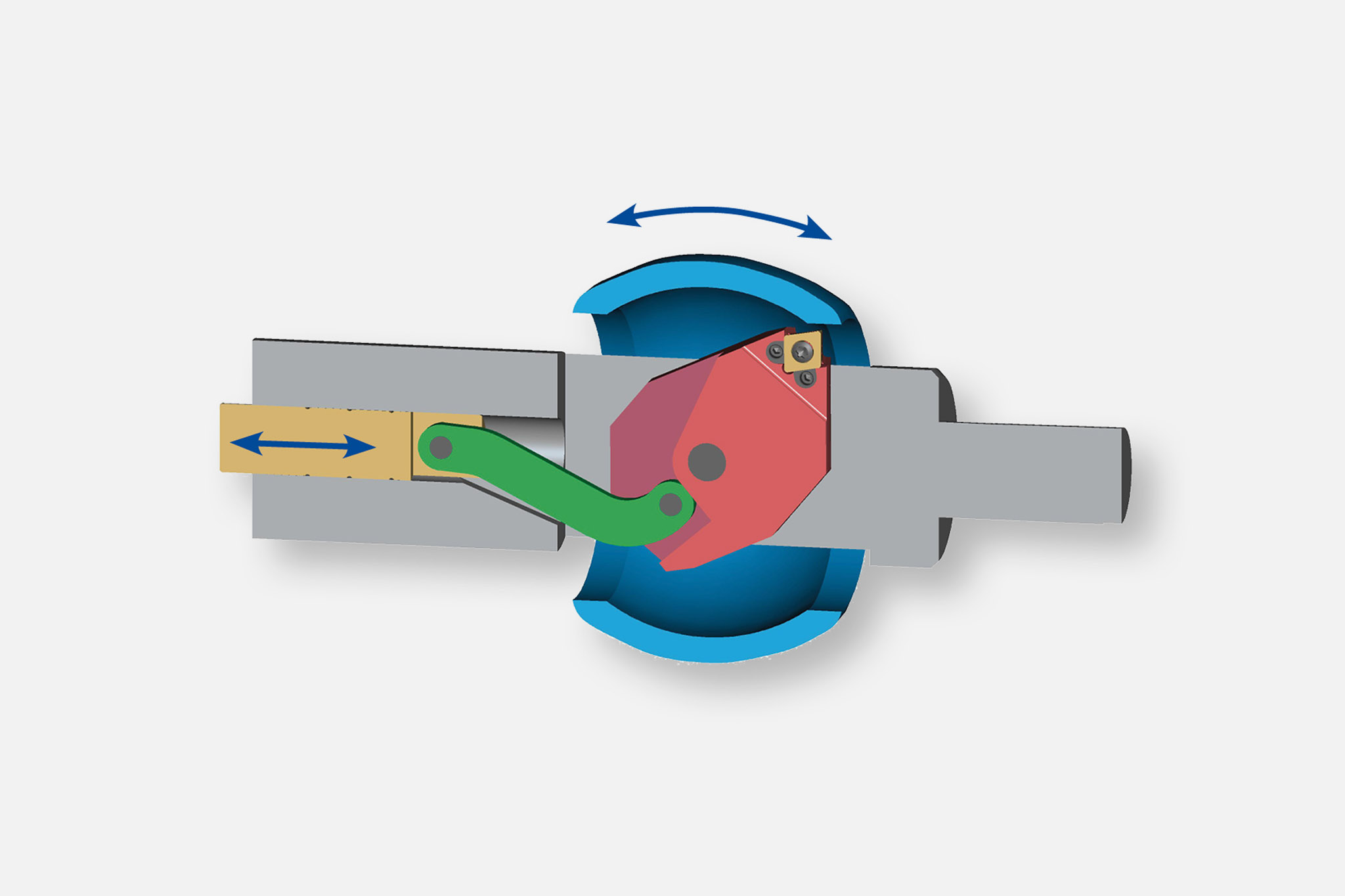
  • Representación esquemática de un accionamiento de corredera giratoria de las herramientas de accionamiento MAPAL.

    Corredera giratoria

    La corredera giratoria se controla por medio de un mecanismo de palanca interno, a través de un perno central. Por medio de la rotación propia de la herramienta y la rotación sobrepuesta de la corredera giratoria se fabrica una sección esférica mediante torneado. 

    Mecanizados: 
    • ​​​​​​​Tornear casquete esférico


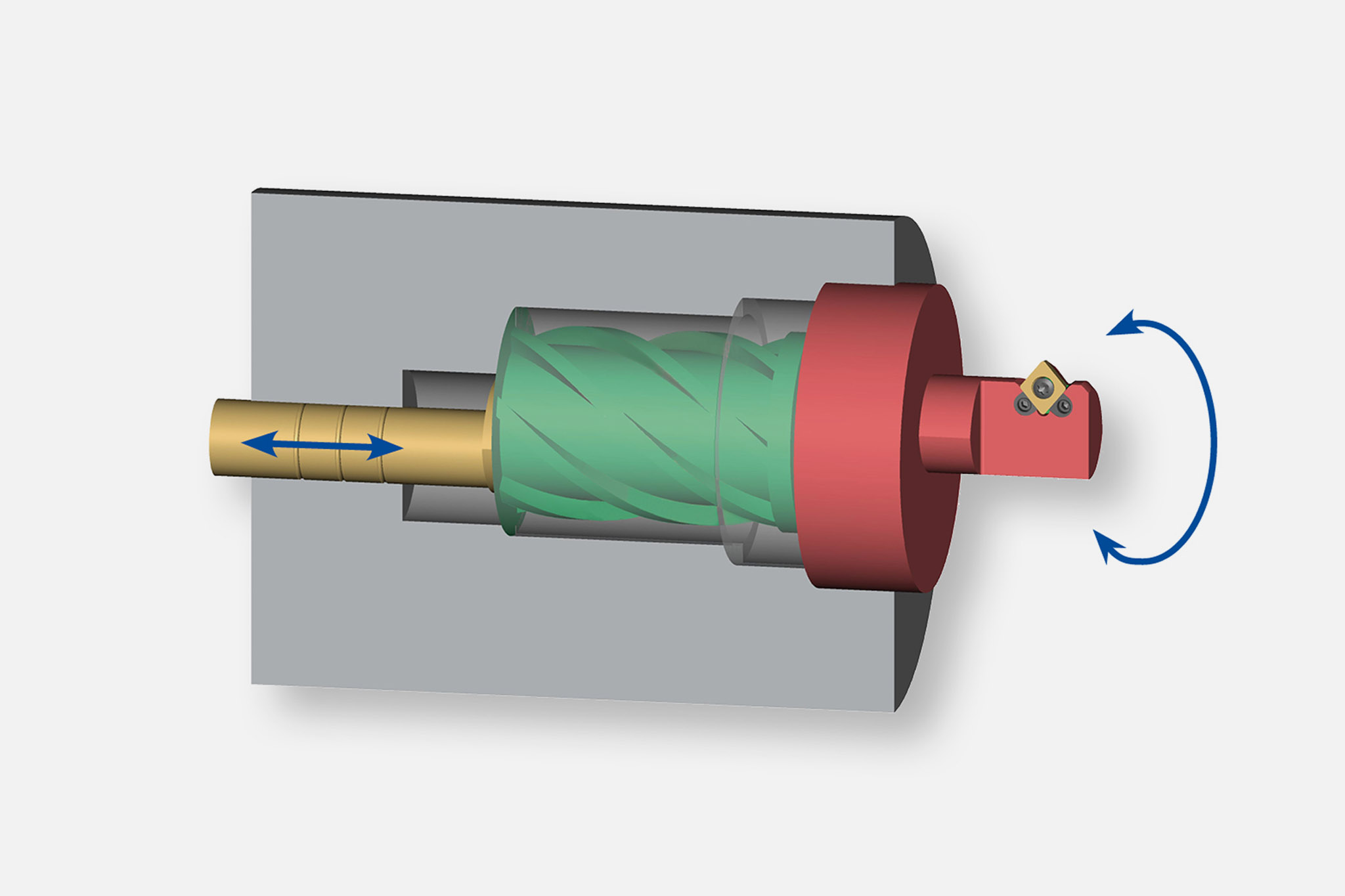
  • Rappresentazione schematica di un azionamento a slitta rotante degli utensili di attuazione MAPAL.

    Cursore rotante

    L'azionamento del cursore rotante avviene tramite una combinazione di albero di torsione e scatola di torsione. Il movimento assiale dell'albero di torsione viene trasformato in rotazione / tornitura mediante la scatola di torsione. La corsa radiale avviene mediante cuscinetto eccentrico.

    Lavorazioni:
    • Rettifica a tuffo
    • Tornitura di contorni
    • Tornitura piana
    • ​​​​​​​Tornitura di cuscinetti calibrati


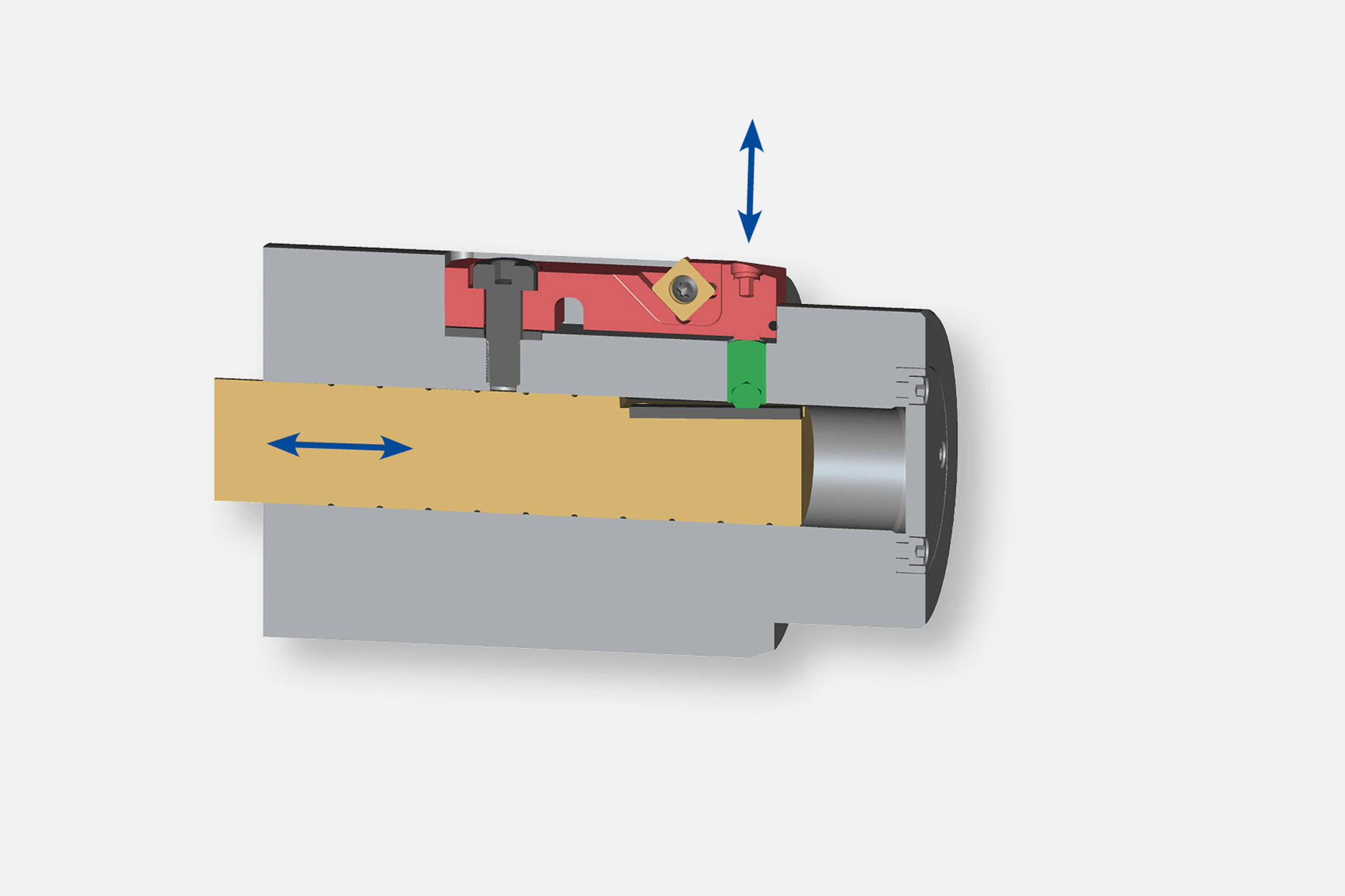
  • I cosiddetti supporti a flessione o a bilanciere sono utilizzati anche come tipo di uscita per gli strumenti di azionamento MAPAL.

    Supporto flessione e Supporto a bilico

    Nel caso del supporto flettente e supporto a bilico, l'azionamento del portainserto corto è dato dal piano inclinato della barra di trazione/pressione. A seconda della posizione della barra di trazione/pressione, il supporto viene posizionato sul corrispondente diametro del campo di rotazione.

    Lavorazioni: 
    • Compensazione dell'usura dei taglienti
    • Tornitura di piccoli contorni
    • ​​​​​​​Rettifica a tuffo