MAPAL as your partner for sustainable manufacturing
Sustainable and efficient with the right technology
Responsible use of resources, protecting the environment and keeping CO2 emissions to a minimum wherever we can – these have been MAPAL’s commitments since day one. Accordingly, the principle of sustainability plays a key role in every product and business division.
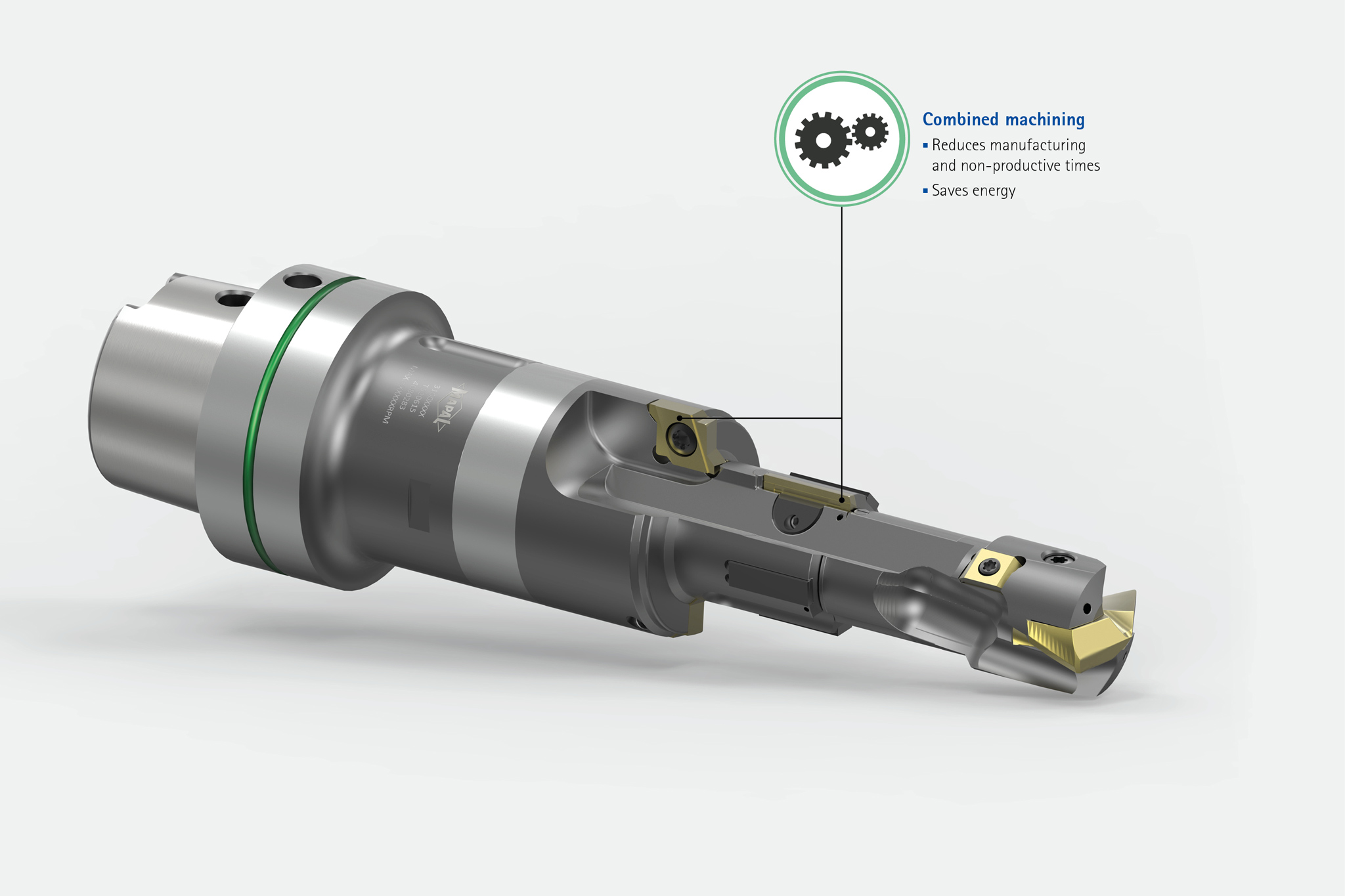
The key to efficient and sustainable manufacturing Combination tools can make a decisive contribution to sustainable manufacturing. By combining various machining steps in a single tool, tool changes and unnecessary travel distancecan be reduced considerably. This leads to shorter machine running times and enables significant energy savings. This method also offers the advantage that a lot less material is needed than with separate tools.
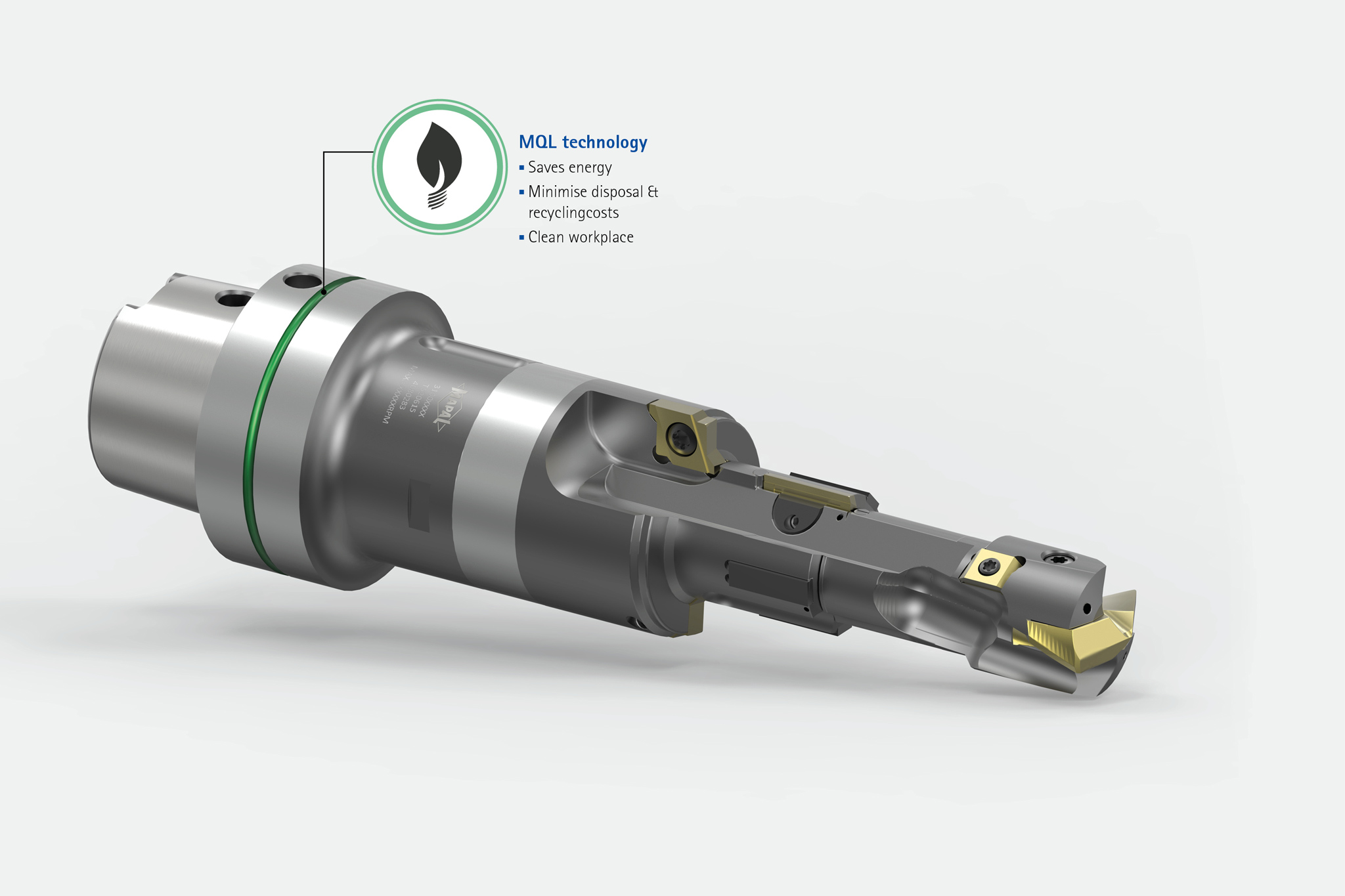
Ecological machining by minimising the use of cooling lubricant Minimum quantity lubrication (MQL) technology represents an ecologically responsible approach to machining. Because not as much cooling lubricant is used, fewer resources are consumed and less energy-intensive high-pressure pumping is needed. These savings have a positive effect on the carbon footprint. The technology also reduces the amount of waste produced by the contaminated cooling lubricant, which lowers disposal and recycling costs.MAPAL offers a wide range of MQL-compatible tools that are environmentally friendly and provide for a cleaner workplace.
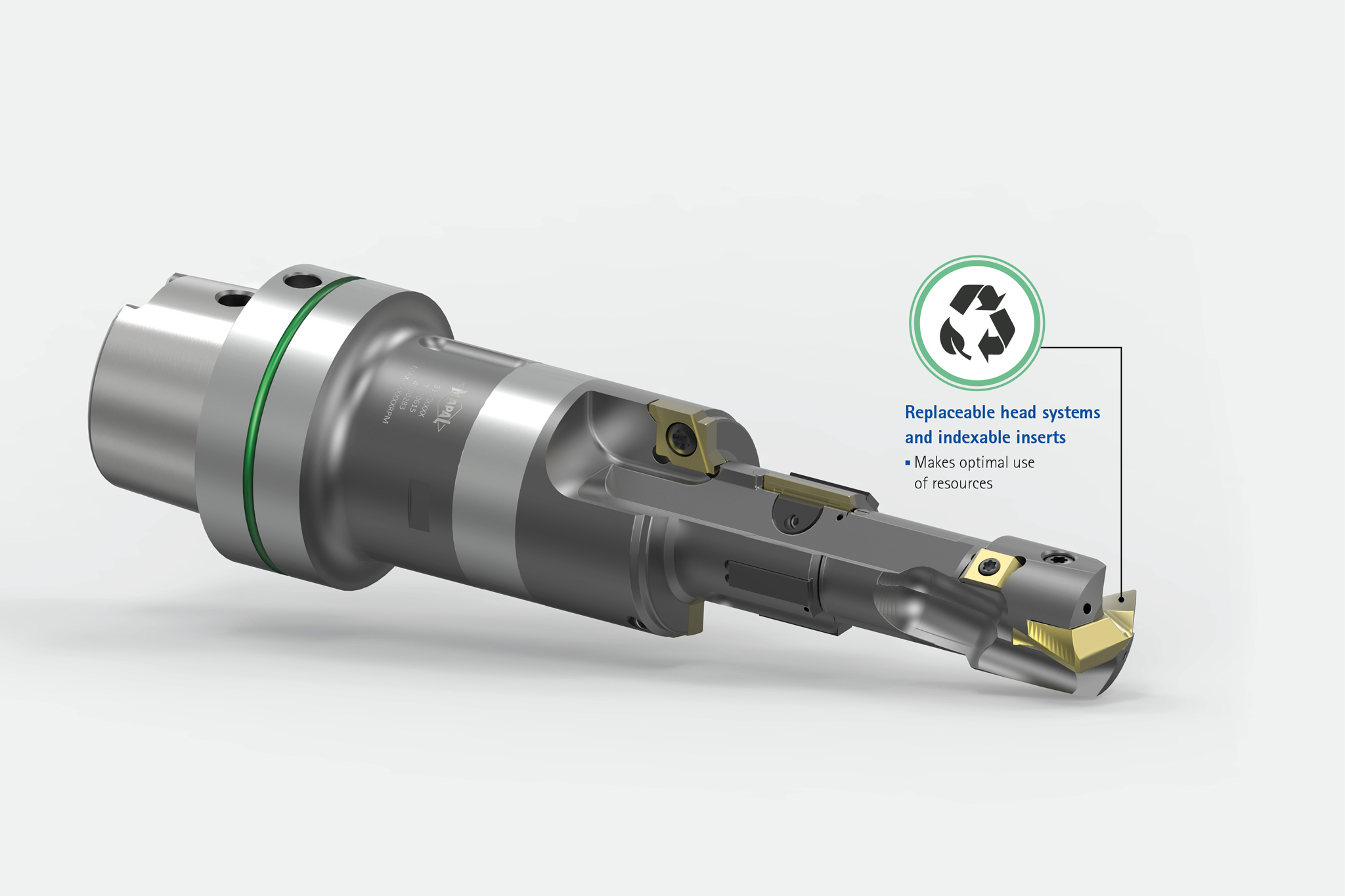
Modularity for resource-efficient manufacturing Replaceable head systems and indexable inserts make a significant contribution to environmental sustainability and resource efficiency in the manufacturing industry. Instead of replacing entire tools, only the heads have to be replaced or the indexable insert turned and/or flipped. This saves materials and energy and reduces waste as well as the environmental impact. Modularity also facilitates flexible adaptation to various machining tasks, which increases operational efficiency. In short, replaceable head systems and indexable inserts provide a sustainable solution that fulfils both ecological and economical requirements.
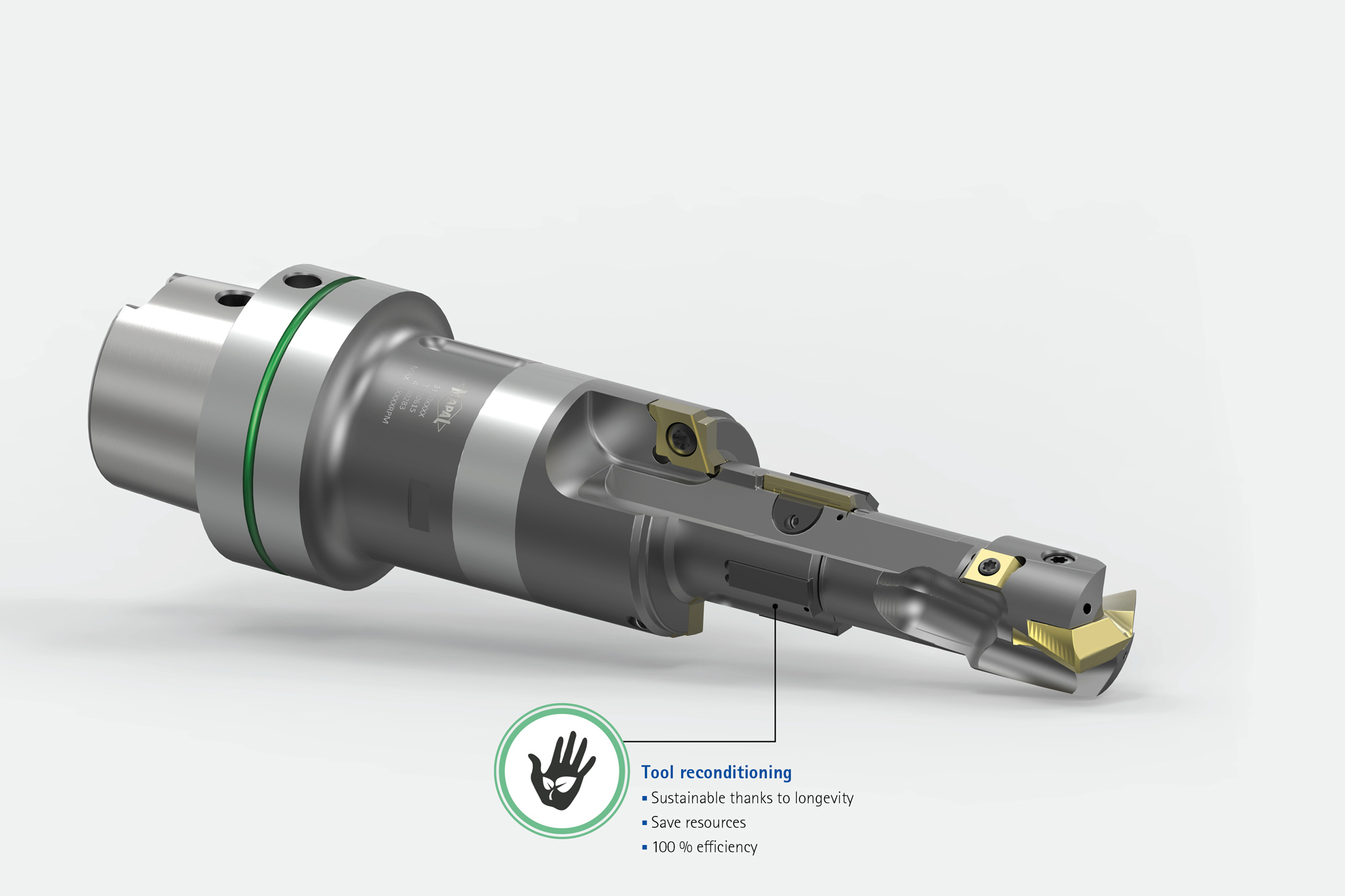
Sustainable thanks to longevity The reconditioning of cutting tools – such as PCD tools, solid carbide tools, and tools with indexable inserts or ISO elements – unlocks enormous potential for sustainability in the manufacturing industry. Tools can be brought back to their former glory through regrinding, restoring guide pads, exchanging inserts or recoating, etc. Reconditioning not only increases tool life considerably, it also effectively prevents important resources from being wasted. It represents an efficient solution that saves resources and optimally combines ecological and economic considerations.
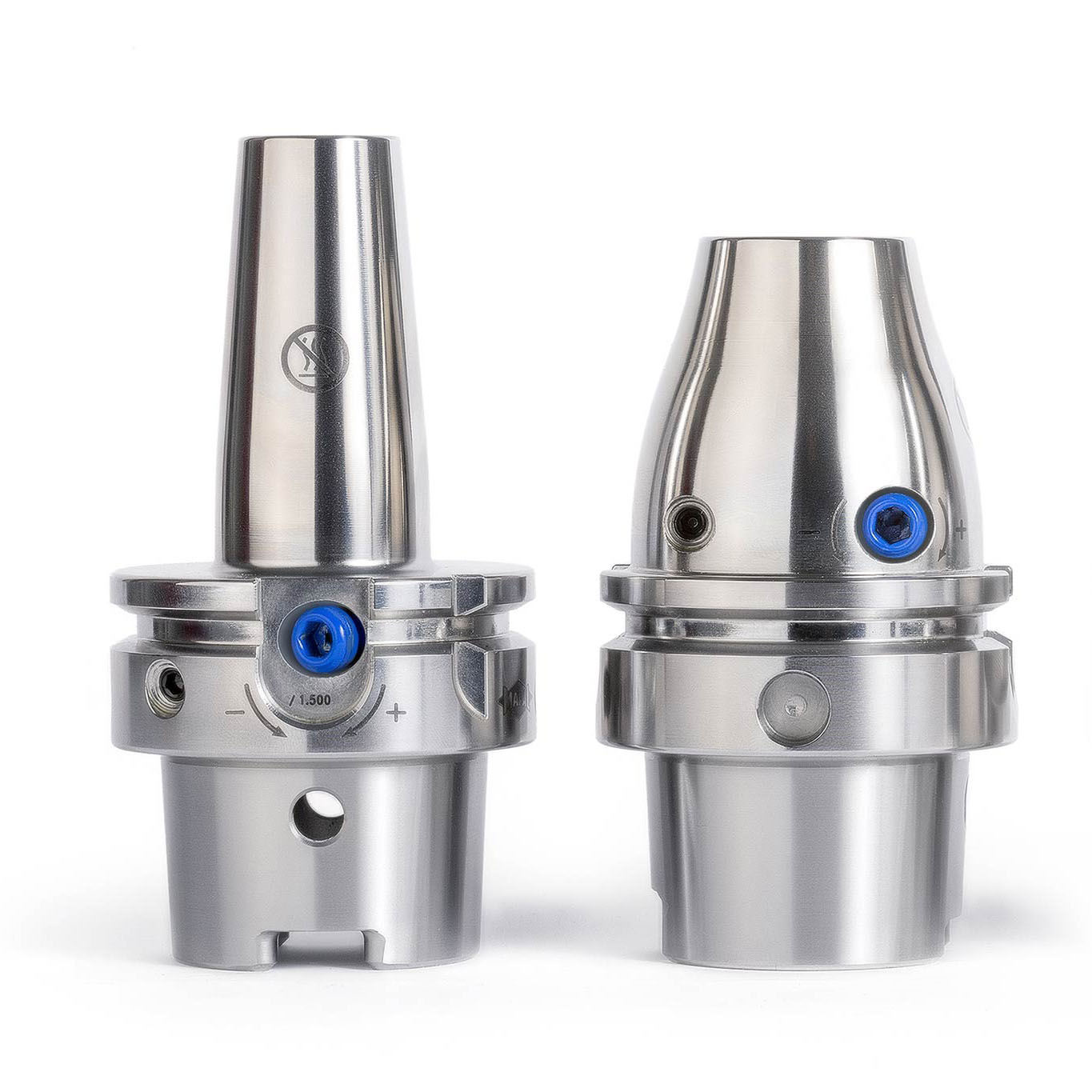
Redefining energy efficiency and workplace safety When it comes to sustainability and efficiency, the UNIQ hydraulic chuck is more than just an alternative to the traditional shrink chuck. One of the main advantages are the significant energy savings, as energy-intensive shrinking processes are avoided. By harnessing a purely mechanical approach to tool clamping, the hydraulic chuck drastically reduces energy expenditure, which lowers carbon emissions. In addition, as shrinking procedures have been done away with, there is no material fatigue and the chuck tool life is ten times longer.
A further advantage is increased workplace safety: Shrink chucks require a special shrink unit, which poses a high risk of injury. This is no longer required with hydraulic chucks. Users also achieve a longer tool life through the precise control of the clamping force, which means less resources are consumed. In combination with adherence to DIN tool restrictions, the UNIQ hydraulic chuck is the right choice when it comes to sustainability and efficiency.