Internal and External Machining of the Stator Housing
Three-stage solution for the stator bore
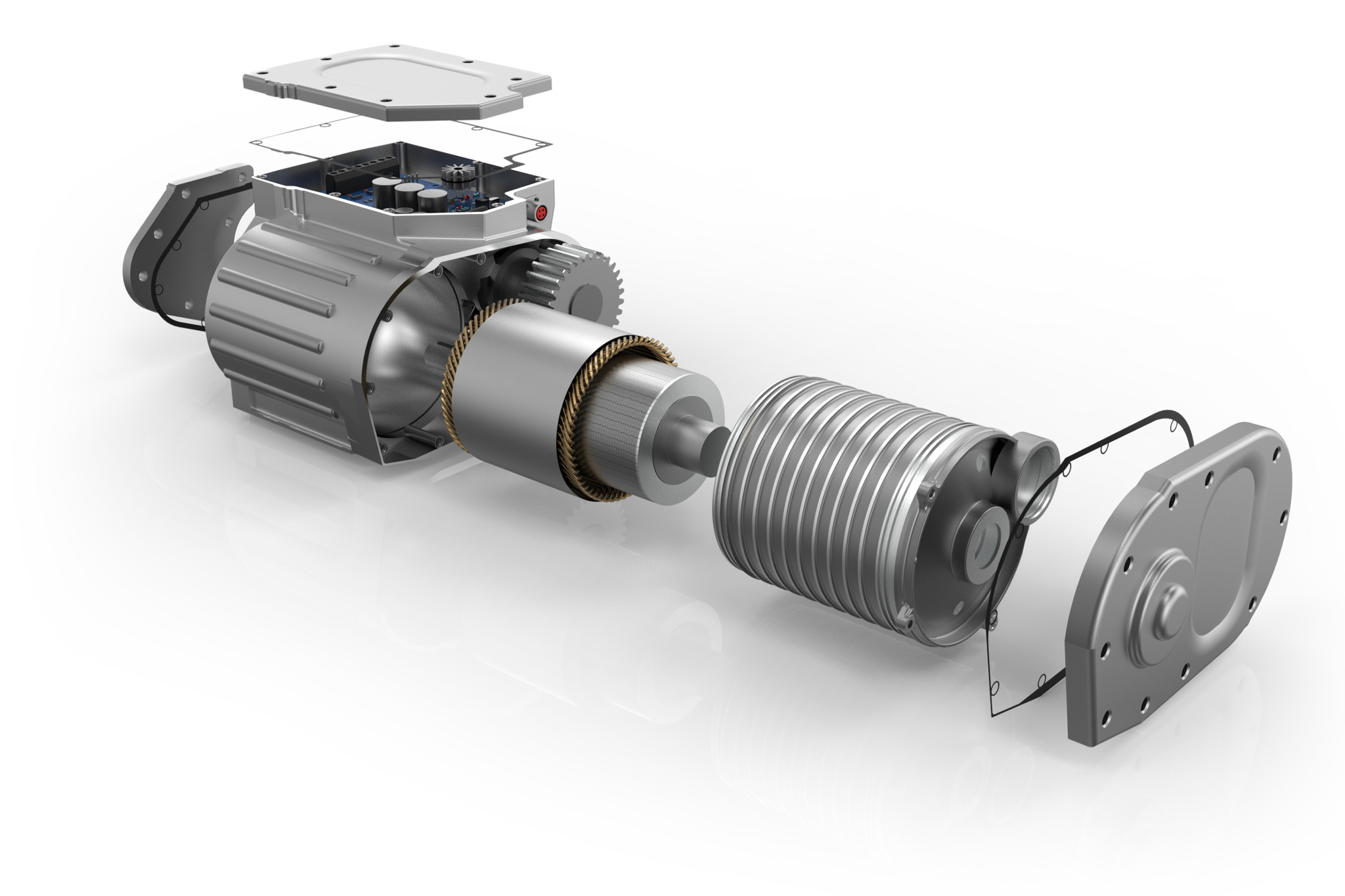
In the pot-shaped version of the motor housing, the stator carrier housing is inserted into the main housing as an intermediate housing. Typical diameters for the thin-walled aluminium part are between 200 and 240 mm on the inside and between 240 and 260 mm externally. Concentricity of the various bearing and mounting diameters is critical to the performance of the electric motor, which requires very precise machining within tight tolerances.
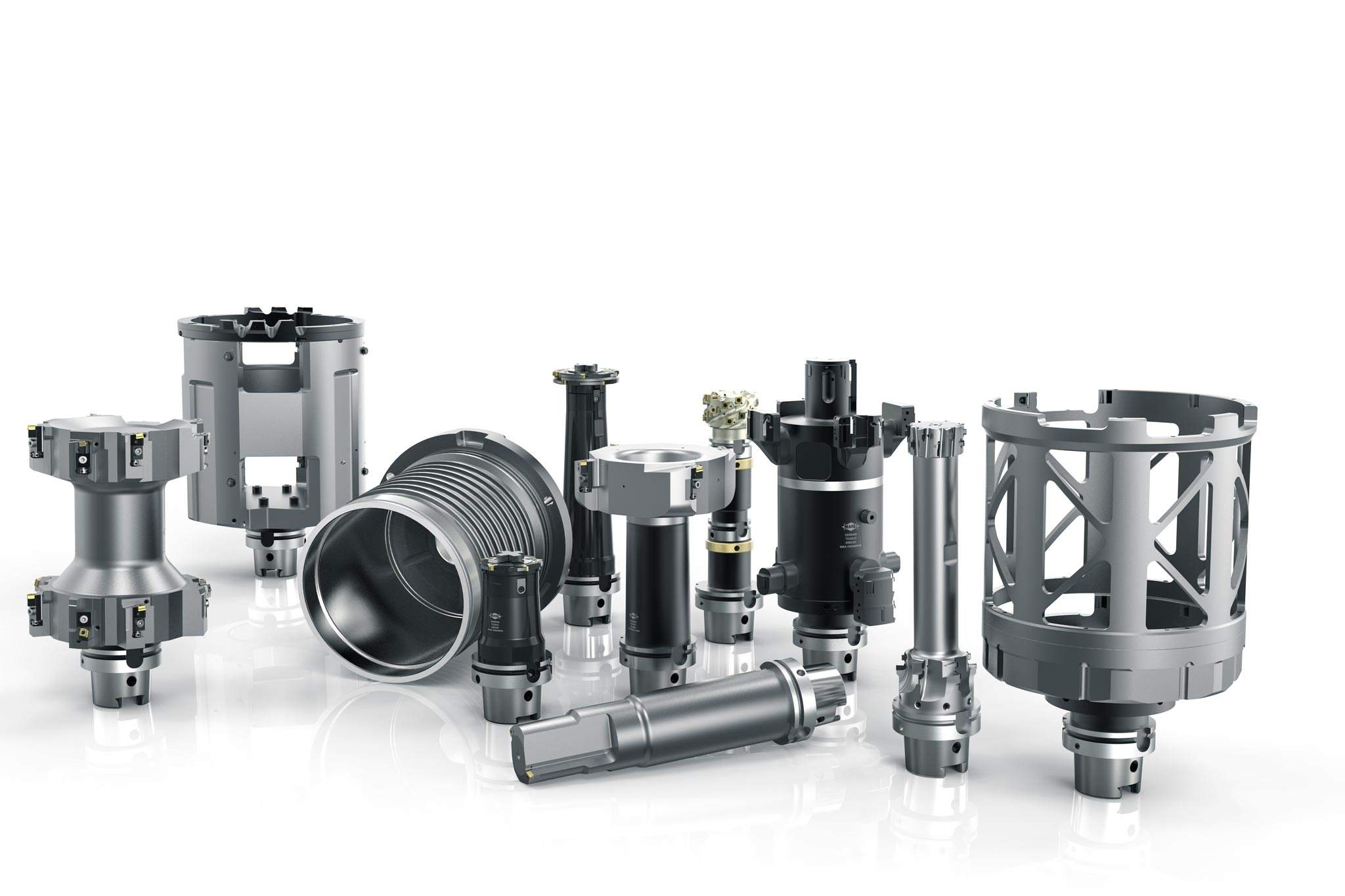
The first of three steps for machining the stator bore is pre-machining with a boring tool. The blank has casting bevels that result in cutting depths of up to 6 mm to be removed. For this purpose, special indexable inserts with a supporting arc shaped land are used to avoid vibrations. This also ensures that small chips are produced, which can be easily removed. In the subsequent semi-finish machining, the complex contour path of the electric motor housing is pre-machined in such a way that the complete fine machining with chamfers and radial transitions can be produced to μm accuracy with the finishing fine boring tool. The tools are individually designed for the respective customer depending on the stock situation, machinery and clamping setup. Different steps in the housing are taken into account with the cutting edge positions of the tools, as are cast-in or pressedin steel bushings for bearings. While the majority of the workpiece is machined with PCD, carbide cutting edges are used for the steel area.
World first for external machining
On the outside, the part features a helical circumferential groove. Because the coolant later flows through this groove after it’s been inserted into the outer housing, the stator carrier is also known as the "cooling jacket".
MAPAL is presenting new external machining tools at the EMO in Milan. They are among the more unusual tools. After pre-machining, a bell-shaped tool takes over the complete finishing of the outside. The specifically designed lightweight tool is equipped with indexable inserts and guide pads and was provided with bars in the right places to save as much weight as possible and to get rid of chips through large openings. The fine machining tool promises high roundness and accuracy.
Complete machining on machining centre
Internal machining is possible very quickly and accurately with the boring tools. In addition, the outside can also be machined in the same clamping setup without moving. The machining centre solution caters to customers who are embracing the transformation to e-mobility with existing machinery geared to machining large cubic aluminium housings.
Those who start their production on a greenfield site can, of course, choose which machining strategy is best for them. MAPAL has developed an alternative machining solution in a joint project with a machine manufacturer. In this case, the process was rotated 90 degrees for use on vertical lathes.