
Six-Slider System for Stator Housings
Maximum flexibility for machining complex internal contours in stator housings
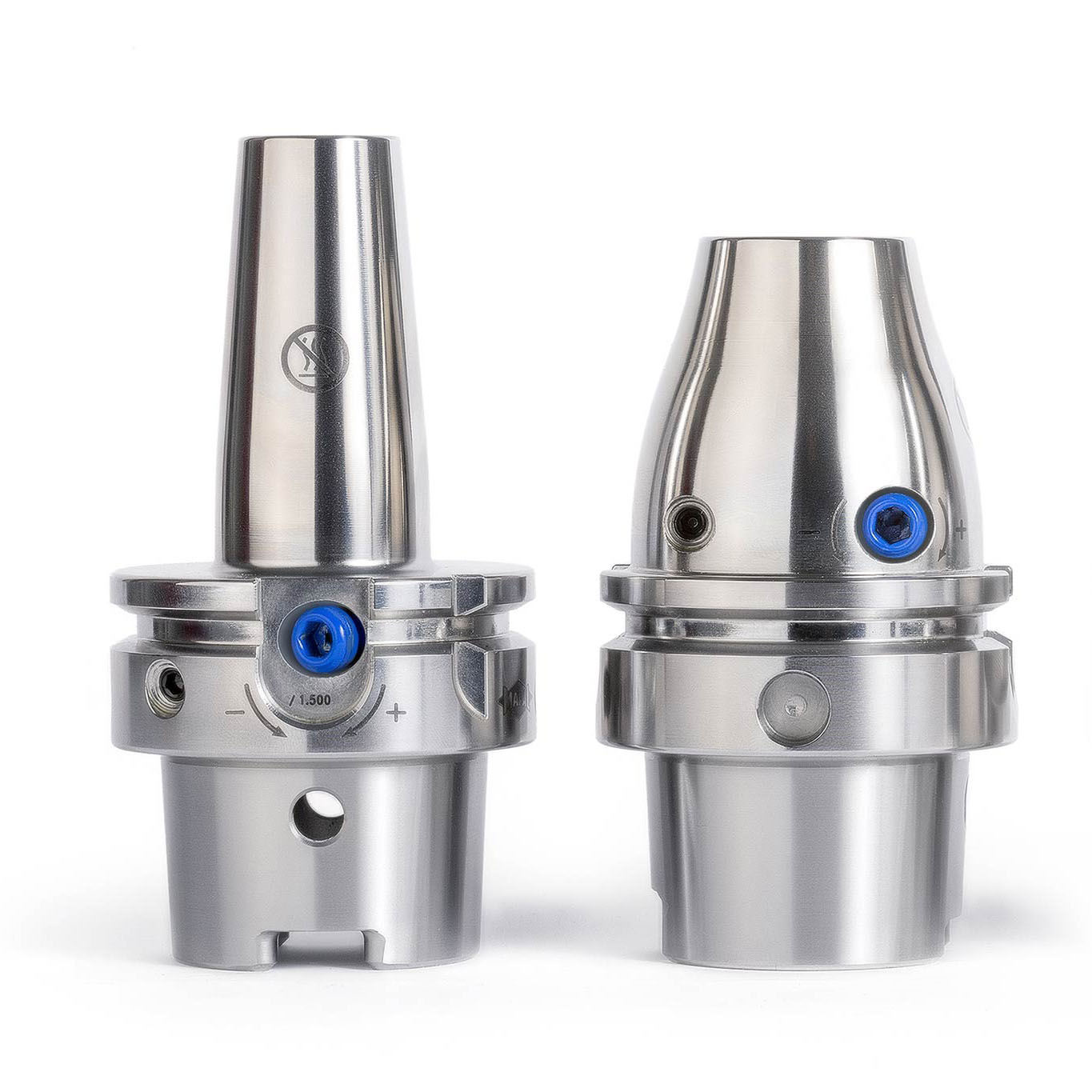
For machining complex internal contours in stator housings for electric motors, MAPAL has expanded its range of solutions with an innovative actuating tool featuring six slides for the first time. The increased number of slides that can be actuated simultaneously provides a significant boost in productivity: The first time it was deployed for a customer, the cycle time was reduced by more than 70% compared with the previous actuating solution with four slides.

MAPAL has a broad portfolio of solutions for stator machining and continuously develops it in line with specific manufacturing requirements. An innovative actuating tool has now been added to the range to machine complex internal contours in stator housings for electric motors. Featuring six slides for the first time, it offers flexibility for di‹erent component variants. The decisive development step towards higher productivity lies in a fundamentally new slide actuation system. The previous installation space with four slides did not provide enough room for additional cutting edges. The tool’s internal design was therefore completely reworked. By integrating the serration directly into the slides, the moving components were made significantly more compact and lightweight. This allowed the number of simultaneously actuated slides to be increased from four to six, while keeping the overall dimensions virtually unchanged. A patent has already been granted for this solution. Based on the new concept, MAPAL has developed two designs for different machining requirements. In the first design, all six slides are actuated simultaneously outwards, forming a six-bladed cutting tool. The second variant is designed as a 3+3 system, with three slides actuated outwards while three opposing slides are retracted. This allows a wide range of contours and process requirements to be covered in a flexible way.

The benefits for users are huge: both variants reduced cycle time by more than 70% in a specific application, while maintaining the same high level of precision and process reliability. In addition to significantly higher productivity, reducing the mass of the moving components enables higher rotational speeds and expands the process window. At the same time, a key advantage of using actuating tools is retained: Contours can be adjusted flexibly via the NC program without having to modify the tool design.

-
 1 / 4
1 / 4Six controllable slides
- Up to 72% shorter cycle times
- Simultaneous Z6 or counter-rotating Z3+3
- Optimised force distribution during the process
-
2 / 4
New slide actuation concept
- Higher productivity in the same installation space
-
3 / 4
Reduced mass of the moving components
- Higher rotational speeds and greater process reliability
-
4 / 4
Combination of di‘erent cutting geo metries
- Maximum flexibility for complex contours




/OptiMill-HPC-Pocket-Bearbeitungen-800x533-2-.png)


