09.04.2025
Komplettes Know-how in einem Bauteil
Für den Bereich Aerospace hat MAPAL zwei Musterbauteile entwickelt: ein Ventilgehäuse und ein Torsionsgelenk
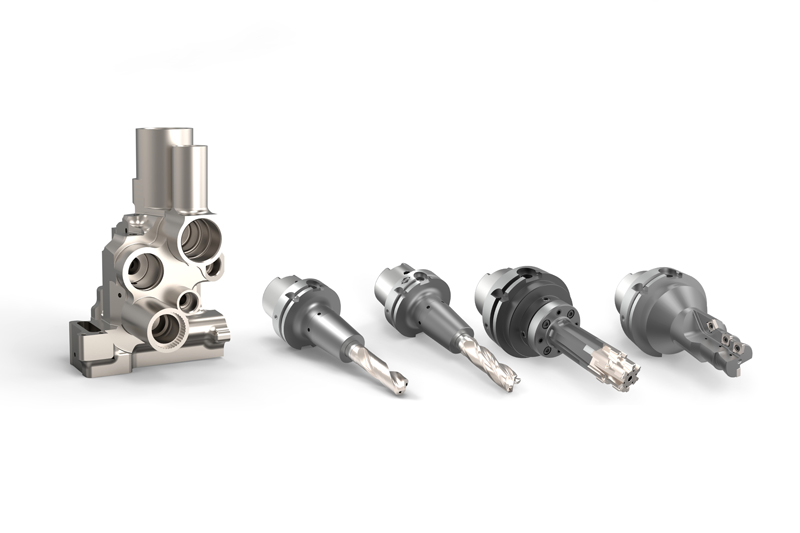
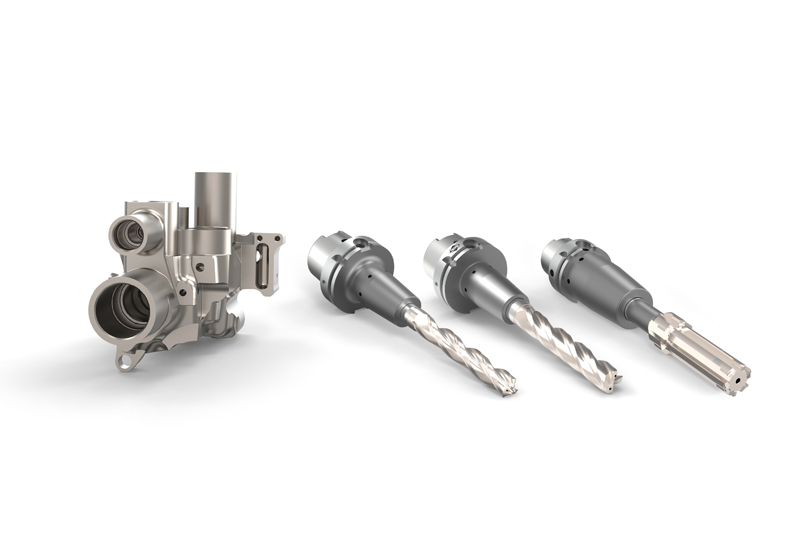
Für den Bereich Aerospace hat MAPAL zwei Musterbauteile entwickelt. Diese so genannten Generic Components decken alle anspruchsvollen Bearbeitungsschritte ab, die bei der Produktion von Hydraulikventilgehäusen aus Aluminium oder den aus Titan gefrästen Torsionsgelenken für Landebeine auftreten können.
Überall wo an einem Flugzeug etwas bewegt werden muss, sitzt ein Ventilgehäuse. Per Hydraulik werden Klappen, Ruder, Fahrwerke, Motoren und anderes gesteuert. In jedem Flugzeug ist eine große Menge an Ventilgehäusen unterschiedlicher Ausführung zu finden. Das Spektrum reicht von kleinen Kästchen bis zu Blöcken, die einen halben Meter Länge erreichen. Die Anforderungen an die Bearbeitung sind dabei immer ähnlich.
Das Generic Component ist bewusst keine Nachempfindung eines Kundenbauteils
Ventilgehäuse für Aerospace sind kompliziertere Bauteile als die Hydraulik für Baumaschinen
Ventilgehäuse für den Bereich Aerospace sind kompliziertere Bauteile als solche, die in anderen Bereichen, wie etwa bei der Hydraulik für Baumaschinen, verwendet werden. Für das bislang komplexeste Kundenprojekt hat MAPAL mehr als 130 unterschiedliche Sonderwerkzeuge für einen einzigen Gehäusetyp eingesetzt. Weil in der Luftfahrtbranche die Reduzierung von Gewicht wichtig ist, arbeitet die Fertigung oft mit sehr dünnwandigen Teilen. Weitere Herausforderungen sind tiefe Bohrungen mit Querbohrungen oder Nuten, die für unterbrochene Schnitte sorgen. Hinzu kommt, dass bei der Zerspanung des verwendeten Aluminiums mit seinem niedrigen Siliziumgehalt sehr lange Späne entstehen, die schwer zu brechen sind.
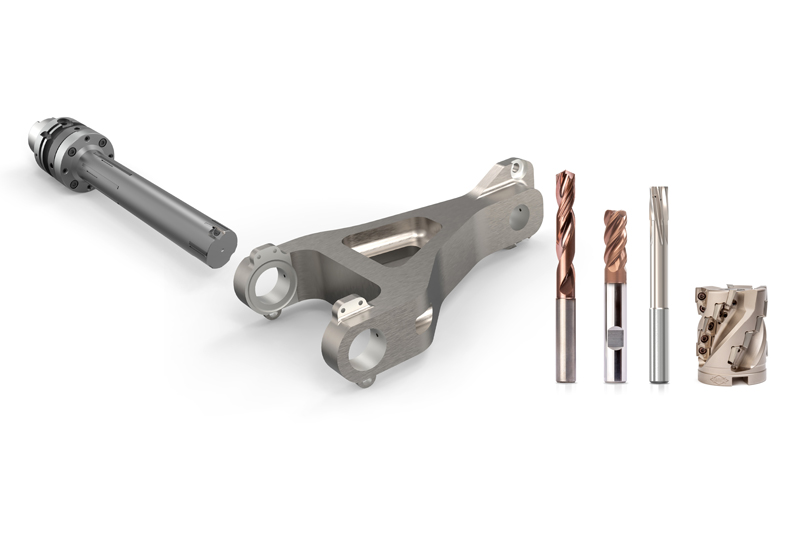
Eine weitere Generic Component, die MAPAL für die Luftfahrt entwickelt hat, ist ein Torsionsgelenk (Torsion Link) für das Hauptfahrwerk am Flugzeug. Es verbindet die beiden zylindrischen Teile des Landebeins miteinander. Diese Konstruktion ermöglicht es dem Dämpferzylinder, ein- und auszufahren, ohne sich dabei zu verdrehen. Auch dieses Bauteil gibt es in unterschiedlichen Ausführungen.
Torsion Links bestehen aus Titan – wegen der hohen Belastungen
An seinem Musterteil mittlerer Größe bildet MAPAL alle realen Anforderungen ab. Wegen der hohen auftretenden Belastungen bestehen Torsion Links aus Titan. Die niedrige Wärmeleitfähigkeit des Materials resultiert in hohen Temperaturen bei der Zerspanung, die sich negativ auf die Standzeit der Werkzeuge auswirken. Neben optimaler Beschichtung und Schneidkantenpräparation kommt es hier auf die richtige Bearbeitungsstrategie an.
Mit den Generic Components für Aerospace setzt MAPAL ein Konzept fort, das sich bereits im Automobilbereich bewährt hat. Auch hier wurden zunächst anspruchsvolle Bauteile identifiziert, für deren Bearbeitung sich die vom Aalener Präzisionswerkzeughersteller zur Verfügung gestellten Werkzeuge sehr gut eignen. Inzwischen wird ein großer Teil der Automobiltechnologie mit den passenden Musterteilen abgedeckt. Mit Hilfe der Generic Components kann MAPAL auch im Luftfahrtbereich aufzeigen, wozu man technologisch in der Lage ist.

Kontakt
Kathrin Rehor Public Relations Kathrin.Rehor@mapal.com Tel.: +49 7361 585 3342